
For more than a thousand years, the kings of France were crowned in the cathedral at Reims. Today another king reigns in the Marne: champagne. Kilometres of galleries carved into the chalk, prestige houses bearing names known across the globe, and a landscape of UNESCO-listed hillsides create a territory where history and pleasure are one.
Reims: The Coronation City
Notre-Dame Cathedral
A UNESCO World Heritage Site and one of the supreme achievements of Gothic architecture, Reims Cathedral witnessed the coronation of nearly every French king from Clovis in 496 AD to Charles X in 1825. Its western facade features over 2,300 sculptures, including the famous Smiling Angel that has become the city's emblem. Inside, Marc Chagall's luminous stained-glass windows in the axial chapel create a breathtaking interplay of medieval stone and modern art. Entry is free, and climbing the towers rewards visitors with sweeping views over the city and surrounding vineyards.
Palais du Tau
Directly beside the cathedral, the Palais du Tau once served as the archbishop's residence and hosted the royal banquet following each coronation. Now a museum, it displays the cathedral treasury, including Charlemagne's talisman, the coronation chalice and monumental tapestries. Admission is around 8 euros, and you should allow at least an hour to appreciate the collection properly.
Basilique Saint-Remi
Less visited but equally UNESCO-listed, the Basilique Saint-Remi is the oldest church in Reims. Its 11th-century Romanesque nave flows into a luminous Gothic choir sheltering the tomb of Saint Remi, the bishop who baptised Clovis. The adjacent museum, housed in a former Benedictine abbey, traces the city's story from prehistory through the Middle Ages.
Champagne Houses in Reims
Beneath the streets of Reims, kilometres of Gallo-Roman chalk pits known as crayeres serve as natural cellars for the great champagne houses. At a constant 10 degrees Celsius with perfect humidity, they provide ideal ageing conditions.
Veuve Clicquot offers an immersive tour through its historic cellars, telling the story of Madame Clicquot, who pioneered the riddling technique. Tours with tasting start at around 30 euros. At Taittinger, the descent into chalk galleries classified as historic monuments is particularly striking — some passages date back to the 4th century. Visits begin at roughly 25 euros. Pommery, housed in a striking Elizabethan-style estate, doubles as an underground contemporary art gallery. Expect to pay 25 to 40 euros depending on the tasting package.
Booking online is strongly recommended, especially between May and October when demand is highest. Allow at least two hours per house.
Epernay and the Avenue de Champagne
Thirty minutes south of Reims, Epernay is a town built entirely on champagne. The Avenue de Champagne, lined with grand bourgeois mansions and neoclassical facades, conceals some 200 million bottles ageing in cellars beneath its cobblestones. Forbes once called it the richest street in the world.
Moet & Chandon, whose founder was a friend of Napoleon, dominates the avenue with its imposing estate. A tour of its 28 kilometres of underground galleries is essential. Further along, Mercier appeals to families with a small-train ride through vast cellars. De Castellane offers a unique vantage point from the top of its landmark tower.
On Sunday mornings, the Epernay market is the place to sample local specialities — pink biscuits from Reims, Reims mustard and ratafia, the region's fortified grape liqueur.
UNESCO Champagne Hillsides
Since 2015, the Champagne Hillsides, Houses and Cellars have held UNESCO World Heritage status. The listing covers three complementary sites: the historic hillsides of Hautvillers, Ay and Mareuil-sur-Ay, the great houses along the Avenue de Champagne in Epernay, and the Saint-Nicaise Hill crayeres in Reims.
The village of Hautvillers, where Dom Perignon perfected the art of blending in the 17th century, deserves a leisurely visit. Its church houses the famous monk's tomb, and its narrow lanes offer glorious views over the Marne Valley.
Chalons-en-Champagne
The quietly appealing prefectural capital of Chalons-en-Champagne charms visitors with its pastoral canals and exceptional religious architecture. The collegiate church of Notre-Dame-en-Vaux, UNESCO-listed as part of the Routes of Santiago de Compostela, contains a dazzling array of 16th-century stained glass. The Jard garden, stretching along the Nau and Marne rivers, provides a tranquil escape from the busier tourist circuit.
Lac du Der-Chantecoq
In the southeastern corner of the department, Lac du Der-Chantecoq is the largest artificial lake in France and one of the biggest in Europe, spanning 4,800 hectares. Built in 1974 to control flooding on the Marne, it has become a major birdwatching destination. Every autumn, over 70,000 common cranes stop here during migration, creating a natural spectacle of extraordinary scale. In summer, its sandy beaches, cycling paths and sailing centres make it a popular outdoor getaway. Access is free, and bicycle hire costs around 15 euros per day.
Practical Tips
When to Visit
Spring and autumn are the best seasons. The grape harvest in September brings the vineyards to life, while Reims's Christmas market bathes the cathedral in light each December. In November, the crane migration at Lac du Der draws thousands of birdwatchers.
Getting There
Reims is just 45 minutes from Paris by TGV. From the station, the tramway connects the main sights. A car is essential for exploring the vineyards and Lac du Der.
Budget
This area is pricier than the French average, especially in high season. Expect to pay 70 to 110 euros per night for a decent hotel, 110 to 170 euros for a charming B&B or boutique hotel, and 170 to 300 euros for premium establishments. Meals range from 18 to 28 euros for lunch to 30 to 55 euros for dinner. To save money, book well in advance, stay slightly away from the most touristy zones (prices drop 20-30%), eat at markets and local food stalls rather than seafront restaurants, and take advantage of the many free activities: hiking, beaches, village walks, panoramic viewpoints.
Explore on the map
Map →📚 Related collections
Related guides
 Heritage
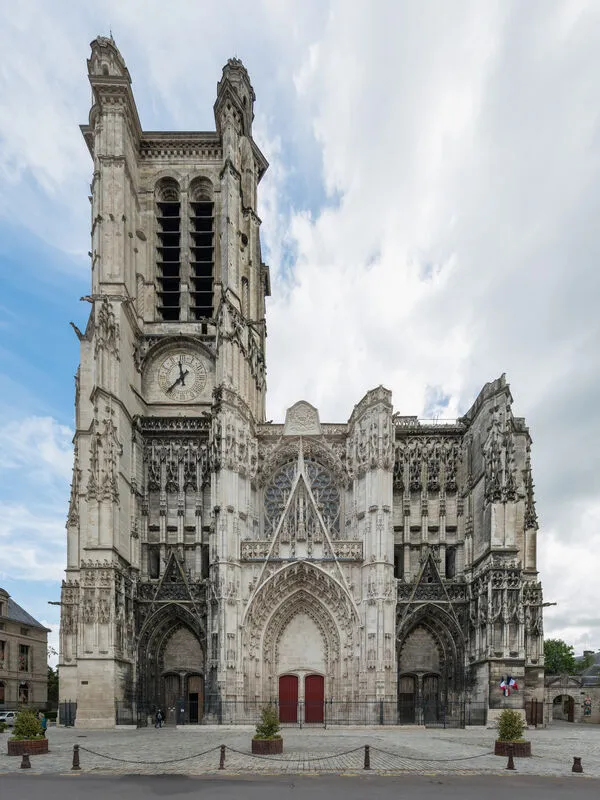
Aube: Troyes and the Champagne Country
Discover the Aube department, from the magnificent medieval city of Troyes to the lakes of the Foret d'Orient, the Cote des Bar vineyards and Renoir's village at Essoyes.
 Heritage
Côte-d'Or: Dijon and the Route des Grands Crus
From ducal Dijon to the UNESCO-listed Route des Grands Crus, discover Côte-d'Or, its legendary vineyards, historic hospices and medieval villages in the heart of Burgundy.