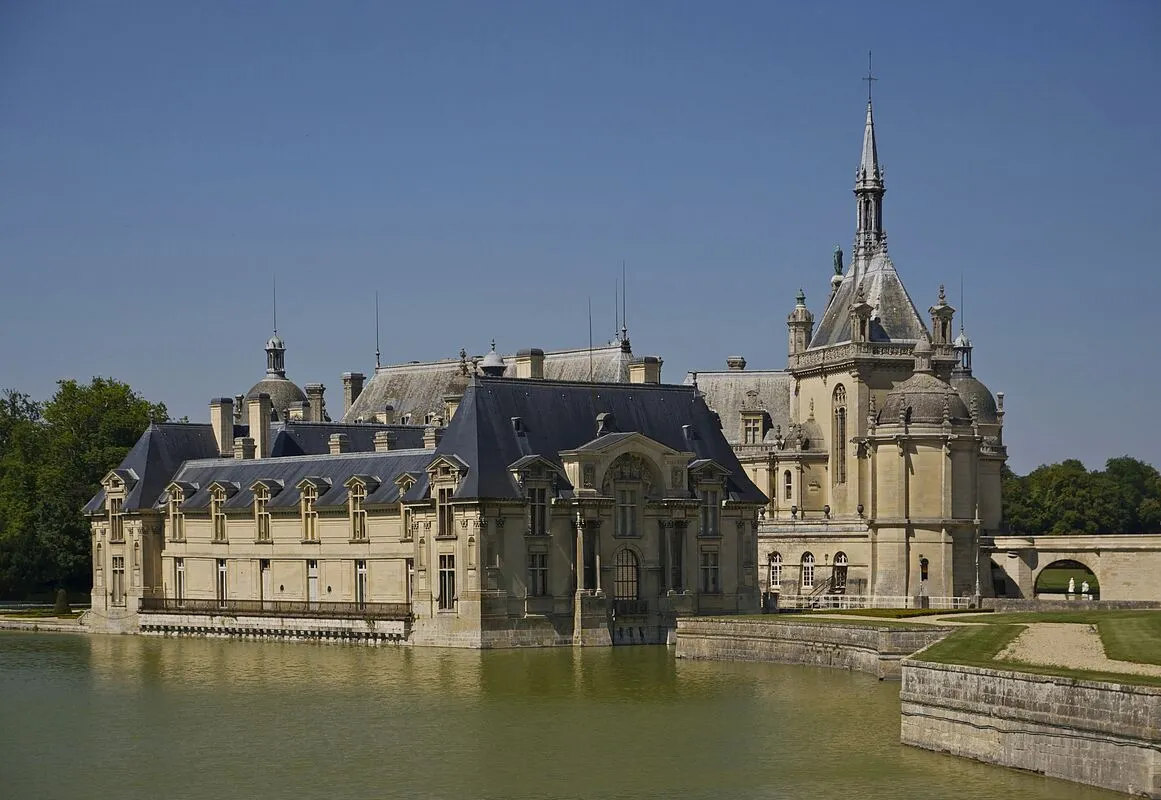
The Chateau de Chantilly holds the second-largest collection of Old Master paintings in France, surpassed only by the Louvre, and the Duc d'Aumale's library contains illuminated manuscripts of breathtaking beauty. The Oise, on Paris's doorstep, blends grand history with unspoilt nature: Beauvais Cathedral with the tallest Gothic vault in the world, royal forests, and racecourses where horses gallop across an emerald carpet.
Chantilly: The Princes' Palace
The Château de Chantilly is one of France's great underappreciated treasures. Home to the Princes of Condé and later to the Duc d'Aumale, who assembled one of Europe's most extraordinary private art collections, the estate combines Renaissance and 19th-century architecture, formal gardens by Le Nôtre, and a museum of world-class stature.
The Musée Condé
The Musée Condé, housed within the château, holds the second-largest collection of pre-modern paintings in France after the Louvre. Raphael, Poussin, Ingres, Delacroix — masterpieces follow one another from room to room. The crown jewel is the Très Riches Heures du Duc de Berry, the most celebrated illuminated manuscript in existence, displayed in a dedicated cabinet (the original is shown on rotation; a high-quality facsimile is always on view). Admission to the estate is around 17 euros (château, park, and stables), and you should allow at least half a day.
The Great Stables and the Horse Museum
Facing the château, the Great Stables are an 18th-century architectural tour de force, built by the Prince of Condé, who, legend has it, believed he would be reincarnated as a horse. They house the Horse Museum, tracing the bond between humans and horses through the ages. Equestrian shows (environ 25 euros, check schedules) are performed in the enormous covered arena, blending dressage, vaulting, and theatrical staging.
Chantilly Cream
You cannot leave Chantilly without tasting the real crème Chantilly in one of the village tea rooms. Legend credits its invention to Vatel, maître d'hôtel to the Grand Condé in the 17th century. The Hameau, a cluster of thatched cottages in the château park (predating Marie Antoinette's hamlet at Versailles), offers tastings in an idyllic setting.
Beauvais: The Cathedral That Dared Too Much
Beauvais is worth a detour for a single building: its Cathedral of Saint-Pierre. With a choir vault soaring to 48.50 metres, it is the tallest Gothic cathedral ever constructed. The ambition of its 13th-century builders literally defied physics — the choir collapsed once in 1284, and the nave was never completed. What remains is a breathtaking feat of engineering: stepping inside the choir and looking up produces an almost physical jolt as the eye follows the impossibly slender columns to their dizzying summit.
The astronomical clock (environ 4 euros for the animation), installed in the transept in 1865, is a marvel of mechanical complexity with 90,000 parts, 52 dials, and animated figures. The demonstration lasts about 15 minutes and runs several times daily.
The town also houses the MUDO — Musée de l'Oise (free admission), set in the former bishops' palace, with collections spanning prehistory to contemporary art. The Place Jeanne-Hachette commemorates the local heroine who, in 1472, rallied the townspeople to repel the Burgundian army of Charles the Bold.
Senlis: A Medieval Jewel
Senlis is a medieval gem just 50 kilometres from Paris, yet miraculously spared from mass tourism. The town is enclosed within Gallo-Roman ramparts dating from the 3rd century — among the best preserved in France — and its interior is a maze of cobbled lanes, half-timbered houses, and hidden courtyards.
The Cathedral of Notre-Dame (12th–13th century), with its elegantly sculpted portal dedicated to the Virgin, presides over a town centre whose architectural harmony is remarkable. The Museum of Art and Archaeology (environ 5 euros) occupies the former bishops' palace and the remains of the royal castle where Hugues Capet was elected King of France in 987. The Museum of Hunting (environ 5 euros), unique in France, tells the story of the royal hunt, a tradition inseparable from the great forests of the Oise.
Senlis is also a favourite of filmmakers: its intact medieval sets have served as backdrops for numerous period productions. Stroll the streets in the evening, after the day-trippers have left, when lamplight plays across the stone facades — the atmosphere is pure enchantment.
Compiègne: The Palace and the Forest
Compiègne is defined by its palace and its forest. The Palace of Compiègne (around 9 euros), a favourite residence of Napoleon III and Empress Eugénie, is one of France's three great imperial palaces alongside Versailles and Fontainebleau. Less monumental but more intimate than its rivals, it preserves sumptuous Second Empire apartments, a remarkable Vehicle Museum (from early automobiles to royal coaches), and a unique Museum of the Second Empire.
The Forest of Compiègne (14,500 hectares) is one of the finest in France, its towering beech and oak stands criss-crossed by walking trails, bridleways, and cycle paths. It was in a clearing in this forest, at Rethondes, that the Armistice of 11 November 1918 was signed. The Armistice Memorial (environ 8 euros) recreates the railway carriage in which Marshal Foch received the German plenipotentiaries — a deeply charged site.
Pierrefonds: The Fairytale Castle
On the edge of the Compiègne forest, the Château de Pierrefonds (around 8 euros) is a postcard vision. A medieval ruin comprehensively rebuilt by Viollet-le-Duc for Napoleon III, it is an idealised castle, a 19th-century chivalric fantasy complete with crenellated towers, wall-walks, and fantastical sculptures. Film and television fans will recognise it as Camelot — the château has appeared in numerous productions.
The Pays de Bray and the Picardie Verte
In the northwestern corner of the département, the Pays de Bray and the Picardie Verte present a landscape of rolling hedgerow-bounded pastures, timber-framed farms, and trout streams. Gerberoy, classified among France's Most Beautiful Villages, is a hilltop hamlet of brick and roses — the June rose festival is enchanting. The Thérain valley and the ponds of the Picardie Verte are havens for anglers and birdwatchers.
Practical Information
- When to visit: April to October; June for Gerberoy's roses and Chantilly's equestrian shows
- Getting around: Chantilly and Compiègne are accessible by regional train from Paris-Nord (25 and 45 minutes respectively); a car is essential for the rest
- Budget: combined entry to major sites (Chantilly, Compiègne, Pierrefonds) around 35 euros; accommodation 65 to 110 euros per double room
- Suggested duration: 3 to 4 days for the full range; Chantilly and Senlis combine beautifully in a single day
- Don't miss: the Musée Condé at Chantilly, Beauvais Cathedral from the inside, an evening stroll through Senlis, and the Château de Pierrefonds
Explore on the map
Map →📚 Related collections
Related guides
 Regions
Ain: Bresse, Dombes and Pays de Gex
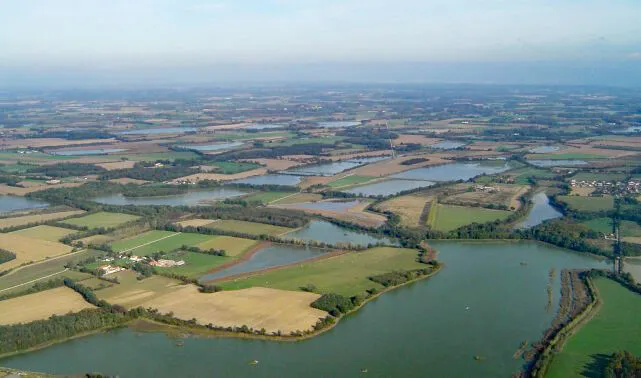
Discover the Ain: world-famous Bresse poultry, the thousand ponds of the Dombes, Pays de Gex facing Mont Blanc and the emerald gorges of Nantua. Complete guide.
 Regions
Aisne: Laon's Medieval Citadel and the Chemin des Dames
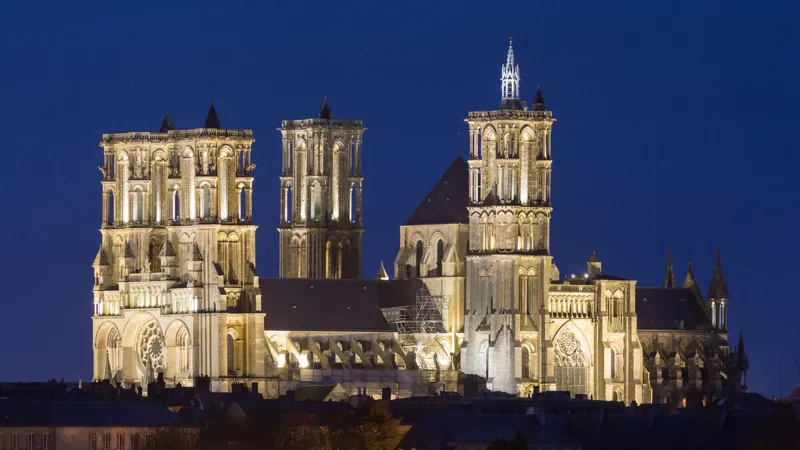
Discover the Aisne département: Laon's hilltop medieval city, the Chemin des Dames battlefields, Soissons, the Familistère de Guise and Champagne vineyards. Complete travel guide.