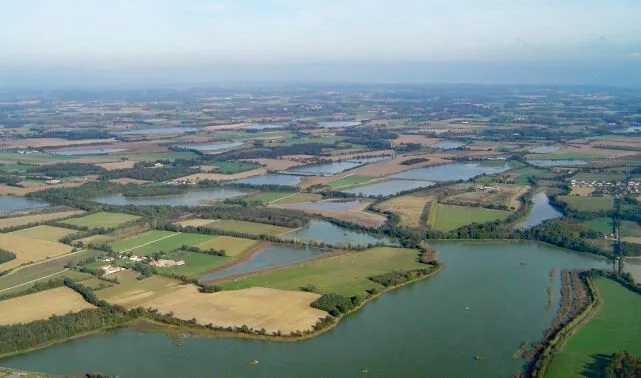
Squeezed between Lyon and Geneva, the Ain is one of those French territories that nobody thinks of visiting -- and that is exactly why you should. Behind its unremarkable plains lie more than a thousand misty ponds, alpine panoramas from the Pays de Gex that rival anything in Switzerland, France's most celebrated poultry, and the emerald gorges of Nantua. This guide reveals what the motorway hides.
Bourg-en-Bresse, a Gourmet Capital
The Royal Monastery of Brou
Bourg-en-Bresse does not dazzle at first glance, but it contains an absolute jewel: the Royal Monastery of Brou. Built in the early sixteenth century by Margaret of Austria to honour her late husband Philibert the Handsome, Duke of Savoy, this masterpiece of late Flamboyant Gothic is one of the finest funerary ensembles in Europe. The three princely tombs carved from Carrara marble, their detail almost impossibly fine, are alone worth the journey. The church, cloisters and museum cost around 10 euros to visit (reduced rate 7 euros). Allow 1h30 to 2 hours for a thorough visit.
The monastery museum houses a collection of Flemish and French art from the sixteenth to the twentieth century, along with high-quality temporary exhibitions. The cloister garden, planted according to the seasons, invites quiet contemplation.
The Market and Bresse Poultry
Every Saturday morning, the Bourg-en-Bresse market fills the town centre. This is where you meet the farmers who raise Bresse poultry, the only poultry in the world to hold an AOC designation (since 1957). A Bresse chicken is recognisable by its blue feet, white plumage and red comb -- the colours of the French flag. Free-range for at least four months with a minimum of ten square metres of pasture per bird, it delivers flesh of unmatched tenderness and flavour.
To taste Bresse poultry at its finest, book a table at Georges Blanc in Vonnas (three Michelin stars, lunch menu from 85 euros) or, for a more modest budget, at one of the many Bresse farmhouse inns that serve the classic poulet a la creme.
In December, do not miss the Glorieuses de Bresse, a prestigious competition where the finest birds are exhibited, judged and sold in a festive, gourmet atmosphere.
The Dombes, Land of a Thousand Ponds
A Landscape Shaped by Human Hands
The Dombes is a clay plateau dotted with more than 1,100 ponds dug from the Middle Ages onwards by monks for fish farming. This aquatic network, unique in Europe, creates a shifting landscape of shimmering water, reed beds, wet meadows and oak groves. The management system is fascinating: each pond alternates between a period under water (evolage) for fish and a dry period (assec) for crops, following a cycle handed down through generations.
The Bird Park at Villars-les-Dombes
The Parc des Oiseaux showcases this biodiversity. Spread over 35 hectares in the heart of the Dombes, it is home to more than 3,000 birds of 300 species, from flamingos to Japanese cranes, toucans to snowy owls. The free-flight bird show is thrilling. The park has been entirely renovated in recent years with spectacular immersive aviaries. Expect to pay around 22 euros for an adult (17 euros for children aged 3 to 12) and set aside a full day to enjoy the site.
Carp and Pike
The Dombes is also a land of aquatic gastronomy. Dombes carp, tench and pike are served in local restaurants fried, as quenelles or in terrines. The village of Chatillon-sur-Chalaronne, listed among the prettiest detours in France, is an excellent base for exploring the region. Its medieval covered market hall, half-timbered houses and flower-lined canals create a charming setting.
Pays de Gex, a Balcony Facing Mont Blanc
Between the Jura and Geneva
The Pays de Gex occupies an extraordinary geographical position: wedged between the Jura ridges and the Swiss border, it offers a permanent panorama of Lake Geneva, Mont Blanc and the entire Alpine chain. It is arguably one of the finest natural balconies in France, yet barely known to tourists.
The Col de la Faucille (1,323 metres) is the signature viewpoint. On a clear day, the view sweeps across the entire length of Lake Geneva, with Geneva at your feet and the Mont Blanc massif as backdrop. In winter, the small resort of Mijoux-La Faucille offers family downhill skiing and, above all, excellent cross-country skiing and snowshoeing through the forests of the Haut-Jura.
CERN, Science on the Doorstep
On the outskirts of Geneva, CERN (the European Organisation for Nuclear Research) offers a free visit to its permanent exhibition Science Gateway, designed by Renzo Piano. Interactive displays explore the mysteries of particle physics, from the Higgs boson to antimatter. Online booking is essential.
Nantua and the Haut-Bugey
Lake Nantua
Nestled in a spectacular Jura gorge, the small town of Nantua stretches along the shore of a deep green lake hemmed in by limestone cliffs. Lac de Nantua, 2.5 kilometres long, is a popular swimming spot in summer (free supervised beach) and a renowned fishing site. The lakeside path (about 1h30 of easy walking) offers fine views of the cliffs and the town.
Sauce Nantua
Nantua gave its name to one of the most famous sauces in French cuisine: sauce Nantua, made from crayfish butter. Crayfish were once abundant in the lake and are now rare, but local restaurants keep the tradition alive with quenelles sauce Nantua prepared to a standard you will struggle to find elsewhere. The restaurant L'Embarcadere, facing the lake, is a reliable choice (set menu from 28 euros).
The Cize-Bolozon Viaduct
A few kilometres from Nantua, the Cize-Bolozon viaduct spans the River Ain on two levels -- road below, railway above. This double feat of engineering, rebuilt after its destruction in the Second World War, is an impressive sight from the banks of the Ain.
Bugey, a Secret Vineyard
The Bugey is one of France's most confidential wine regions. Its south-facing limestone slopes, tucked between the Jura and the Alps, produce wines of remarkable freshness. Cerdon, a naturally sparkling rose made by the ancestral method, is the local star: light, fruity, with a fine bubble, it is perfect with dessert or as a summer aperitif. Cellars in the village of Cerdon welcome visitors for tastings (often free) in a friendly atmosphere.
Do not overlook the Bugey's white wines from chardonnay and altesse grapes either -- they rival some Burgundies at a fraction of the price.
Food and Drink of the Ain
The Ain is a department of remarkably high gastronomy, boasting an unusual concentration of Michelin-starred restaurants for its size. Beyond Bresse poultry and Nantua quenelles, look out for:
- Galette bressane, a flat brioche topped with cream and sugar, found in every Bresse bakery
- Frogs' legs from the Dombes, served in parsley butter or fricasseed
- Comte and Bleu de Gex, two Jura cheeses produced in the Pays de Gex
- Bugey wines, especially the sparkling Cerdon and crisp high-altitude whites
Practical Tips
When to Visit
Spring (April to June) is ideal for the Dombes: the ponds are full, birds are nesting and meadows are in bloom. Summer suits every part of the department. Autumn is magnificent in the Bugey and Haut-Jura. Winter draws cross-country skiing enthusiasts to the Pays de Gex.
Getting Around
Bourg-en-Bresse is 1 hour from Lyon and 1h30 from Geneva by car. The TGV links Paris to Bourg-en-Bresse in 2 hours. A car is essential for exploring the Dombes and the Bugey. The Pays de Gex is easily reached from Geneva by public transport.
How Long to Stay
Allow 3 to 5 days for a full tour: Bourg-en-Bresse and the Brou monastery (1 day), the Dombes and the Bird Park (1 day), Nantua and the Bugey (1 day), the Pays de Gex and the Col de la Faucille (1 day).
Budget
Accommodation ranges from 50 to 80 euros per night for a budget hotel, 80 to 130 euros for a B&B or charming hotel, and 130 to 220 euros for upscale options. A restaurant lunch runs 14 to 22 euros, dinner 25 to 40 euros. Local farmers' markets provide excellent produce for picnics at reasonable prices. Hiking, village exploration and most churches are free. Paid sites and museums cost 6 to 15 euros per person. To keep costs in check, look for weekday set-lunch menus, stay in rural gites or quality campsites, and enjoy the free tastings many local producers offer.
Explore on the map
Map →📚 Related collections
Related guides
 Regions
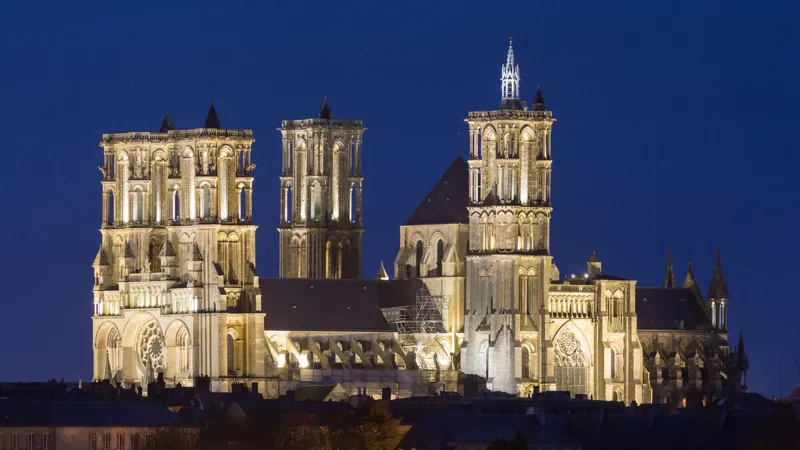
Aisne: Laon's Medieval Citadel and the Chemin des Dames
Discover the Aisne département: Laon's hilltop medieval city, the Chemin des Dames battlefields, Soissons, the Familistère de Guise and Champagne vineyards. Complete travel guide.
 Regions
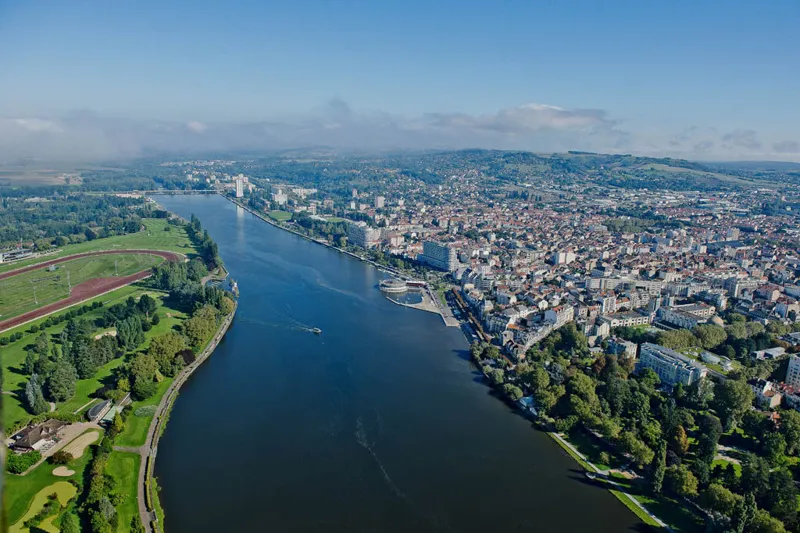
Allier: Vichy, Moulins and the Forest of Troncais
Discover the Allier: Vichy UNESCO spa town, Moulins ducal capital, the oak forest of Troncais and Bourbon-l'Archambault. Complete guide with practical tips.