Most travellers speed through the Allier on their way south without a second glance. That is their loss. This northernmost department of the Auvergne region harbours two unexpectedly elegant towns -- Vichy, a UNESCO-listed thermal city, and Moulins, the ducal capital -- along with the finest oak forest in Europe at Troncais, and a rolling bocage landscape where slow rivers and deep woods invite you to pause.
Vichy, Queen of Spa Towns
A UNESCO-Listed Thermal Heritage
Vichy is one of eleven Great European Spa Towns inscribed on the UNESCO World Heritage List in 2021. Its thermal history stretches back to Roman antiquity, but it was under Napoleon III that the town reached its zenith. The emperor stayed five times between 1861 and 1866, transforming a modest watering place into a lavish resort.
The Parc des Sources, in the heart of town, is a shaded garden bordered by the Halle des Sources, an elegant iron-and-glass gallery where you can sample the thermal waters free of charge -- some hot and sulphurous, others cool and sparkling. The experience is surprising and costs nothing. The Art Nouveau Grand Casino, the Opera House and the Hall des Sources form a remarkably cohesive architectural ensemble.
The Banks of the Allier
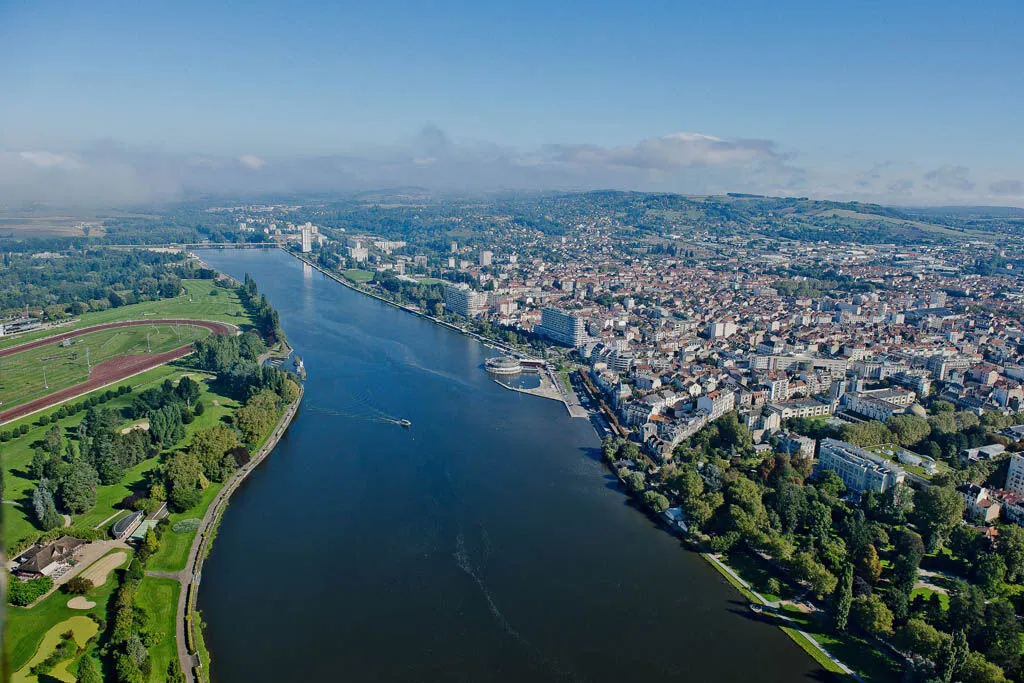
Napoleon III had the banks of the Allier landscaped into a promenade, creating a riverfront that recalls a seaside resort. Today, the Vichy lake (a five-kilometre artificial stretch on the river) is a hub for walking, rowing, canoeing and swimming. The plane-tree-lined banks are ideal for strolling or cycling. The Parc d'Allier, stretching over 100 hectares on the left bank, is the largest landscaped urban park in France.
Vichy Pastilles
The famous Vichy pastilles, small white lozenges flavoured with mint or anise, have been made since 1825 using mineral salts from the thermal springs. The Vichy Celestins shop in the town centre stocks the full range and tells the story of this confection turned national icon.
Moulins, Capital of the Dukes of Bourbon
The Master of Moulins Triptych
Moulins is the prefecture of the Allier and the former capital of the powerful Duchy of Bourbon. The Cathedral of Notre-Dame houses the Master of Moulins Triptych (circa 1498), a masterpiece of late-medieval French painting. The altarpiece depicts the Virgin in Glory flanked by Duke Pierre II of Bourbon and his wife Anne de Beaujeu, daughter of Louis XI. The colours are astonishingly fresh for a work more than five centuries old. Entry to the cathedral is free; a guided tour of the triptych costs around 5 euros.
The National Centre for Stage Costume
The CNCS is the only museum in the world devoted entirely to stage costume: opera, theatre, ballet and film. Housed in a former cavalry barracks, it displays collections from the Comedie-Francaise, the Paris Opera and the Bibliotheque nationale de France. The temporary exhibitions are spectacular. Expect to pay around 7 euros and spend 1h30 exploring.
The Old Town
The old quarter of Moulins, with its half-timbered houses from the fifteenth century, Renaissance mansions and the Jacquemart tower (a fourteenth-century clock whose automata strike the hours), rewards a leisurely wander. The Pavillon Anne de Beaujeu, one of the earliest Renaissance buildings in France, now houses the departmental museum.
The Forest of Troncais
Europe's Finest Oak Forest
The Forest of Troncais is widely considered the finest stand of sessile oaks in Europe. Its 10,600 hectares shelter trees that exceed 300 years in age and 40 metres in height. Planted under Colbert in the seventeenth century to supply the royal navy with shipbuilding timber, the forest is now managed by the French forestry commission and produces stave wood for wine barrels prized around the world.
Remarkable Trees
Several notable oaks are signposted along the trails: the Chene Sentinelle, the Chene de la Resistance and the Chene Stebbing (named after an English forester) are among the most impressive. Their colossal trunks and majestic canopies give a physical sense of the passage of time. Information panels explain the history and management of the forest.
Walks and Ponds
The forest offers more than 100 kilometres of marked trails for walkers, mountain bikers and horse riders. The ponds of Saint-Bonnet-Troncais, Pirot and Troncais punctuate the walks with tranquil stretches of water. The GR 46 long-distance path crosses the forest for about twenty kilometres. In autumn, the colours are superb and the forest fills with the scent of mushrooms and fallen leaves -- reason enough for the detour.
Bourbon-l'Archambault, Cradle of the Bourbons
The Fortress and the Spa
Bourbon-l'Archambault is the birthplace of the Bourbon dynasty, which gave its kings to France, Spain and Naples. The imposing ruins of the medieval fortress, with three surviving towers looming over the village, testify to that former greatness. A guided tour (around 5 euros) traces the history of the Bourbon family from the tenth century onward.
The town also has a thermal establishment fed by hot springs at 53 degrees, known since antiquity. Rheumatology cures still draw visitors, and the peaceful atmosphere of the village offers a welcome contrast to the bustle of Vichy.
Madame de Montespan
Madame de Montespan, the celebrated mistress of Louis XIV, was born and died in Bourbon-l'Archambault. Her memory lingers in the town, and several walking routes evoke her turbulent life between the court at Versailles and her native soil.
Souvigny, the Bourbon Saint-Denis
The Priory of Souvigny, founded in the tenth century, is the burial place of the earliest lords of Bourbon. Its priory church, one of the largest in the region, contains sculpted tombs and a remarkable Romanesque zodiac pillar. The priory garden and the adjoining museum (around 5 euros) complete a peaceful and enlightening visit into the origins of the dynasty.
Bourbonnais Food and Drink
The Allier is a land of honest, generous cooking:
- Pate aux pommes de terre, a puff-pastry pie filled with potatoes, cream and parsley, is the emblematic dish of the Bourbonnais
- Pompe aux grattons, a brioche studded with crispy pork-fat cracklings
- Charolais beef, exceptional cattle raised in the western pastures of the department
- Saint-Pourcain wines, from one of the oldest vineyards in France (predating Bordeaux), producing crisp whites and light reds well worth rediscovering
Practical Tips
When to Visit
Spring and autumn are the best seasons. Summer is pleasant but can be hot on the plains. Autumn (September to October) is ideal for the Forest of Troncais. Vichy is lively all year thanks to its cultural calendar.
Getting Around
Vichy and Moulins are linked to Paris by train (about 3 hours). Vichy station is served by Intercites services. A car is essential for the Forest of Troncais and Bourbon-l'Archambault. The A71 motorway (Paris to Clermont-Ferrand) crosses the department.
How Long to Stay
Allow 3 to 4 days: Vichy and the banks of the Allier (1 day), Moulins and Souvigny (1 day), the Forest of Troncais (1 day), Bourbon-l'Archambault and the Saint-Pourcain vineyard (1 day).
Budget
Accommodation ranges from 40 to 70 euros per night for a budget hotel or quality campsite, 70 to 120 euros for a B&B or boutique hotel, and 120 to 200 euros for high-end establishments. A restaurant lunch costs 12 to 20 euros, dinner 20 to 35 euros. Local markets and picnics are an excellent way to eat well while keeping costs down. Many activities are free: hiking, village strolls, markets, churches. Paid museums and sites average 5 to 12 euros per person. To save money, book rural gites by the week, opt for weekday lunch menus, and take advantage of free tastings at local producers.
Explore on the map
Map →📚 Related collections
Related guides
 Regions
Ain: Bresse, Dombes and Pays de Gex
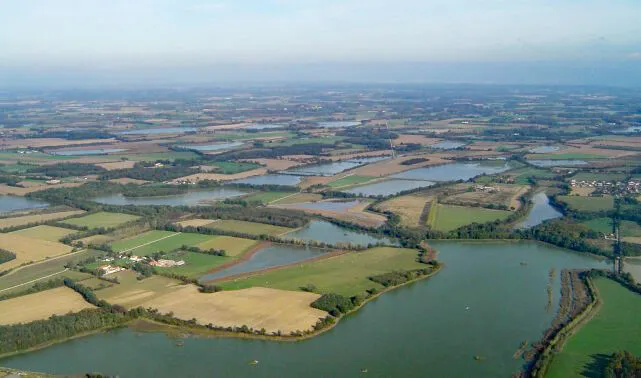
Discover the Ain: world-famous Bresse poultry, the thousand ponds of the Dombes, Pays de Gex facing Mont Blanc and the emerald gorges of Nantua. Complete guide.
 Regions
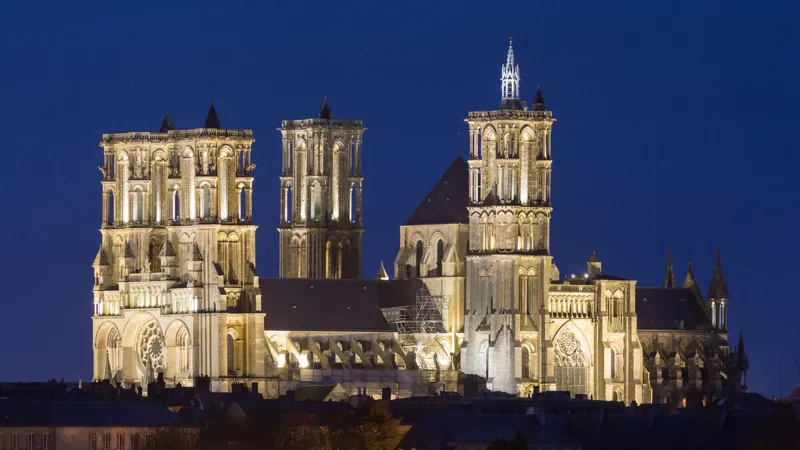
Aisne: Laon's Medieval Citadel and the Chemin des Dames
Discover the Aisne département: Laon's hilltop medieval city, the Chemin des Dames battlefields, Soissons, the Familistère de Guise and Champagne vineyards. Complete travel guide.