Travellers often speed toward Provence or Brittany without stopping, yet northern France holds one of the densest concentrations of heritage in the country. Gothic cathedrals competing for height, UNESCO-listed Flemish belfries, Great War memorials, warm estaminets and a wild, windswept coast: this region, a thousand-year crossroads of Flemish, Picard and Artesian cultures, surprises everyone who takes the time to explore it.
Lille: Flemish Soul, French Heart
Lille has undergone one of the most remarkable transformations of any European city. Once a gritty industrial capital, it reinvented itself around culture and conviviality without losing an ounce of its northern character. Today it is a place of genuine warmth, superb food and architectural beauty that catches newcomers off guard.
Vieux-Lille and the Grand'Place
The old quarter of Vieux-Lille is a feast of Flemish baroque architecture: facades of golden stone and rose-coloured brick, stepped gables, carved ornaments and tall sash windows that recall Ghent or Bruges more than Paris. Start at the Grand'Place (officially Place du Général-de-Gaulle, who was born here), anchored by the Goddess Column and the magnificent seventeenth-century Vieille Bourse, whose arcaded courtyard hosts booksellers and chess players every afternoon. From there, wander the cobbled streets toward the Hospice Comtesse, a medieval hospital turned museum that offers a quiet window into Flemish daily life from the fifteenth to the eighteenth century.
Palais des Beaux-Arts
The Palais des Beaux-Arts is often cited as the finest art museum in France outside the Louvre, and a single visit makes the claim feel modest. Rubens, Van Dyck, Goya, Delacroix, Monet and Raphael hang in beautifully restored galleries. In the basement, an extraordinary collection of relief maps — scale models of fortified towns commissioned by Louis XIV — reveals the military mind of Vauban in three dimensions. Entry is about 7 euros (free on the first Sunday of the month). Allow at least two hours, more if painting is your passion.
The Braderie de Lille
If you can visit Lille only once, aim for the first weekend of September. The Braderie de Lille is the largest flea market in Europe: for two days and two nights, over two million people pour through 100 kilometres of stalls selling everything from antique silverware to vintage vinyl records. The entire city becomes a street party. Tradition dictates that you eat moules-frites at every opportunity, and restaurant owners stack the empty shells in towering pyramids outside their doors — the highest pile wins bragging rights. Book accommodation months ahead; the city fills completely.
The Bay of the Somme: Where Sky Meets Sea
Ranked among the most beautiful bays in the world alongside Ha Long Bay and the Bay of Mont-Saint-Michel, the Baie de Somme is an immense estuary where vast skies, shifting sands and tidal flats merge into a landscape of extraordinary luminosity.
Seals at Pointe du Hourdel
A permanent colony of harbour seals and grey seals lives in the bay year-round, and watching them from the shore is one of northern France's most memorable wildlife experiences. The best vantage point is the Pointe du Hourdel, at low tide, when the seals haul themselves onto exposed sandbanks. Bring binoculars, keep the mandatory 300-metre distance, and time your visit around low tide for the best sightings. Observation is free, but joining a local naturalist guide (about 10 euros per person) adds depth to the encounter.
Marquenterre Bird Sanctuary
Part of the wider Somme Bay nature reserve, the Parc du Marquenterre is one of Europe's premier birdwatching sites. Three waymarked trails (ranging from 45 minutes to 3 hours) wind through dunes, marshes and woodland, with observation hides where you can spot spoonbills, avocets, grey herons and, with luck, nesting white storks. Entry is about 10 euros. Pack a picnic and binoculars for the full experience.
Saint-Valery-sur-Somme and the Steam Railway
The medieval town of Saint-Valery-sur-Somme, perched on a headland overlooking the bay, charms visitors with its ramparts, flower-lined lanes and old fishermen's cottages. Tradition holds that William the Conqueror sailed from here to invade England in 1066. For a different perspective on the bay, board the Chemin de fer de la Baie de Somme, an authentic heritage steam railway that runs between Saint-Valery and Le Crotoy along the estuary. The round trip takes about 2 hours and costs around 15 euros — a delight for all ages.
The Cathedrals: Birthplace of Gothic
Northern France is where Gothic architecture was born, and the region holds a concentration of cathedrals unmatched anywhere on earth. Three stand out for their sheer ambition.
Amiens Cathedral
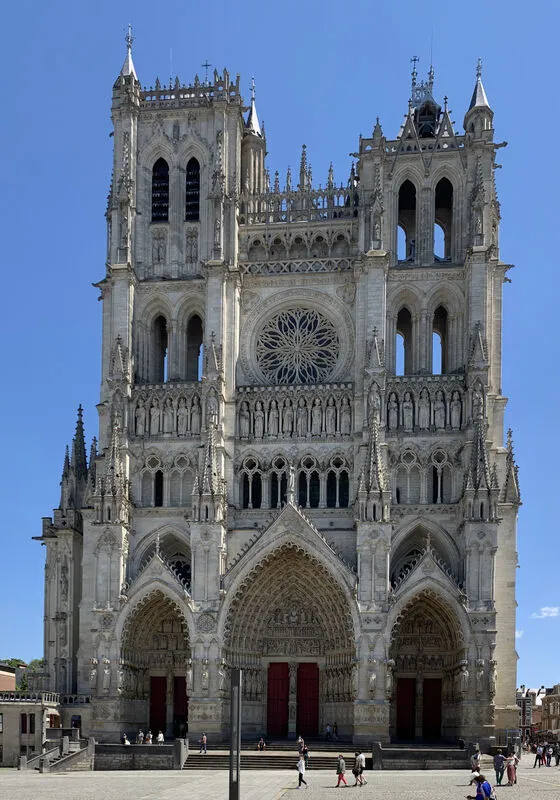
Notre-Dame d'Amiens, a UNESCO World Heritage Site, is the largest Gothic cathedral in France. Its nave could swallow Notre-Dame de Paris twice over. Inside, the proportions feel almost impossible, and the sixteenth-century oak choir stalls — carved with over 4,000 figures depicting biblical scenes and daily medieval life — are among the finest wood carvings in existence. From June to September and again in December, the western facade comes alive with a polychrome light show that restores the original painted colours of the medieval statuary. The show is free and begins at nightfall. It is one of the most magical spectacles in all of France.
Laon Cathedral
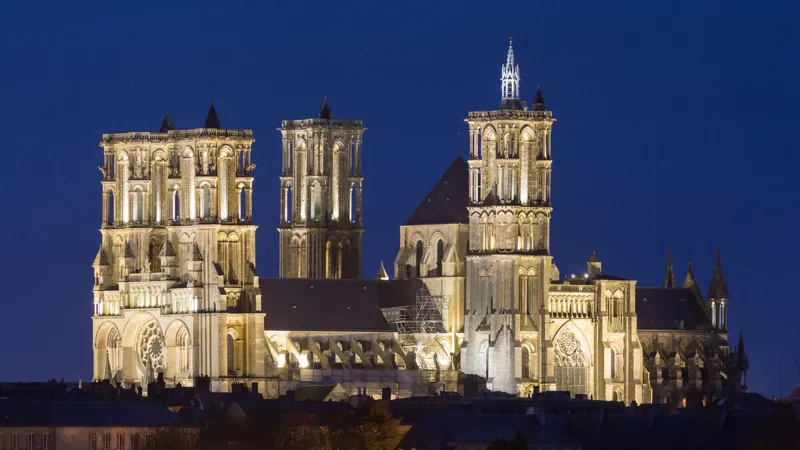
Laon Cathedral occupies a dramatic hilltop setting visible from miles across the Picardy plain. Its towers are adorned with life-sized stone oxen — a tribute to the beasts that hauled the building stone up the hill. Less famous than Amiens, Laon is considered by art historians as one of the purest expressions of early Gothic architecture. The climb to the upper town, through steep streets or aboard the Poma, a small automated funicular, is part of the pleasure.
Beauvais Cathedral
The Cathedral of Saint-Pierre de Beauvais holds a record that no one has ever surpassed: its Gothic choir vault soars to 48 metres, the tallest ever achieved in the Middle Ages. The builders' limitless ambition nearly destroyed the project — the nave was never completed after a partial collapse — but it is precisely that audacity that makes the building so thrilling to stand inside. The nineteenth-century astronomical clock, composed of 90,000 parts, is worth the visit on its own.
The Opal Coast
The Cote d'Opale takes its name from the opalescent shimmer of the sea under the ever-changing skies of the Pas-de-Calais. It is a coastline of wild grandeur, shaped relentlessly by wind and tide.
Cap Blanc-Nez and Cap Gris-Nez
The twin headlands of Cap Blanc-Nez and Cap Gris-Nez form the Grand Site de France des Deux Caps, one of the most spectacular stretches of coast in northern Europe. Cap Blanc-Nez is a towering chalk cliff rising 134 metres above the sea; on a clear day, the white cliffs of Dover are plainly visible across the Channel. Cap Gris-Nez, the closest point to England at just 28 kilometres, is the place to watch the ceaseless parade of ships through the strait. The coastal walk between the two capes along the GR trail (about 10 kilometres, 3 hours) ranks among the finest cliff-top hikes in France. Between the capes, the wild beach of Wissant draws land-yachting and kitesurfing enthusiasts from across northern Europe. Be warned: the wind on these cliffs can be fierce, particularly in winter.
Le Touquet-Paris-Plage
Created as an elegant resort in the late nineteenth century, Le Touquet has kept its Belle Epoque charm intact: Anglo-Norman villas set among pine forests, an Art Deco seafront and a relaxed yet refined atmosphere. Stroll the promenade, rent a bicycle to explore the forest paths, or treat yourself to afternoon tea at the stately Westminster Hotel. Le Touquet also makes an excellent base for exploring the wilder beaches stretching southward.
Chantilly: Art, Horses and Whipped Cream
On the southern edge of the region, Chantilly occupies its own world of aristocratic elegance, blending art, nature and equestrian tradition in an unforgettable setting.
The Chateau and the Musee Conde
The Chateau de Chantilly houses the Musee Conde, the second-largest collection of old master paintings in France after the Louvre. Works by Raphael, Poussin, Ingres and Delacroix hang in rooms whose arrangement has not changed since the nineteenth century, honouring the will of the Duke of Aumale who bequeathed the estate to the nation. The grounds, designed by Le Notre, cover 115 hectares of formal French gardens, English landscape gardens and ornamental canals. Entry to the estate and museum costs about 17 euros; allow at least half a day. The Great Stables, considered the finest in Europe, host equestrian shows and a museum of the horse. And do not leave without tasting Chantilly cream on site — legend credits its invention to Vatel, the chateau's seventeenth-century maitre d'hotel. The surrounding Forest of Chantilly, stretching across 6,300 hectares, offers walking and cycling trails open to all.
World War I Battlefields
The Hauts-de-France bears the scars of the First World War more visibly than any other region in Europe. Visiting these sites is a pilgrimage that leaves a deep and lasting impression.
The Thiepval Memorial and the Somme
The Thiepval Memorial, a vast brick arch designed by Edwin Lutyens, bears the names of 72,337 British and South African soldiers who fell during the 1916 Battle of the Somme and have no known grave. The free interpretation centre traces a battle that claimed over one million casualties in five months. The silence that hangs over these fields, now green and peaceful, is profoundly moving.
Vimy Ridge and the Chemin des Dames
Vimy Ridge, stormed by Canadian troops in April 1917, has become a founding site of Canadian national identity. The soaring white marble memorial dominates the Artois plain. Visitors can walk through restored trenches and underground tunnels with Canadian student guides. Further south, the Chemin des Dames, scene of the disastrous Nivelle Offensive of 1917, is home to the Caverne du Dragon, an underground quarry turned museum of tunnel warfare.
Northern Gastronomy
The food of the Hauts-de-France mirrors its people: hearty, honest and deeply satisfying.
The welsh — a gratin of cheddar melted in dark beer, poured over toast and served with chips — is the signature dish of Lille's estaminets, the region's cosy traditional taverns. Carbonnade flamande, beef braised slowly in dark beer with gingerbread, and ficelle picarde, a crepe stuffed with mushrooms, ham and cream then gratineed, compete for the title of quintessential regional dish. Moules-frites (mussels and chips) are a sacred ritual, especially during the Braderie. Among cheeses, Maroilles reigns supreme — a pungent, orange-rinded washed cheese that stars in the region's famous flamiche and tarts. For something sweet, the betises de Cambrai, mint-flavoured boiled sweets born from a happy manufacturing accident, have been a classic since 1830. Northern France is also serious brewing country. Seek out 3 Monts, Ch'ti or Jenlain, all biere de garde styles with rich, complex flavours, ideally sampled in an estaminet beside a crackling fire.
Practical Tips
Getting There
Lille is just one hour from Paris by TGV and 1 hour 20 minutes from London by Eurostar, making it one of the best-connected cities in Europe. For the coast, the Somme Bay or the battlefields, a car is strongly recommended. Rentals start from about 30 euros per day.
Best Time to Visit
The region is at its best from May to September, with long days and mild temperatures. The first weekend of September is essential for the Braderie de Lille. Summer brings the polychrome light shows at Amiens Cathedral and the best conditions for seal-watching in the Somme Bay. Autumn and winter have their own appeal: dramatic light on the Opal Coast cliffs, the warmth of estaminets and atmospheric Christmas markets across the region.
Budget
Accommodation ranges from 50 to 80 euros per night for a budget hotel, 80 to 130 euros for a B&B or charming hotel, and 130 to 220 euros for upscale options. A restaurant lunch runs 14 to 22 euros, dinner 25 to 40 euros. Local farmers' markets provide excellent produce for picnics at reasonable prices. Hiking, village exploration and most churches are free. Paid sites and museums cost 6 to 15 euros per person. To keep costs in check, look for weekday set-lunch menus, stay in rural gites or quality campsites, and enjoy the free tastings many local producers offer.
Explore on the map
Map →📚 Related collections
Related guides
 Regions
Ain: Bresse, Dombes and Pays de Gex
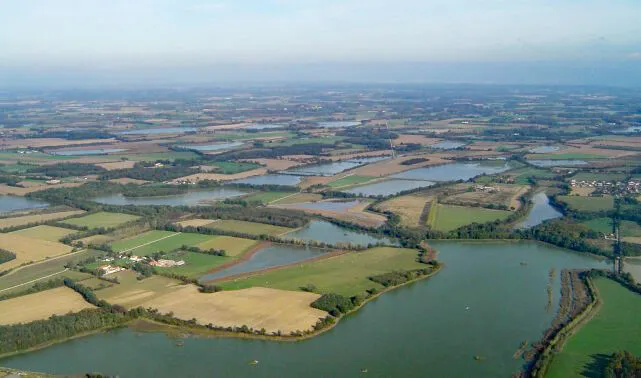
Discover the Ain: world-famous Bresse poultry, the thousand ponds of the Dombes, Pays de Gex facing Mont Blanc and the emerald gorges of Nantua. Complete guide.
 Regions
Aisne: Laon's Medieval Citadel and the Chemin des Dames
Discover the Aisne département: Laon's hilltop medieval city, the Chemin des Dames battlefields, Soissons, the Familistère de Guise and Champagne vineyards. Complete travel guide.