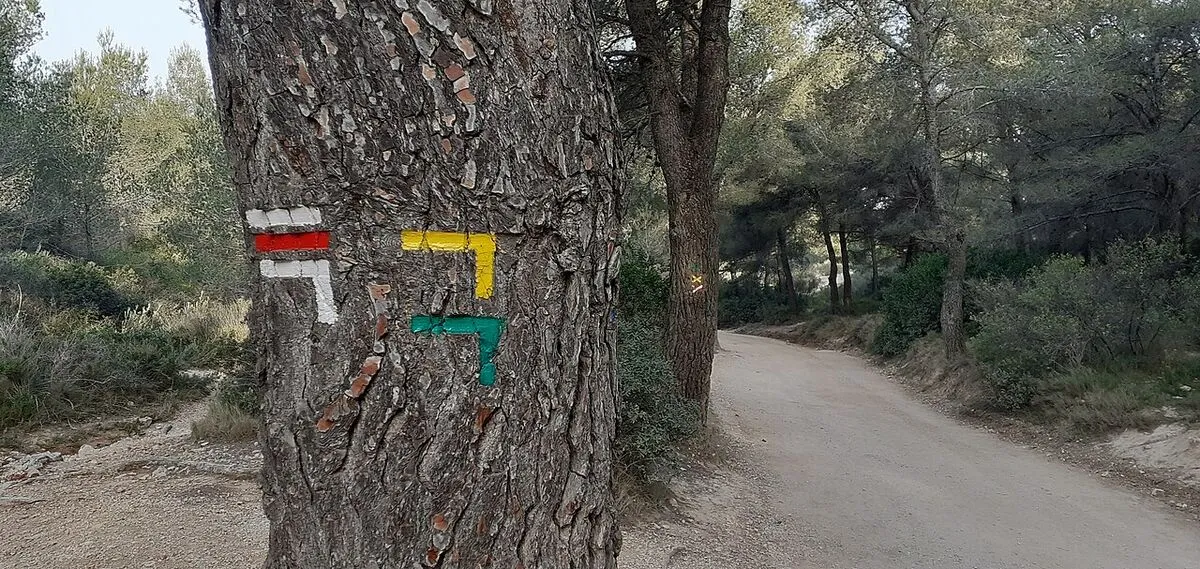
Marseille is not a city you visit -- it is a city you live. France's second city blazes with raw Mediterranean energy, from its tumultuous Old Port to the limestone calanques sculpted along its coastline. The Bouches-du-Rhone department also encompasses the wild Camargue, the Alpilles beloved by Van Gogh, and Aix-en-Provence, city of fountains and light where Cezanne painted his Sainte-Victoire mountain from every angle.
Marseille: A World City
Marseille is the oldest city in France, founded by Greek traders around 600 BC. It is also the most diverse, the most energetic and the most unpredictable. It is a city that demands time and repays curiosity generously.
The Vieux-Port and Le Panier
The Vieux-Port has been the heartbeat of Marseille for 2,600 years. Every morning, a fish market livens the Quai des Belges, where fishermen sell the night's catch straight off the boat. The quayside walk passes under Norman Foster's mirror canopy, a glittering steel structure that reflects the harbour and the sky. Behind the port, the Panier quarter, the oldest neighbourhood in the city, is a maze of colourful lanes, stairways and small squares where street art, artist workshops and traditional soap-makers coexist. The Vieille Charité, a seventeenth-century almshouse with a baroque chapel, now houses archaeology and African art museums (entry about 6 euros).
Notre-Dame de la Garde
The basilica of Notre-Dame de la Garde, affectionately called La Bonne Mère, watches over Marseille from a hilltop 162 metres above the sea. The walk up from the Vieux-Port takes roughly 30 minutes. The neo-Byzantine interior, ablaze with gold mosaics and hung with maritime ex-votos, is striking. Entry is free. The 360-degree panorama from the terrace takes in the city, the Frioul islands, the Château d'If, and on clear days, Mont Ventoux on the horizon.
MuCEM
The MuCEM (Museum of European and Mediterranean Civilisations), opened in 2013, has become a symbol of Marseille's reinvention. Its architecture of concrete and mineral lattice, designed by Rudy Ricciotti, is spectacular in itself. Permanent and temporary exhibitions explore Mediterranean civilisations from antiquity to the present (entry about 11 euros). A footbridge connects the museum to the seventeenth-century Fort Saint-Jean, creating a unique architectural walk between sea and heritage. A single ticket covers both sites.
The Calanques National Park
The Parc National des Calanques, established in 2012, protects a coastline of sheer limestone cliffs plunging into turquoise water between Marseille and Cassis. It is the only peri-urban national park in Europe.
Sormiou and Sugiton
The Calanque de Sormiou, reachable by car out of season or by a 45-minute trail from the Col de la Gineste, is one of the largest inlets. Its two seaside fish restaurants are a Marseille institution — book well ahead in summer. The Calanque de Sugiton, reached in 30 minutes from the Luminy university campus, offers crystalline swimming in a dramatic mineral amphitheatre. Access to the calanques is regulated in summer due to fire risk: check the park's website on the morning of your visit to confirm opening.
En-Vau and Cassis
The Calanque d'En-Vau is the most spectacular of all: a narrow fjord flanked by sheer cliffs and needle-like rock pinnacles, with a pebble beach lapped by emerald water. Allow 90 minutes on foot from the Port-Miou car park in Cassis. Cassis itself is an elegant fishing port beneath a medieval castle. Boats depart from the harbour for calanques excursions (3 calanques: about 18 euros, 45 minutes; 8 calanques: about 28 euros, 90 minutes). The white wine of Cassis, dry and mineral, pairs perfectly with the local shellfish.
Aix-en-Provence
Aix-en-Provence is the elegant counterpoint to gritty Marseille. An aristocratic university city, it charms with its fountains, its townhouses and the quality of light that captivated Cézanne for a lifetime.
Cours Mirabeau and the Old Centre
The Cours Mirabeau, a grand boulevard shaded by ancient plane trees, divides the old town from the Quartier Mazarin. Mossy fountains, including the celebrated Fontaine de la Rotonde, punctuate the promenade. The pedestrianised streets to the north overflow with boutiques, galleries and bakeries where you can taste the calisson d'Aix, the city's signature almond-and-melon confection. The Place Richelme market, held every morning, is a sensory riot of Provençal produce.
In the Footsteps of Cézanne
The Cézanne trail, marked by bronze studs in the pavement, leads from the painter's birthplace to his Atelier des Lauves (entry 6.50 euros), preserved much as he left it, with still-life objects and unfinished canvases. The trail continues to the hillside viewpoint where he painted his obsessive studies of the Montagne Sainte-Victoire, the limestone ridge that dominates the Aix skyline. Allow half a day for the full walking circuit.
Arles: Between Rome and Van Gogh
Arles is an open-air museum, inscribed on the UNESCO World Heritage list for its Roman and Romanesque monuments.
The Amphitheatre and Roman Heritage
The Roman amphitheatre of Arles (Les Arènes), built in the first century AD, once seated 20,000 spectators. Today it hosts Camargue-style bull games and cultural events (entry about 9 euros). The ancient theatre, the Baths of Constantine and the Alyscamps (a Roman necropolis later painted by both Van Gogh and Gauguin) round out an exceptional ancient heritage. A combined monument pass costs about 15 euros and covers all the major sites.
Van Gogh's Arles
Vincent van Gogh spent fifteen transformative months in Arles in 1888-1889, producing more than 300 works including The Night Café and The Bedroom. A signposted trail leads to the locations he painted, with reproductions set beside the actual views. The Fondation Vincent Van Gogh (entry about 10 euros) stages contemporary art exhibitions in dialogue with Van Gogh's legacy. Every June, the Rencontres de la Photographie transform churches, cloisters and warehouses into one of the world's most important photography festivals.
The Camargue
The Camargue, the vast delta of the Rhône, is a world apart: flat, wild and liquid. This territory of salt marshes, pink lagoons and rice paddies shelters extraordinary wildlife.
Flamingos and White Horses
Greater flamingos, present in their thousands, are the stars of the Camargue. The Parc Ornithologique du Pont de Gau (entry about 8 euros) allows you to observe them at close range along well-maintained boardwalks. The white Camargue horses and black Camargue bulls roam freely across the marshes. Horseback rides through the wetlands are offered from Saintes-Maries-de-la-Mer (about 35 euros for 90 minutes). Saintes-Maries-de-la-Mer, a small seaside town famous for its Roma pilgrimage, is the ideal base for exploring the delta by bike, horseback or boat.
Les Baux-de-Provence
The fortress village of Les Baux-de-Provence, perched on a spur of the Alpilles limestone ridge, commands views stretching to the sea. The ruined castle (entry about 10 euros) features working reconstructions of medieval siege engines. At the foot of the village, the Carrières de Lumières (entry about 16 euros), a former quarry converted into an immersive digital art experience, projects animated masterworks onto 14-metre-high rock walls in a mesmerising spectacle of light and sound.
Practical Tips
Getting There and Around
Marseille-Provence airport and the TGV stations at Marseille Saint-Charles and Aix-en-Provence connect to Paris in about 3 hours. Regional buses and trains serve Arles and major towns. A car is necessary for the Camargue and the more remote calanques trailheads.
When to Visit
April to June and September to October offer the best conditions. Summer is very hot and some calanques trails close due to fire risk. Winter is mild and the calanques are blissfully empty of tourists — a well-kept local secret.
Budget
This area is pricier than the French average, especially in high season. Expect to pay 70 to 110 euros per night for a decent hotel, 110 to 170 euros for a charming B&B or boutique hotel, and 170 to 300 euros for premium establishments. Meals range from 18 to 28 euros for lunch to 30 to 55 euros for dinner. To save money, book well in advance, stay slightly away from the most touristy zones (prices drop 20-30%), eat at markets and local food stalls rather than seafront restaurants, and take advantage of the many free activities: hiking, beaches, village walks, panoramic viewpoints.
Explore on the map
Map →📚 Related collections
Related guides
 Regions
Ain: Bresse, Dombes and Pays de Gex
Discover the Ain: world-famous Bresse poultry, the thousand ponds of the Dombes, Pays de Gex facing Mont Blanc and the emerald gorges of Nantua. Complete guide.
 Regions
Aisne: Laon's Medieval Citadel and the Chemin des Dames
Discover the Aisne département: Laon's hilltop medieval city, the Chemin des Dames battlefields, Soissons, the Familistère de Guise and Champagne vineyards. Complete travel guide.