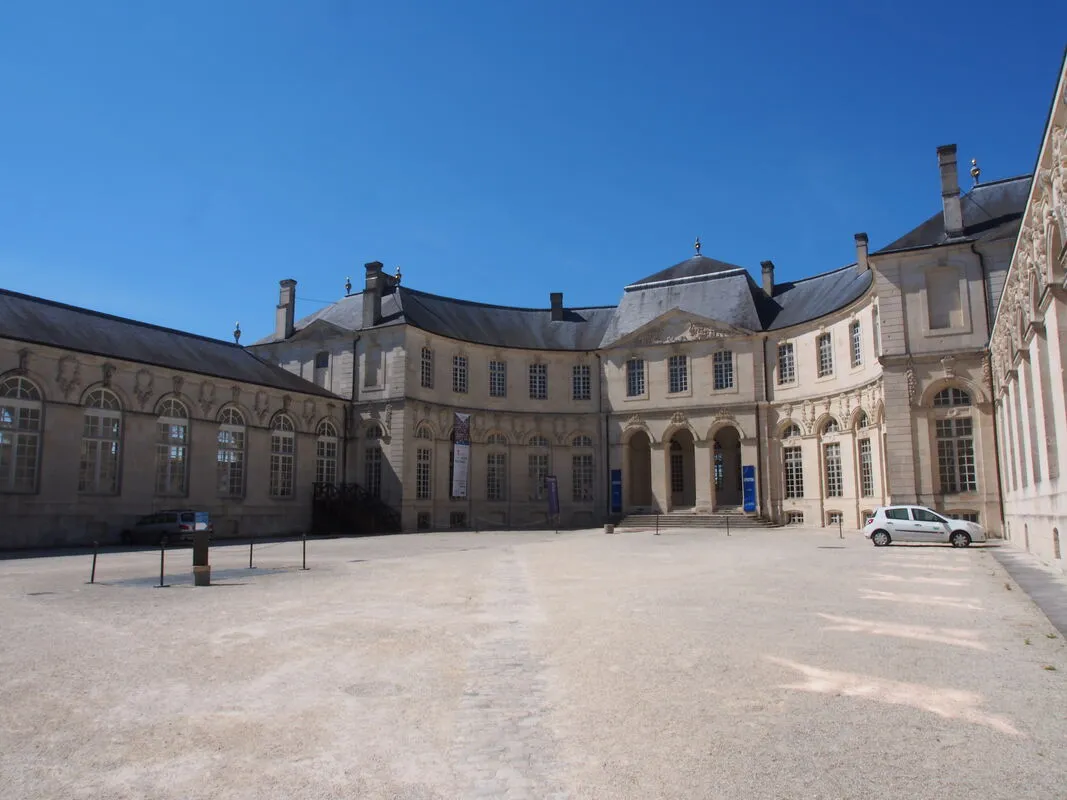
The name Verdun echoes around the world. In 1916, 700,000 soldiers fell here in ten months of battle. The Meuse carries that memory with gravity, but this department crossed by the river of the same name is also a land of deep forests, white cliffs, golden mirabelle plums in September, and dragees invented in Verdun more than seven centuries ago.
Verdun: The Memory of 1916
The Battle of Verdun (21 February – 18 December 1916) was one of the longest and most devastating engagements of the First World War: 300 days of relentless fighting, approximately 700,000 casualties (killed, wounded, missing) on both sides, and a lunar landscape of craters and trenches across some 30 kilometres. Verdun has become the universal symbol of the soldier's suffering and the absurdity of industrialised warfare.
The Douaumont Ossuary
The Douaumont Ossuary is the most powerful monument on the battlefield. This 137-metre-long building, surmounted by a 46-metre lantern tower visible for kilometres, houses the unidentified remains of approximately 130,000 French and German soldiers. Through small windows along the base of the facade, visitors can see the stacked bones — a sight of overwhelming force. In front of the ossuary, a cemetery of 16,142 white crosses stretches as far as the eye can see. Entry to the ossuary is free; climbing the tower costs around 6 euros and provides a panorama of the entire battlefield.
The Verdun Memorial
The Verdun Memorial (environ 12 euros), completely renovated in 2016, is one of the finest First World War museums in Europe. Conceived at the initiative of soldier-writer Maurice Genevoix, it immerses the visitor in the daily experience of the soldiers: personal belongings, letters, weapons, trench reconstructions, and audio-visual testimonies. The two-level exhibition is of rare emotional intensity. Allow 2 to 3 hours.
Fort Douaumont and Fort Vaux
Fort Douaumont (environ 5 euros), the largest of the fortified works in the sector, was captured by a small German commando on 25 February 1916, just four days after the offensive began. Its recapture on 24 October cost thousands of lives. Touring the casemates, underground corridors, and upper observation post gives a vivid sense of the conditions of combat.
Fort Vaux (environ 5 euros) was the scene of one of the battle's most heroic episodes. Surrounded and cut off from water, Major Raynal and his garrison held out for seven days before surrendering. Their carrier pigeon, "le Vaillant," the last messenger sent before capitulation, was awarded the Légion d'honneur. The visit is particularly moving.
The Destroyed Villages
Nine villages on the battlefield were totally obliterated during the fighting and were never rebuilt. Officially declared "dead for France", they retain a mayor appointed by the prefect and still appear on maps. Signs mark the locations of streets, houses, the church, and the cemetery in a landscape of forest that has reclaimed the ruins. Fleury-devant-Douaumont and Douaumont are the most accessible and the most affecting. Visits are free and self-guided.
The Town of Verdun
Beyond the battlefield, the town of Verdun is worth lingering in. The Cathedral of Notre-Dame (10th–12th century), perched on the hill, is one of the oldest Romanesque buildings in Lorraine. The World Centre for Peace (around 8 euros), housed in the former bishops' palace, stages exhibitions on contemporary conflict and Franco-German reconciliation. The Meuse riverbanks, lined with colourful houses, make for a pleasant stroll.
Verdun is also famous for its dragées — sugar-coated almonds whose manufacture dates back to the 13th century. The Braquier factory (free tour) carries on the tradition. Expect to pay 8 to 15 euros for a souvenir box.
Bar-le-Duc: The Renaissance Upper Town
Bar-le-Duc, préfecture of the Meuse, is an unexpected discovery. Its upper town, perched on a rocky spur, preserves a remarkable Renaissance ensemble: mansions of pale ashlar stone, carved facades, carriage entrances, and elegant inner courtyards. The strikingly homogeneous district is one of the finest Renaissance quarters in eastern France.
The Church of Saint-Étienne contains a macabre and fascinating work: the Transi of René de Chalon (1547), a sculpture by Ligier Richier depicting a standing skeleton holding its own heart aloft towards heaven. Anatomically startling and artistically brilliant, it is one of the most famous works of the French Renaissance. Entry is free.
Bar-le-Duc is also renowned for its redcurrant jam seeded with a goose quill — a product unique in the world, whose artisanal production is classified as intangible heritage. It can be found in local delicatessens (environ 12 to 18 euros per jar).
Lac de Madine
Lac de Madine, at the heart of the Lorraine Regional Natural Park, is an 1,100-hectare artificial lake offering welcome nature and leisure activities. Supervised swimming in summer (free), sailing, canoeing, mountain biking, hiking, and birdwatching: the lake is an ideal base for families and outdoor enthusiasts. The trail circling the lake (~35 kilometres) passes through meadows, forests, and wetlands rich in migratory birds.
The Côtes de Meuse and the Voie Sacrée
The Côtes de Meuse, east-west-running limestone hills, support a small but increasingly respected vineyard. Meuse wine (IGP designation) produces light Pinot Noir reds and fragrant Auxerrois whites. The wine villages of Combres-sous-les-Côtes and Vigneulles-lès-Hattonchâtel offer tastings in a bucolic setting.
The Voie Sacrée (Sacred Way), a 56-kilometre road between Bar-le-Duc and Verdun, was the battle's lifeline: day and night, convoys of trucks ferried men, ammunition, and supplies to the front. Commemorative milestones mark the route, now a peaceful country road.
Saint-Mihiel and Hattonchâtel
Saint-Mihiel, on the banks of the Meuse, preserves a remarkable Entombment by Ligier Richier (1554–1564) in the Church of Saint-Étienne — a sculptural group of thirteen life-size figures of striking realism. The hilltop village of Hattonchâtel, rebuilt after the war with the patronage of an American benefactress, offers a magnificent panorama over the Woëvre plain from its restored castle.
Practical Information
- When to visit: April to October; the commemorations around 11 November and 21 February (the battle's start) are particularly solemn
- Getting around: a car is essential; Verdun is 3 hours from Paris by road, reachable by regional train from Metz (1 hour 15 minutes)
- Budget: a very affordable département — 50 to 75 euros per double room, 12 to 18 euros for a meal
- Suggested duration: 2 to 3 days for Verdun and the battlefield; add 1 day for Bar-le-Duc and Lac de Madine
- Don't miss: the Douaumont Ossuary, the Verdun Memorial, the upper town of Bar-le-Duc, and a walk through the destroyed villages
Explore on the map
Map →📚 Related collections
Related guides
 Regions
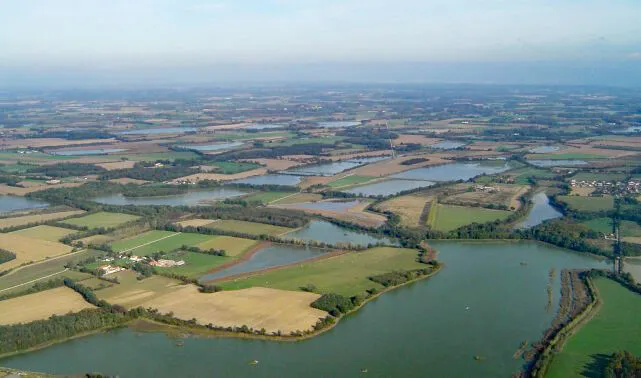
Ain: Bresse, Dombes and Pays de Gex
Discover the Ain: world-famous Bresse poultry, the thousand ponds of the Dombes, Pays de Gex facing Mont Blanc and the emerald gorges of Nantua. Complete guide.
 Regions
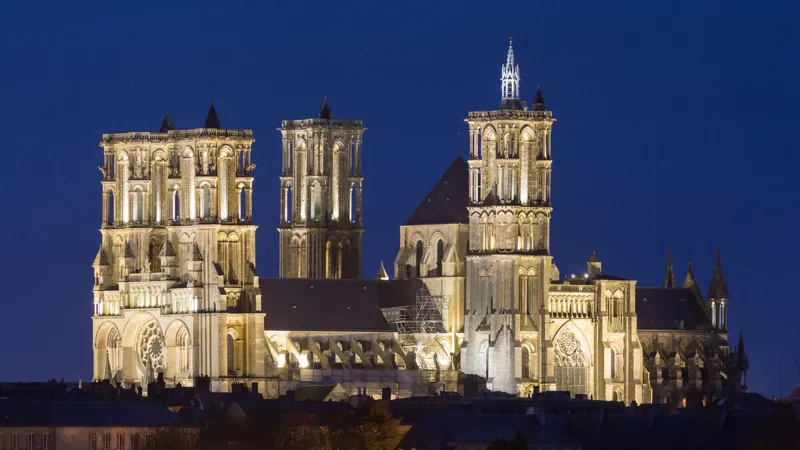
Aisne: Laon's Medieval Citadel and the Chemin des Dames
Discover the Aisne département: Laon's hilltop medieval city, the Chemin des Dames battlefields, Soissons, the Familistère de Guise and Champagne vineyards. Complete travel guide.