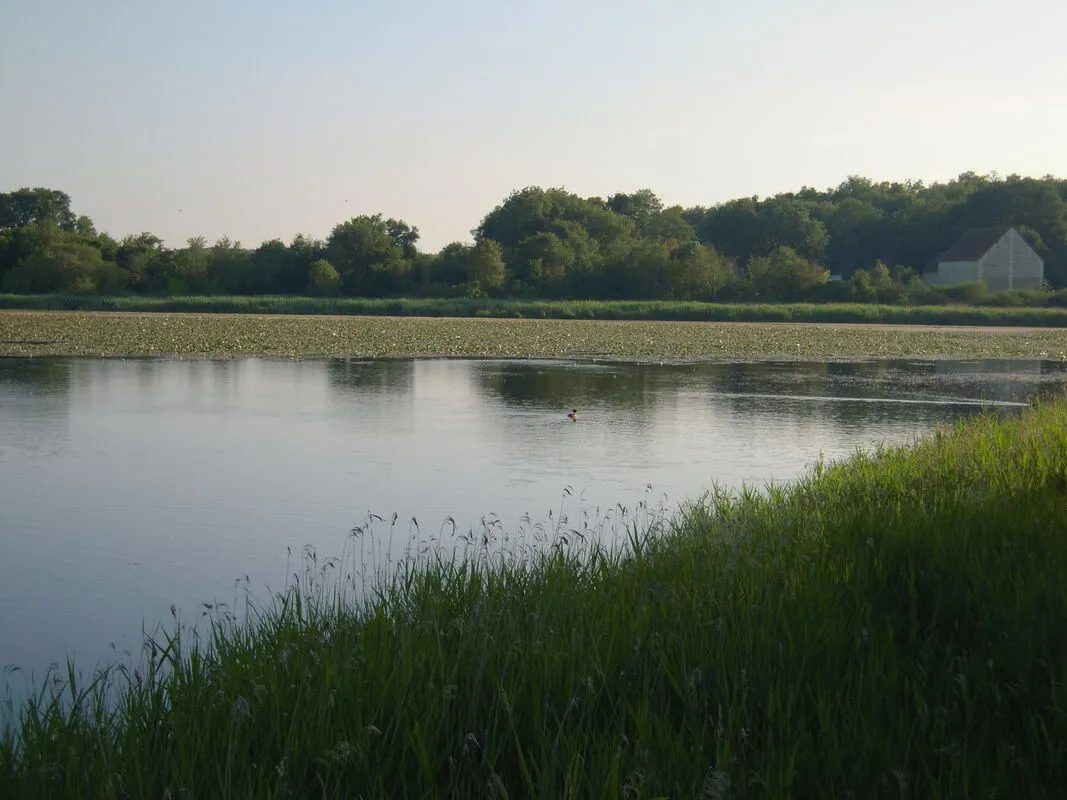
George Sand lived and wrote at Nohant, in the Berry, and her novels still carry the scent of the Indre's meadows. This most secretive department of the Centre-Val de Loire has no world-famous chateau, no star vineyard, no UNESCO cathedral. And that is precisely its charm: the Brenne with its thousand ponds, the forests around Chateauroux, and a deep quiet that is increasingly rare elsewhere.
Nohant: In George Sand's Footsteps
The George Sand Estate at Nohant (~8 euros) is one of the most moving literary sites in France. It was in this Berry manor house that Aurore Dupin — who became George Sand — lived, wrote, and entertained the greatest minds of her age. Chopin composed some of his finest works here, Delacroix painted here, and Liszt, Balzac, Flaubert and Turgenev all stayed as guests.
The guided tour (about one hour) passes through the drawing rooms, Chopin's bedroom with his piano, the puppet theatre Sand created for her granddaughters, and the romantic garden that slopes down into the countryside. The atmosphere remains intact: you feel you have stepped into suspended time, the 19th-century Berry world that Sand immortalised in her novels.
George Sand's Berry
Around Nohant, the landscape is exactly what Sand described in her pastoral novels. The Vallée Noire — the name she gave this country of hedgerows and shaded little valleys — can be explored on foot or by bicycle along waymarked trails. The village of La Châtre, a few kilometres away, has a George Sand and Vallée Noire Museum (~4 euros) that retraces the novelist's life and work. The medieval keep that houses it offers a panoramic view of the countryside.
The Vallée Noire trails, signposted as "George Sand Walks", let you rediscover the landscapes of The Devil's Pool and Little Fadette. These are easy rambles of 5 to 15 km, through sunken lanes, flower-filled meadows and oak woods.
The Brenne Regional Natural Park: Land of a Thousand Ponds
The Brenne is an extraordinary territory. This regional natural park of 183,000 hectares, nicknamed the "Land of a Thousand Ponds", is one of the most important wetland areas in France. More than 2,000 ponds, created by monks in the Middle Ages for fish farming, form an aquatic labyrinth that supports wildlife of exceptional richness.
Birdwatching in the Brenne
The Brenne is a paradise for birdwatchers. More than 260 bird species have been recorded here, including the purple heron, bittern, whiskered tern, osprey and, in winter, thousands of migrating common cranes. The Chérine Nature Reserve (free entry) has purpose-built hides from which birds can be observed without disturbance.
The Maison du Parc at Le Blanc offers exhibitions on the Brenne's ecosystems and organises guided nature outings (about 8 to 12 euros per person). The best times for observation are dawn and dusk, when the ponds come alive with calls and wingbeats.
The Brenne also supports France's largest population of European pond turtles, as well as rare dragonflies, wild orchids and water lilies that blanket the ponds in summer.
Walking and Cycling in the Brenne
The park is crisscrossed by walking trails and cycle paths that let you discover the ponds, heathland and forests at your own pace. The Chérine trail (3.5 km) is an ideal family walk. For more ambitious hikers, the GR 46 crosses the Brenne from north to south over roughly forty kilometres. Bicycle hire is available at Le Blanc and Mézières-en-Brenne from 12 euros per day.
Valençay: Talleyrand's Castle
The Château de Valençay (~14 euros) is a revelation. This Renaissance château, whose scale and elegance easily match the great Loire residences, was the property of Talleyrand, the most astute diplomat in French history. Napoleon himself ordered him to buy it in order to receive foreign sovereigns in suitable style.
The visit leads through salons furnished in the Empire style, a conference room where Talleyrand entertained ambassadors, and monumental kitchens. The English-style park, with its deer, fallow deer and box-hedge labyrinth, invites a leisurely stroll. In summer, costumed games enliven the estate for families.
The village of Valençay is also famous for its AOP goat cheese, a truncated pyramid with an ash-dusted rind whose fresh, delicate flavour pairs perfectly with a glass of local white wine.
Châteauroux: The Capital Reborn
Châteauroux long suffered from a dull reputation, but the city is reinventing itself. The restored Couvent des Cordeliers hosts contemporary art exhibitions. The historic quarter around the Place de la République and the Church of Saint-Martial has regained its poise with freshly restored facades and lively café terraces.
The Musée-Hôtel Bertrand (~5 euros), set in an 18th-century mansion, holds a fine collection of paintings, decorative arts and Napoleonic memorabilia. The banks of the Indre, landscaped as a riverside walk, provide a pleasant stroll through the heart of the city.
A few kilometres away, the Château de Déols (ruins, free access) and the Romanesque basilica of Déols bear witness to the powerful past of an abbey that was once one of the wealthiest in France.
Argenton-sur-Creuse: The Venice of Berry
Argenton-sur-Creuse is one of the prettiest towns in the département. Its houses with wooden balconies overhang the River Creuse, earning it the nickname "Venice of Berry". The old bridge, medieval lanes and the Chapel of Notre-Dame-des-Bancs, clinging to the cliff face, form a picturesque ensemble. The Museum of Shirt-Making (~5 euros) tells the story of the textile industry that brought prosperity to the town in the 19th and 20th centuries.
Food and Drink in the Indre
The cooking of the Indre is deep Berry fare: simple, sustaining and profoundly rooted in the land.
- Pâté de Pâques berrichon, a brioche filled with meat and hard-boiled eggs, is an essential Easter tradition
- Galettes de pommes de terre, crispy potato cakes served alongside meats and game
- Valençay AOP cheese, an ash-dusted pyramid with a subtle flavour
- Poule en barbouille, chicken braised in its own blood and red wine, is the signature dish of Berry
- Poirat, a pear tart flavoured with pepper, brings the meal to a gentle close
Local inns offer set menus between 13 and 20 euros. Gastronomy here does not stand on ceremony: it feeds, it warms, it comforts.
Practical Tips
- Best time to visit: May to June for orchids and nesting birds in the Brenne; September for mushrooms and autumn colours; winter for migrating cranes
- Getting there: Châteauroux is 2 hours 30 minutes from Paris by train. A car is essential for the Brenne, Nohant and Valençay
- Visit budget: Expect 25 to 35 euros per person for a full day (2 to 3 paid sites, free nature access)
- Suggested duration: 3 to 5 days for Nohant, the Brenne, Valençay and a stroll in Argenton
- Don't miss: the George Sand estate at Nohant, dawn over a Brenne pond with binoculars, and a Valençay goat cheese from the village market
Explore on the map
Map →📚 Related collections
Related guides
 Regions
Ain: Bresse, Dombes and Pays de Gex
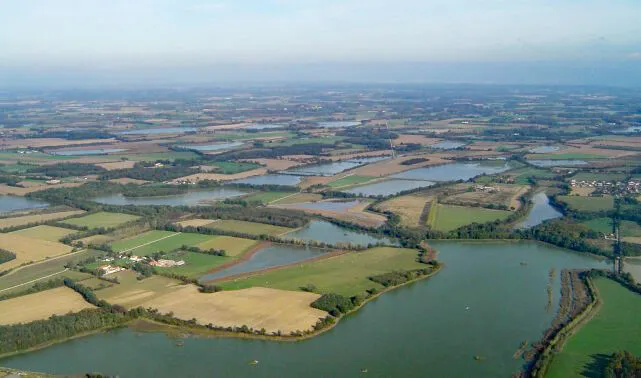
Discover the Ain: world-famous Bresse poultry, the thousand ponds of the Dombes, Pays de Gex facing Mont Blanc and the emerald gorges of Nantua. Complete guide.
 Regions
Aisne: Laon's Medieval Citadel and the Chemin des Dames
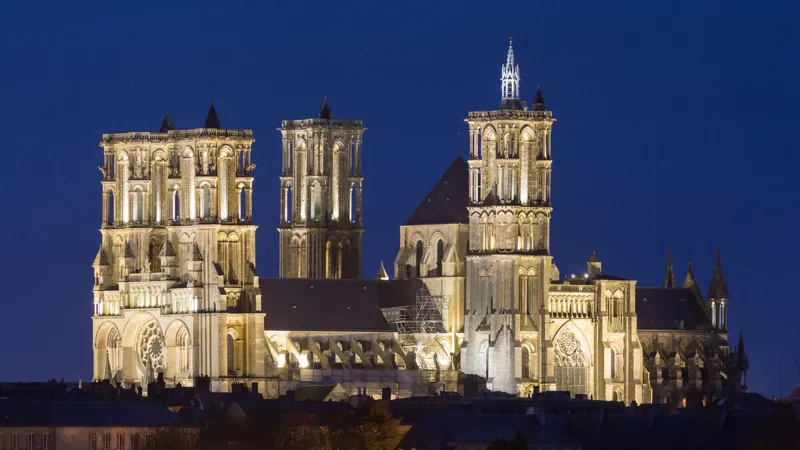
Discover the Aisne département: Laon's hilltop medieval city, the Chemin des Dames battlefields, Soissons, the Familistère de Guise and Champagne vineyards. Complete travel guide.