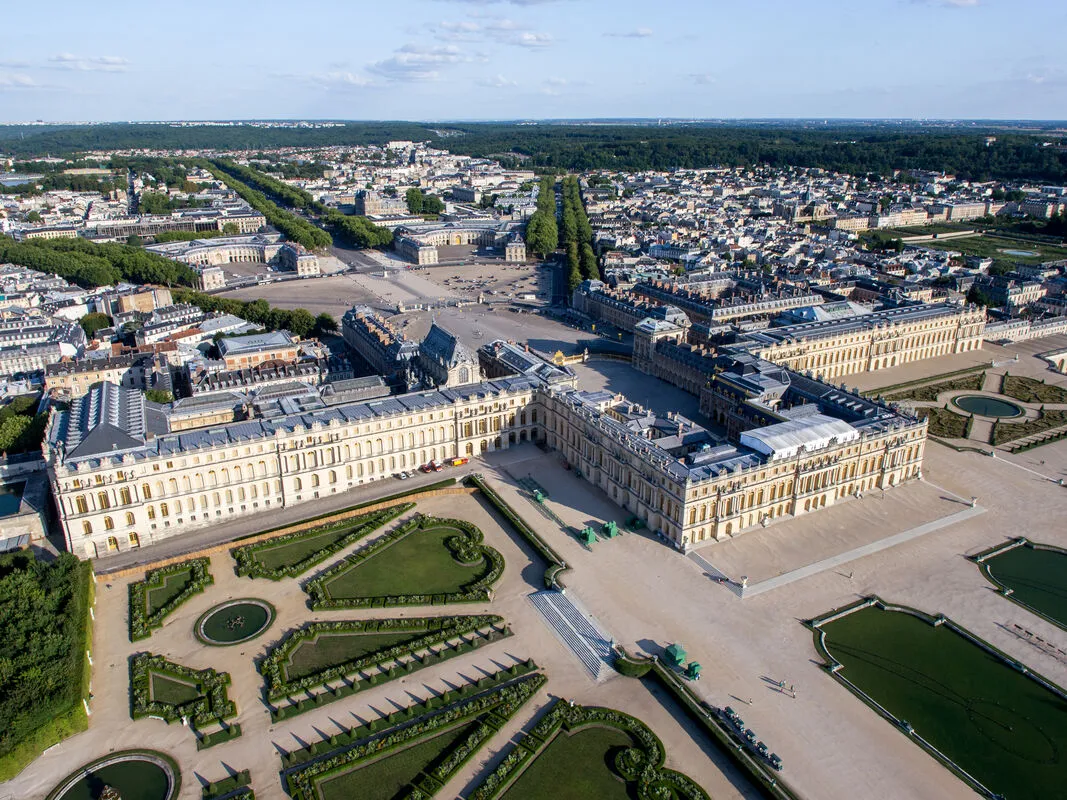
Thirteen million visitors crowd into the Chateau de Versailles each year, but how many know the Chevreuse valley just next door? The Yvelines is not only the palace of the Sun King: it is also the forest of Rambouillet and its deer, the Chateau de Thoiry and its safari park, and a green valley classified as a Regional Natural Park just thirty minutes from Paris.
Versailles: Far More Than a Palace
The Palace of Versailles needs no introduction. Seat of royal power from Louis XIV to the French Revolution, it is one of the most visited monuments in the world. The Hall of Mirrors, the Grand Apartments, the Royal Chapel, and the Royal Opera are breathtakingly splendid. Admission to the palace costs around 21 euros (free on the first Sunday of the month from November to March). Booking online is essential to avoid queues that can exceed two hours in peak season.
The Gardens and the Trianon Estate
The Gardens of Versailles, designed by André Le Nôtre, are a work of art in their own right. Geometric parterres, hidden groves, monumental fountains, and the Grand Canal compose an 800-hectare ensemble. On Musical Fountain Show days (April to October, Saturdays and some Tuesdays), the fountains come alive to the rhythm of baroque music — an unforgettable spectacle. Garden access costs around 10 euros on those days (free otherwise).
The Trianon Estate, accessible with a separate ticket (environ 12 euros) or the Passport ticket (environ 28 euros which covers everything), is often less crowded than the main palace. Marie-Antoinette's Petit Trianon, her Hamlet with its thatched cottages and mill, and the pink marble Grand Trianon offer a more intimate glimpse into court life. It is here that you best understand the personality of France's last queen.
Practical tip: start your visit at the Trianon Estate in the morning (fewer crowds), then move to the main palace after lunch when tour groups have departed.
The Town of Versailles
The town of Versailles itself deserves your time. The Saint-Louis quarter, with its covered market, antique dealers, and restaurants, is a village within the city. The Notre-Dame market, on Tuesdays, Fridays, and Sundays, is one of the finest markets in Île-de-France, with fishmongers, cheese makers, and greengrocers. The surrounding lanes brim with bistros and brasseries where you can lunch for 15 to 25 euros.
The Saint-Louis Cathedral and Notre-Dame Church remind visitors that Versailles is also a spiritual town. The King's Kitchen Garden (Potager du Roi), created in 1683 to supply the royal table, is still in operation and sells its fruit and vegetables to the public (environ 5 euros entry for a visit).
Rambouillet Forest and Its Château
In the southwest of the department, the Rambouillet Forest covers 20,000 hectares of oak, beech, and pine. It is one of the last great forests in Île-de-France where red deer still roam free. In autumn, the deer rut (brame du cerf) is a mesmerising sonic experience. The ONF (National Forestry Office) organises guided outings in September-October (booking required, around 10 euros).
The Château de Rambouillet has been a presidential residence since 1896. It is partially open to visitors (environ 9 euros), revealing a Queen's Dairy built for Marie-Antoinette and a unique shell cottage. The park is vast and ideal for picnics.
The Espace Rambouillet, deep in the forest, features a 2.5 km wildlife trail where you can observe deer, hinds, and birds of prey in their natural habitat (environ 8 euros for adults). It is a perfect family outing.
The Chevreuse Valley: Hiking and Charming Villages
The Haute Vallée de Chevreuse is the closest regional nature park to Paris. Its wooded hills, green vales, and stone villages make it a haven of peace less than an hour from the capital. The village of Chevreuse itself, overlooked by the ruins of the Château de la Madeleine (environ 4 euros, panoramic views), is an excellent starting point for hikes.
The GR 11 long-distance trail crosses the valley and offers routes for all levels. The Dampierre circuit (about 2.5 hours walking) passes by the sumptuous Château de Dampierre (visible from outside, gardens open in season), through forest and past picturesque hamlets. Saint-Rémy-lès-Chevreuse, the southern terminus of RER B, is the ideal gateway for hikers coming from Paris.
Cernay-la-Ville is home to the former Vaux de Cernay Abbey, now a luxury hotel but with grounds open to the public. The Cernay ponds provide a bucolic setting for a waterside walk.
Royal Heritage: From Maisons-Laffitte to Saint-Germain-en-Laye
The Yvelines overflow with testimony to royal power. Saint-Germain-en-Laye, the royal residence before Versailles, houses the National Archaeology Museum in its Renaissance château (environ 9 euros). The Le Nôtre Terrace, stretching 2.4 km, offers an exceptional panorama over Paris and the Seine valley.
The Château de Maisons-Laffitte, a masterpiece by François Mansart (environ 8 euros), is considered the prototype of French classical architecture. More discreetly, the Château de Thoiry (environ 32 euros) combines a 150-hectare zoological park with a 16th-century château and gardens — a very popular family day out.
Yvelines Gastronomy
The Yvelines benefit from a varied terroir. Watercress, cultivated mushrooms, vegetables from the King's Kitchen Garden, and honey from the Rambouillet forest are signature products.
The department also boasts several Michelin-starred restaurants, heirs to the gastronomic tradition linked to the royal court. In Versailles, La Table du 11 offers inventive cuisine in a refined setting (menus from 45 euros). For a simpler meal, the guinguettes (riverside open-air restaurants) along the Seine, particularly at Chatou (where Renoir painted the Luncheon of the Boating Party), serve alfresco meals on fine days.
Brasseries in the Notre-Dame quarter of Versailles serve quality bistro fare, with lunch formulas between 18 and 28 euros. Do not miss the gâteau de Versailles, a soft little almond macaron found at local pâtisseries.
Practical Tips
- When to visit: April to June for Versailles without summer crowds and the Musical Fountain Shows, September to October for the Rambouillet forest and the deer rut
- Getting around: RER C serves Versailles Rive Gauche, RER B reaches Saint-Rémy-lès-Chevreuse, but a car is needed for Rambouillet and the Chevreuse valley
- Food budget: expect 15 to 25 euros for lunch at the Notre-Dame market, 30 to 50 euros for dinner at a restaurant
- Suggested duration: 2 days minimum for Versailles (palace + gardens + Trianon), 4 to 5 days to explore the whole department
- Must-do experiences: the Musical Fountain Shows at Versailles, a hike in the Chevreuse valley from Saint-Rémy, and the deer rut at Rambouillet in autumn
Explore on the map
Map →📚 Related collections
Related guides
 Regions
Ain: Bresse, Dombes and Pays de Gex
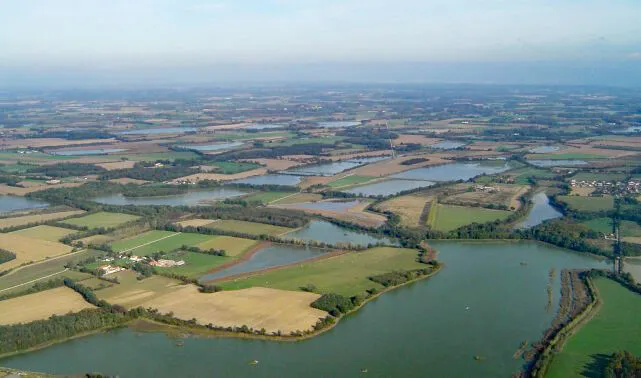
Discover the Ain: world-famous Bresse poultry, the thousand ponds of the Dombes, Pays de Gex facing Mont Blanc and the emerald gorges of Nantua. Complete guide.
 Regions
Aisne: Laon's Medieval Citadel and the Chemin des Dames
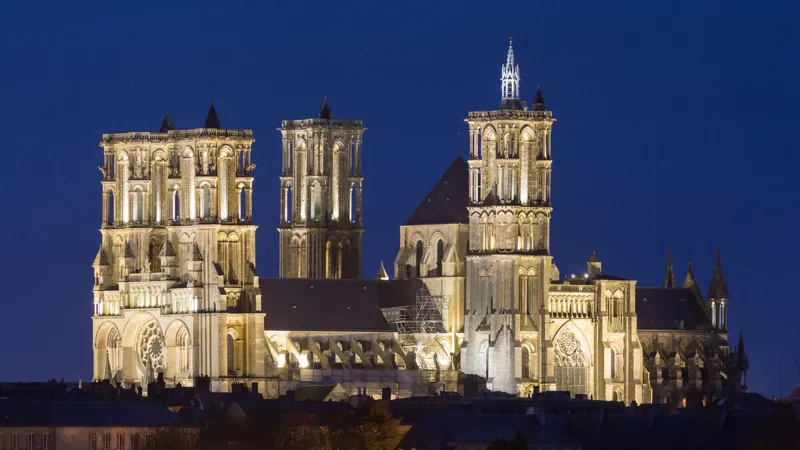
Discover the Aisne département: Laon's hilltop medieval city, the Chemin des Dames battlefields, Soissons, the Familistère de Guise and Champagne vineyards. Complete travel guide.