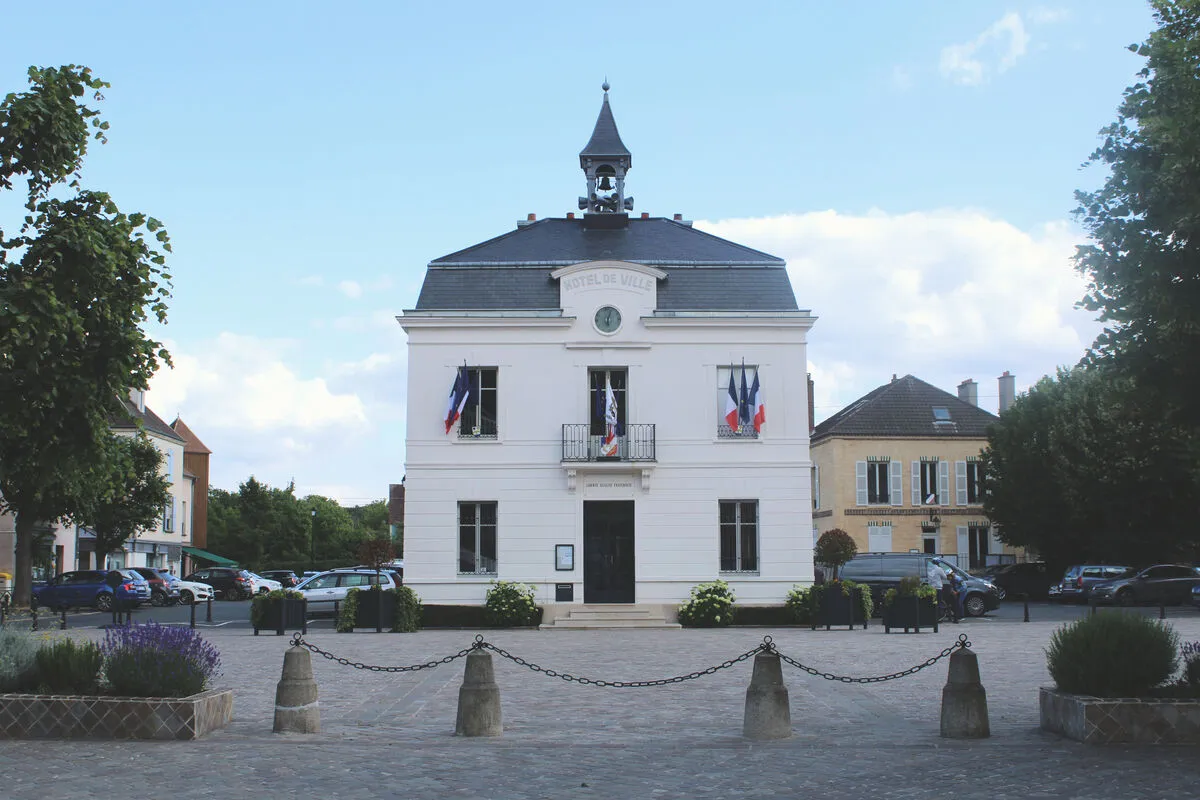
It was in Auvers-sur-Oise that Van Gogh painted his last masterpieces, including the famous 'Wheatfield with Crows', before dying in the small inn that now bears his name. Val-d'Oise is a department where art and nature intertwine: rolling landscapes that inspired the Impressionists, the Abbaye de Royaumont lost in the woods, and the Vexin Francais, the last great rural space at the gates of Paris.
Auvers-sur-Oise: In Van Gogh's Footsteps
Auvers-sur-Oise is a pilgrimage for art lovers. It was in this village that Vincent van Gogh spent the last 70 days of his life, between May and July 1890, an astonishingly prolific period during which he painted over 70 works. The church, the wheat field, the inn, the thatched roofs — everything is still recognisable, and panels reproducing his paintings are placed at the very spots where the artist set up his easel.
The Auberge Ravoux, where Van Gogh rented a 7 m2 garret room for 3.50 francs a day, is now a place of memory. The visit to Van Gogh's room costs around 6 euros and lasts 30 minutes. The emotion is palpable in this tiny room, preserved in its original state. The ground-floor restaurant offers lunch in a period setting (menus from 36 euros).
The Château d'Auvers and Memorial Sites
The Château d'Auvers, an elegant 17th-century château, houses an immersive experience devoted to the Impressionists (environ 15 euros). The multimedia trail traces the history of the Impressionist movement and its relationship with the Oise valley. It is an accessible, well-designed visit suitable for all audiences.
The grave of Van Gogh and his brother Theo, in the small cemetery above the village, is a simple and moving place of contemplation. The ivy covering the twin headstones makes it a melancholy yet beautiful spot. Access is free.
Do not miss the Daubigny House-Studio (environ 6 euros), home of the pre-Impressionist painter who settled in Auvers long before Van Gogh and whose interior walls were decorated by his family and by Corot. The Absinthe Museum (environ 5 euros) tells the story of this mythical drink linked to artistic bohemia.
Practical tip: the Impressionist Ticket (environ 18 euros) gives access to the main Auvers sites and offers good value. Plan a full day to see everything.
Royaumont Abbey: Gothic Splendour and Music
Royaumont Abbey, founded in 1228 by Saint Louis (King Louis IX), is the largest Cistercian monastery in Île-de-France. Tucked into a wooded vale at Asnières-sur-Oise, it has preserved its cloister, its cathedral-scale monks' refectory, its medieval kitchens, and a 15-hectare park crossed by canals.
Admission costs around 10 euros and a self-guided visit takes 1.5 to 2 hours. The abbey is also a renowned cultural centre for its musical programming. Classical, jazz, and world music concerts and artist residencies take place throughout the year. Concerts in the refectory, with its exceptional acoustics, are unforgettable experiences (tickets from 15 euros).
The gardens, laid out in an inspired medieval spirit, are a peaceful place to stroll. The square-bed kitchen garden, the medicinal plant garden, and the canals lined with willows create a timeless atmosphere. In autumn, the colours of the surrounding forest add to the magic.
L'Isle-Adam: The Beach an Hour from Paris
L'Isle-Adam is Val-d'Oise's surprise. This elegant small town on the banks of the Oise boasts the largest river beach in Île-de-France, an 800-metre natural sandbank along the river. In summer, it becomes a genuine little holiday spot with supervised swimming, playgrounds, and refreshment stands (access around 5 euros in high season).
The Pavillon Chinois de Cassan, an 18th-century architectural folly inspired by the fashion for chinoiserie, is a rare jewel. This small temple decorated with pagodas and oriental motifs, nestled in a romantic park, can be visited on special days (check the programme).
The Musée d'Art et d'Histoire Louis-Senlecq (environ 5 euros) displays collections relating to local history and the artists who stayed in the area. The town centre, with its bourgeois houses and quays along the Oise, invites idle strolling.
Enghien-les-Bains: Thermal Baths and Casino
Enghien-les-Bains is the only spa town in Île-de-France. Its lake, Belle Epoque villas, and gardens compose a setting of faded elegance. The casino, the only one in the Paris region, attracts gaming enthusiasts and also offers shows and concerts (free access to slot machines, minimum 2 euros stake at tables).
The Enghien thermal baths offer spa treatments and wellness packages. Access to the spa area (sulphur baths, hammam, sauna) costs around 35 to 50 euros for a half day. It is an unexpected pocket of relaxation in the Paris suburbs.
The walk around Lake Enghien is pleasant in any season. Pedalos (environ 10 euros per half hour) let you enjoy the lake in summer. Lakeside restaurants offer terraces with water views.
Heritage and Villages of the French Vexin
The northwest of Val-d'Oise belongs to the Parc Naturel Régional du Vexin Français, a territory of limestone plateaux, deep valleys, and blonde-stone villages. It is one of the best-preserved landscapes in Île-de-France, with church spires, fortified farms, and intact wash-houses.
La Roche-Guyon, listed among France's Most Beautiful Villages, has a spectacular troglodyte castle built against a chalk cliff (environ 9 euros). The keep perched atop the cliff offers an exceptional panorama over the Seine valley. The site's history is fascinating: from medieval fortress to Rommel's headquarters in 1944, every era has left its mark.
The Val-d'Oise Archaeological Museum at Guiry-en-Vexin (environ 5 euros), housed in a château, displays collections ranging from prehistory to the Middle Ages. The open-air archaeological garden is original and well designed.
Val-d'Oise Gastronomy
Val-d'Oise benefits from the produce of the Vexin and the Oise valley. Paris mushrooms cultivated in old quarries, Vexin honey, apples and pears from orchards, and vegetables from market gardeners make up the local terroir's richness.
The department has several quality markets, notably at Pontoise (Saturday morning market in the old town), L'Isle-Adam, and Enghien-les-Bains. Craft breweries are multiplying across Val-d'Oise, offering local beers to discover (tastings around 5 to 8 euros).
For a gastronomic meal, the Auberge Ravoux restaurant in Auvers-sur-Oise serves traditional cuisine in a historic setting. Vexin inns provide rustic, generous cooking with menus between 22 and 38 euros. In Enghien, the lakeside restaurants offer formulas between 20 and 40 euros with water views.
Vexin cider, produced in small quantities by a few passionate producers, is a local secret worth seeking out — ask at the tourist offices for retail locations.
Practical Tips
- When to visit: April to June for Impressionist landscapes and the Royaumont gardens, July to August for L'Isle-Adam beach, September to October for autumn colours in the Vexin
- Getting around: Transilien H serves Auvers-sur-Oise, L'Isle-Adam, and Enghien-les-Bains from Paris-Gare du Nord, but a car is preferable for Royaumont and the Vexin
- Food budget: expect 15 to 25 euros for lunch at an inn, 36 euros and up at the Auberge Ravoux restaurant, 22 to 38 euros in the Vexin
- Suggested duration: 3 to 4 days for a full tour of the department, 1 day for Auvers-sur-Oise, half a day for Royaumont
- Must-do experiences: Van Gogh's room at the Auberge Ravoux, a concert in the Royaumont refectory, and the view from the keep at La Roche-Guyon
Explore on the map
Map →📚 Related collections
Related guides
 Regions
Ain: Bresse, Dombes and Pays de Gex
Discover the Ain: world-famous Bresse poultry, the thousand ponds of the Dombes, Pays de Gex facing Mont Blanc and the emerald gorges of Nantua. Complete guide.
 Regions
Aisne: Laon's Medieval Citadel and the Chemin des Dames
Discover the Aisne département: Laon's hilltop medieval city, the Chemin des Dames battlefields, Soissons, the Familistère de Guise and Champagne vineyards. Complete travel guide.