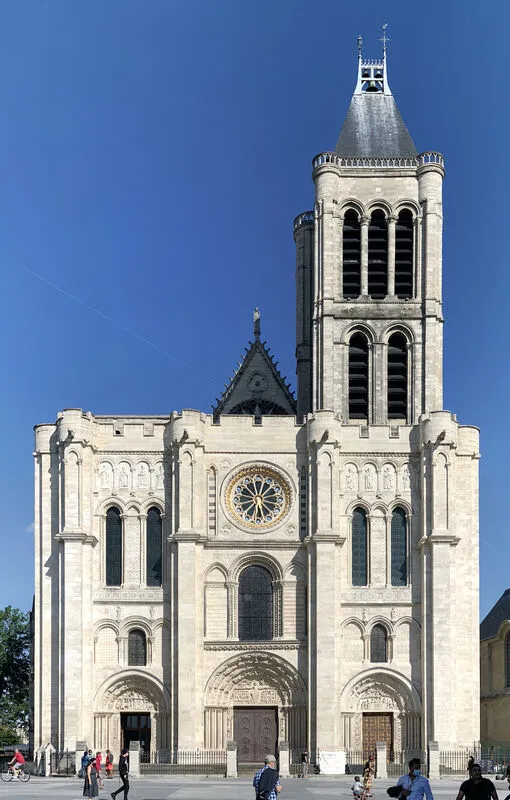
The Basilica of Saint-Denis, necropolis of the kings of France, houses the recumbent effigies of Dagobert, Francois I and Marie-Antoinette. It is the ideal starting point for discovering Seine-Saint-Denis, the '93', the most surprising department in Ile-de-France. Far from the cliches, this territory north of Paris has become a bubbling cultural laboratory: street art, music scenes, industrial heritage converted into creative spaces.
The Basilica of Saint-Denis: Necropolis of the Kings of France
The Basilica Cathedral of Saint-Denis is one of the most important monuments in French history, yet one of the least visited relative to its stature. Considered the first masterpiece of Gothic architecture — Abbot Suger invented the pointed-arch style here in the 12th century — it houses the largest collection of royal effigies and tombs in Europe. From Clovis to Louis XVI and Marie-Antoinette, 43 kings, 32 queens, and 63 princes and princesses are interred here.
The royal necropolis visit costs around 9.50 euros and lasts 1 to 1.5 hours. The Renaissance tombs of Francis I and Henry II are extraordinarily refined. The Gothic apse, flooded with light through stained glass, is strikingly beautiful. An ambitious project to restore the spire is currently underway.
Practical tip: the basilica is accessible by metro (line 13, Basilique de Saint-Denis station). Combine the visit with a walk through Saint-Denis town centre, which has preserved its medieval lanes and its market — one of the most popular and cosmopolitan in the Paris region (Tuesday, Friday, and Sunday).
Parc de la Villette: Culture and Leisure on a Grand Scale
Parc de la Villette, straddling Paris and Seine-Saint-Denis, is the capital's largest cultural park. Its 55 hectares house the Cité des Sciences et de l'Industrie (environ 13 euros), one of Europe's biggest science museums, with interactive exhibitions that captivate children and adults alike. The Géode, a gleaming 36-metre-diameter sphere, offers hemispherical-screen projections.
The Philharmonie de Paris, designed by Jean Nouvel, is an architectural and acoustic marvel. Its concerts span an immense range from classical to jazz and world music (tickets from 10 euros for some performances). The Musée de la Musique (included in the Philharmonie ticket or environ 10 euros separately) holds a remarkable collection of instruments from around the world.
The park itself is a place of life: Bernard Tschumi's red follies, themed gardens, meadows, and the Canal de l'Ourcq make it ideal for relaxing, jogging, or picnicking. In summer, the open-air cinema festival (free) draws thousands of spectators.
Street Art and Urban Culture
Seine-Saint-Denis is a major hub of street art in France. The walls of Aubervilliers, Pantin, and Montreuil are open-air galleries where internationally renowned artists express themselves. The Canal de l'Ourcq, between Pantin and Bobigny, is lined with monumental murals best discovered on foot or by bicycle.
Pantin has become the creative epicentre of the "93". Former warehouses and factories now house art galleries, artist studios, and cultural third places. The Magasins Généraux, a former customs warehouse turned advertising agency headquarters and exhibition venue, symbolise this transformation. The Centre National de la Danse (environ 5 euros for matinee performances), installed in a former administrative building, offers demanding programming and classes open to the public.
Practical tip: to discover the street art, join a guided walk organised by local associations (around 10 to 15 euros, 2 hours). These tours provide context about the neighbourhoods' history and the artists' work.
The Stade de France and the Olympic Legacy
The Stade de France, inaugurated for the 1998 World Cup, is an icon of the Seine-Saint-Denis landscape. Behind-the-scenes guided tours (environ 16 euros, 1.5 hours) let you walk on the pitch, discover the changing rooms, and pass through the players' tunnel. It is an experience that delights sports fans.
The 2024 Olympic Games profoundly transformed the north of the department. The Athletes' Village in Saint-Denis and Saint-Ouen has become an exemplary residential eco-neighbourhood. The Olympic Aquatic Centre (environ 8 euros for a public swim session), with its wave-shaped roof covered in solar panels, is a top-class sports facility open to the public.
Industrial Heritage and Urban Transformation
Seine-Saint-Denis has a rich industrial heritage undergoing creative conversion. In Montreuil, the former factories along Rue de Paris now house film studios — the town is nicknamed "French Hollywood" for its concentration of studios and production companies.
The Saint-Ouen flea market (Marché aux Puces), just on the border, is one of the largest in the Paris region. With 2,500 dealers spread across 14 markets, it is the world's largest antiques and second-hand market. You can find everything from Art Deco furniture to vintage vinyl to haute couture. Entry is free, and you can easily spend half a day here.
Gastronomy of the 93
Seine-Saint-Denis is a genuine culinary world tour. The diversity of communities living here translates into an extraordinarily varied food scene. In Saint-Denis, you will find the finest Tamil and Comorian restaurants in Île-de-France. In Aubervilliers, Chinese and Vietnamese cuisine is outstanding. Montreuil brims with Malian, Senegalese, and North African tables.
Prices are among the gentlest in the Paris region: a full meal at a community restaurant often costs between 8 and 15 euros. The Saint-Denis market is a feast for the senses, with spices, exotic fruits, and products from around the world.
For more contemporary cuisine, Pantin and Les Lilas have seen a crop of trendy new bistros offering market menus between 20 and 35 euros. The Gallia brewery, set in former industrial premises in Pantin, serves craft beers brewed on site alongside quality food.
Practical Tips
- When to visit: year-round, but May to June and September are ideal for street art walks and strolls along the Canal de l'Ourcq
- Getting around: metro (lines 5, 7, 12, 13), RER B, and tramway T1 and T3b serve the department very well — driving is inadvisable due to difficult parking
- Food budget: expect 8 to 15 euros for a meal at a community restaurant, 20 to 35 euros at Pantin's newer bistros
- Suggested duration: 2 to 3 days for the main sites, half a day for the basilica and Saint-Denis market
- Must-do experiences: the royal necropolis in the basilica, a street art walk along the Canal de l'Ourcq, and a world-cuisine lunch in Saint-Denis
Explore on the map
Map →📚 Related collections
Related guides
 Regions
Ain: Bresse, Dombes and Pays de Gex
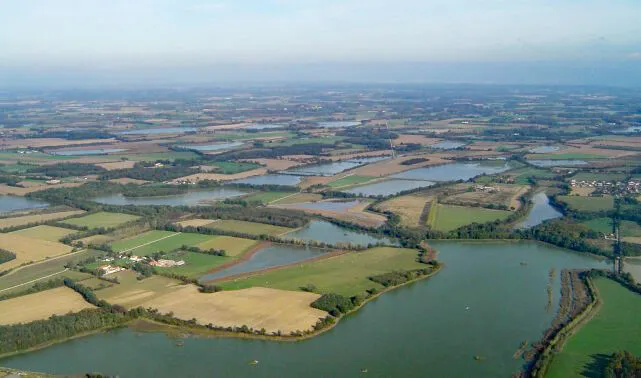
Discover the Ain: world-famous Bresse poultry, the thousand ponds of the Dombes, Pays de Gex facing Mont Blanc and the emerald gorges of Nantua. Complete guide.
 Regions
Aisne: Laon's Medieval Citadel and the Chemin des Dames
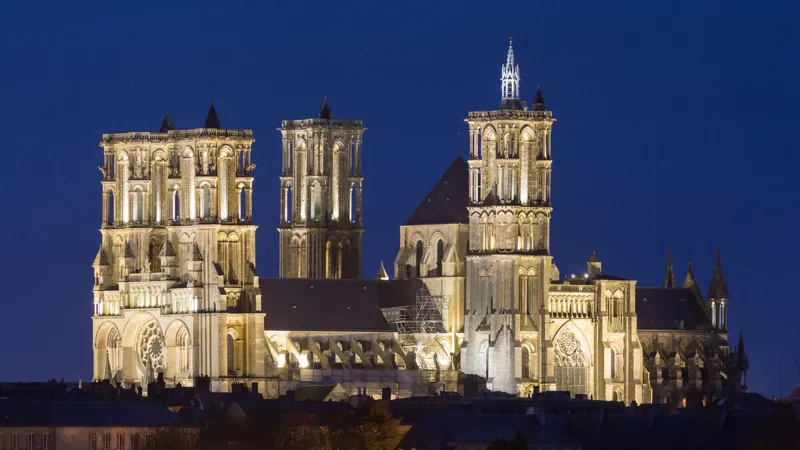
Discover the Aisne département: Laon's hilltop medieval city, the Chemin des Dames battlefields, Soissons, the Familistère de Guise and Champagne vineyards. Complete travel guide.