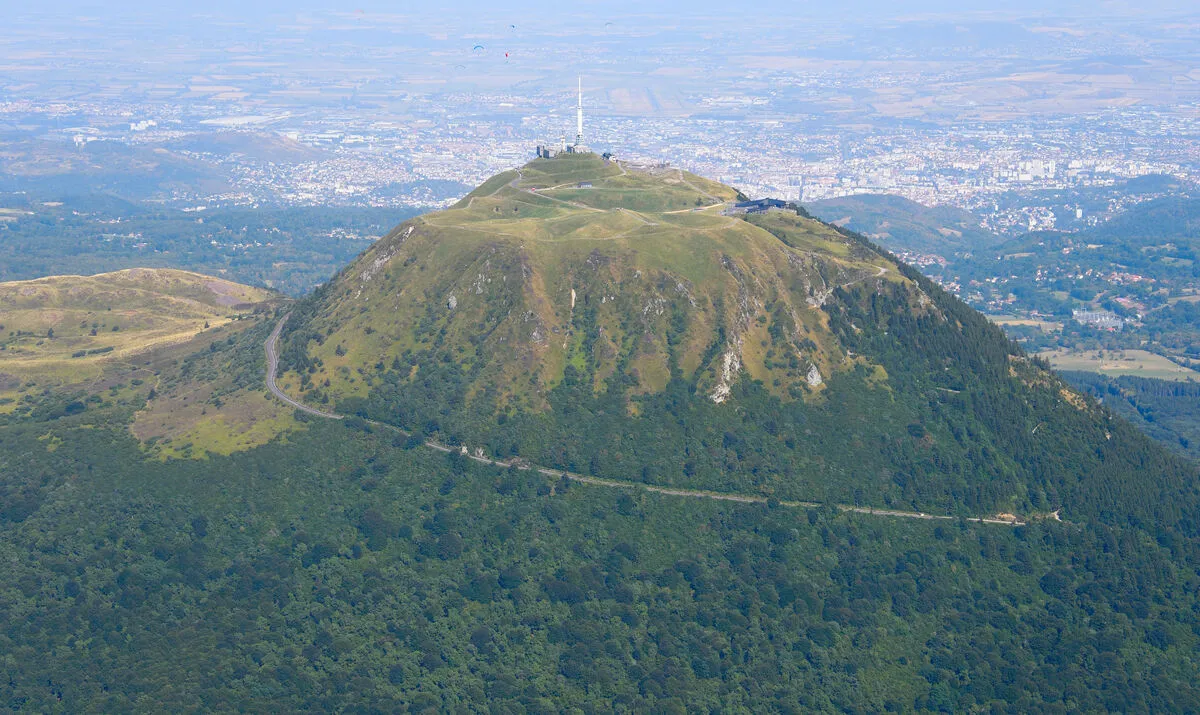
Nowhere else in mainland France is geology so spectacular or so easy to read. The Chaine des Puys, lined up like a sleeping army, the craters of la Vache and Lassolas, the Puy de Dome wreathed in mist: this is the department where the earth reminds you it is alive. Clermont-Ferrand, built from black lava stone, is its capital -- a city of character that the Auvergnats defend with smiling pride.
Clermont-Ferrand, the Black City
A Capital of Lava
Clermont-Ferrand surprises with its colour. Built from Volvic stone, a dark-grey volcanic andesite that blackens over time, the city has a visual identity unlike any other in France. The Cathedral of Notre-Dame-de-l'Assomption, constructed entirely from black lava, is a masterpiece of Rayonnant Gothic whose 96-metre spires dominate the skyline. The interior, brighter than you might expect, houses magnificent thirteenth-century stained glass. Entry free.
The Basilica of Notre-Dame-du-Port, a UNESCO World Heritage Site as part of the Santiago de Compostela pilgrimage routes, is a jewel of Auvergnat Romanesque art. Its sculpted chevet, carved capitals and seated Black Madonna form an ensemble of austere, powerful beauty. Entry free.
Old Clermont
The old quarter between the cathedral and the basilica is a maze of cobbled lanes lined with lava-stone houses and sculpted doorways. The Place de Jaude, a vast esplanade dominated by a statue of Vercingetorix, is the commercial heart of the city. The Renaissance Fontaine d'Amboise is one of the finest fountains in Auvergne. The covered Saint-Pierre market on Saturday mornings is a concentrated showcase of Auvergne produce.
L'Aventure Michelin
The L'Aventure Michelin museum traces the story of the company born in Clermont-Ferrand in 1889. From the first bicycle tyres to the red guides and road maps, the visit is fascinating even for non-enthusiasts. You will discover how Bibendum became one of the most recognised logos in the world. Entry around 11 euros, allow 2 hours.
The Chaine des Puys, UNESCO World Heritage
Eighty Volcanoes in a Row
The Chaine des Puys is an alignment of roughly eighty extinct volcanoes stretching 32 kilometres across the Massif Central. Formed between 95,000 and just 8,600 years ago (yesterday in geological terms), these volcanoes display a remarkable variety of shapes: domes, cinder cones with craters and maars (explosion craters filled with water). Since 2018, the chain and the Limagne Fault have been inscribed on the UNESCO World Heritage List for their outstanding geological value.
The Puy de Dome
The Puy de Dome (1,465 metres), the iconic volcano that gave the department its name, is the most famous in the chain. Since 2012, a cog railway called the Panoramique des Domes climbs to the summit from the base in 15 minutes (around 15 euros return, booking advisable in summer). At the top, the panorama is extraordinary: the entire chain unfolds before your eyes, and on a clear day the view reaches as far as Mont Blanc.
The summit also holds the remains of the Temple of Mercury, a second-century Gallo-Roman sanctuary and one of the largest mountain temples in the Roman Empire. A small museum displays finds from the excavations.
Hiking the Volcanoes
The Chaine des Puys is outstanding hiking terrain. The Puy de Pariou, with its perfect 93-metre-deep crater, is a one-hour climb from the Goules car park. The Puy de la Vache and Puy de Lassolas offer an easy walk through a lunar landscape of red volcanic scoria. For experienced walkers, the traverse of the Chaine des Puys (approximately 30 kilometres, 2 days) is a volcanic trek unmatched anywhere in Europe.
Note: since the UNESCO inscription, access to certain volcanoes has been regulated to protect the site. Check at the Maison du Parc or on the Parc des Volcans d'Auvergne website before setting out.
Vulcania, the Volcano Park
Vulcania is a science theme park entirely dedicated to volcanoes and earth phenomena, designed by architect Hans Hollein and opened in 2002. Nestled inside a former crater, the park offers immersive attractions: eruption simulators, 4D dynamic cinema, interactive trails on earthquakes and meteorological events. The Machine Earth show plunges visitors into the heart of magma.
Vulcania appeals equally to families and geology enthusiasts. Expect to pay around 33 euros per adult and 25 euros per child (ages 3 to 11), with discounts for online bookings. Allow a full day.
The Crater Lakes
Lac Pavin
Lac Pavin, at 1,197 metres altitude, is the youngest volcano in Auvergne (roughly 6,900 years old) and the most mysterious of its lakes. Perfectly circular, 92 metres deep, its near-black waters are surrounded by dense forest that heightens the atmosphere. The path around the lake (45 minutes of easy walking) is one of the most beautiful strolls in Auvergne. Local legends claim the lake is bottomless and that a submerged city lies beneath its surface.
Lac de Guery and Lac Serviere
Lac de Guery (1,244 metres), the highest lake in Auvergne, is set between the Roches Tuiliere and Sanadoire, two imposing volcanic dykes. Lac Serviere, more discreet, offers a peaceful pastoral setting for a picnic with a view of the volcanoes.
The Sancy Massif
The Roof of Auvergne
The Puy de Sancy (1,886 metres) is the highest point in the Massif Central. From the resort of Le Mont-Dore, a cable car (around 8 euros return) brings you close to the summit, then a wooden staircase of 860 steps leads to the very top. The 360-degree panorama, sweeping across the Chaine des Puys, the Cantal mountains and sometimes the Alps, is unforgettable.
Super Besse
Super Besse is Auvergne's most vibrant winter sports resort, at 1,350 metres altitude. In winter, its ski area offers 43 kilometres of pistes for all levels (day pass around 32 euros). In summer, the resort transforms into an activity base with a giant zip line, downhill mountain biking, a summer toboggan run and hikes to Lac Pavin and the Puy de Sancy.
Auvergne Food and Drink
The Puy-de-Dome is a stronghold of terroir gastronomy:
- Saint-Nectaire, a semi-hard pressed cheese with a nutty flavour, aged in the caves of the Monts Dore
- Fourme d'Ambert, a mild, creamy blue cheese and one of the oldest in France
- Truffade, a pan of potatoes melted with fresh Cantal tome cheese, served stretchy and golden
- Aligot, mashed potato blended with fresh tome cheese and pulled into long elastic strands
- Puy green lentils (AOC), grown on the volcanic plateaux of neighbouring Haute-Loire
- Gentiane, a bitter aperitif typical of the volcano country, to be tasted as Aveze or Salers
Practical Tips
When to Visit
Summer (June to September) is ideal for hiking and the lakes. Spring (May to June) brings flowery volcanoes and pleasant temperatures. Winter (December to March) is ski season at Super Besse and Le Mont-Dore. Note: the Puy de Dome is very busy in July and August -- aim for early morning.
Getting Around
Clermont-Ferrand is 3h30 from Paris by train and has an airport with flights to several French and European cities. A car is essential for exploring the volcanoes and lakes. The Panoramique des Domes cog railway serves the Puy de Dome summit from the base.
How Long to Stay
Allow 5 to 7 days: Clermont-Ferrand and its museums (1 to 2 days), the Chaine des Puys and the Puy de Dome (1 day), Vulcania (1 day), the Sancy Massif and Super Besse (1 to 2 days), the crater lakes (1 day).
Budget
Accommodation ranges from 40 to 70 euros per night for a budget hotel or quality campsite, 70 to 120 euros for a B&B or boutique hotel, and 120 to 200 euros for high-end establishments. A restaurant lunch costs 12 to 20 euros, dinner 20 to 35 euros. Local markets and picnics are an excellent way to eat well while keeping costs down. Many activities are free: hiking, village strolls, markets, churches. Paid museums and sites average 5 to 12 euros per person. To save money, book rural gites by the week, opt for weekday lunch menus, and take advantage of free tastings at local producers.
Explore on the map
Map →📚 Related collections
Related guides
 Regions
Ain: Bresse, Dombes and Pays de Gex
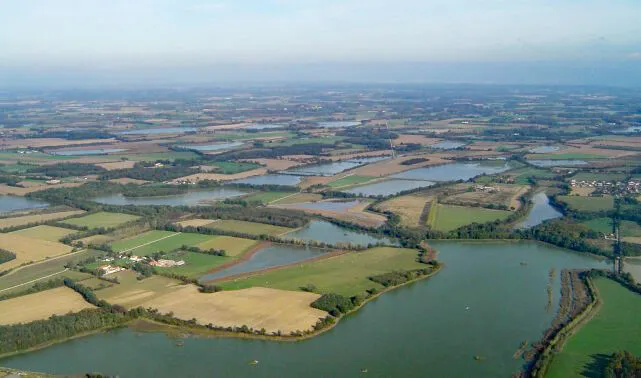
Discover the Ain: world-famous Bresse poultry, the thousand ponds of the Dombes, Pays de Gex facing Mont Blanc and the emerald gorges of Nantua. Complete guide.
 Regions
Aisne: Laon's Medieval Citadel and the Chemin des Dames
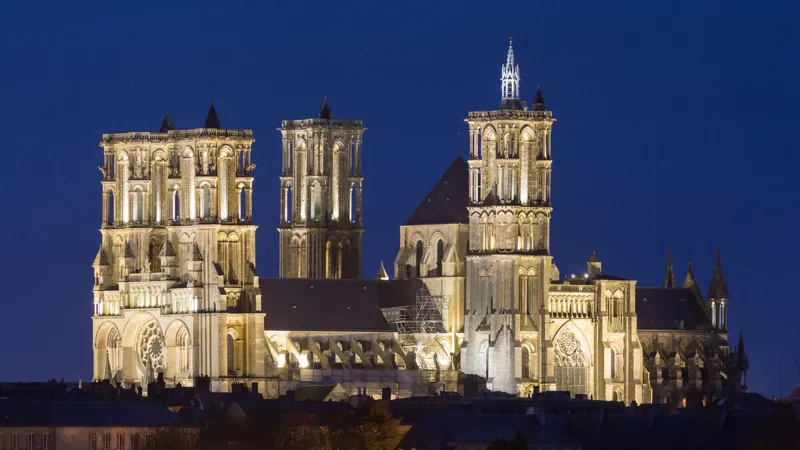
Discover the Aisne département: Laon's hilltop medieval city, the Chemin des Dames battlefields, Soissons, the Familistère de Guise and Champagne vineyards. Complete travel guide.