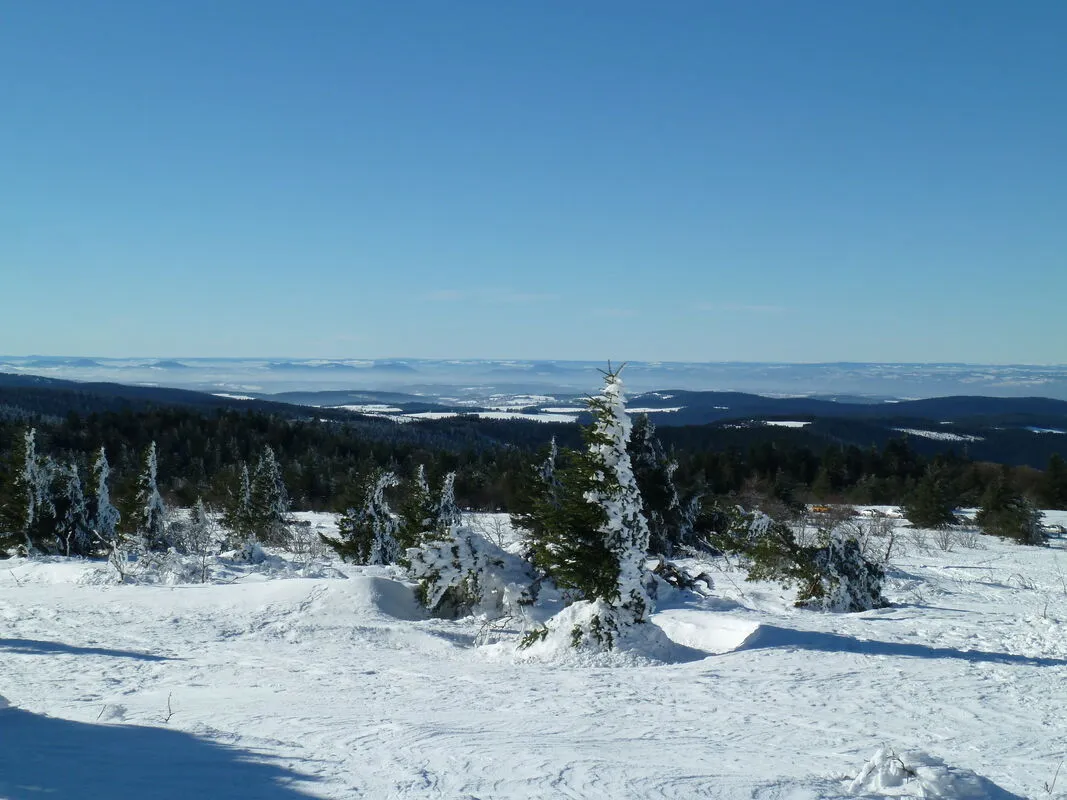
Most travellers rush through the Loire department without stopping, eager to reach Lyon or the Massif Central. Behind Saint-Etienne's industrial reputation, however, lies a territory of spectacular Loire gorges, steep vineyards at Condrieu and Cote-Rotie, and the Pilat massif, whose summit offers one of the finest viewpoints in southeastern France, from the Rhone valley to the Alps.
Saint-Étienne: France's Design Capital
For most of the nineteenth and twentieth centuries, Saint-Étienne meant coal mines, arms factories and the legendary green football jerseys of AS Saint-Étienne. Then the mines closed, the factories downsized, and the city faced a choice: decline or reinvention. It chose reinvention, and the results are remarkable.
Cité du Design
The flagship project is the Cité du Design, built on the grounds of the former National Arms Manufactory. Finnish-German architect Finn Geipel added dramatic contemporary extensions to the nineteenth-century industrial halls, creating a space where heritage and innovation coexist. The Cité hosts rotating exhibitions on all aspects of design — product, urban, digital, social — and every even-numbered year stages the International Design Biennial, drawing creative professionals from around the globe. Allow about 2 hours and check the website for current exhibition prices.
Museum of Modern and Contemporary Art
The MAMC+ houses one of France's finest collections of modern art outside Paris. Works by Monet, Picasso, Fernand Léger, Warhol and an outstanding contemporary section make this a genuine destination museum. Admission is around 5 euros, and the building is set in a pleasant park — ideal for a post-museum stroll. Plan at least 90 minutes inside.
Musée de la Mine (Puits Couriot)
The Puits Couriot mining museum occupies an authentic coal mine site, complete with its towering headframe visible from across the city. Visitors walk through reconstructed underground galleries, learning about the harsh reality of life for the miners — the "black faces" — who powered France's industrial revolution. Entry is about 7 euros and tours last roughly 90 minutes. Even if industrial heritage is not usually your thing, this museum has a way of gripping you.
Getting around
Saint-Étienne is 45 minutes from Lyon by regional train (about 9 euros one way). A modern tramway connects the city centre, the train station and the main museums efficiently.
Pilat Regional Natural Park
Drive twenty minutes south-east of Saint-Étienne and the landscape transforms entirely. The Pilat Regional Natural Park stretches between the Rhône valley and the Forez plain, a world of beech forests, granite ridges and sweeping panoramas.
Crêt de la Perdrix
At 1,432 metres, the Crêt de la Perdrix is the highest point in the Pilat massif. A roughly two-hour hike from the Col de la Croix de Chaubouret takes you through heathland and old-growth beech forest to a bare summit where, on a clear day, you can see from Mont Blanc in the east to Mont Ventoux in the south. Bring a windbreaker — the Pilat earns its windy reputation up here.
Saut du Gier
The Saut du Gier is a waterfall hidden in a narrow valley near Saint-Chamond, reached by an easy 30-minute walk. It is most spectacular in spring, when snowmelt swells the torrent into a crashing white curtain. A fine spot for a family picnic away from the crowds.
Cycling Heritage
The Loire is cycling country. The département has produced champions and hosted countless Tour de France stages through the Pilat climbs. Today, the ViaRhôna long-distance cycle path and several greenways let you explore the territory on two wheels, winding between Rhône valley vineyards and the Pilat plateaux. E-bike hire is available in Pélussin and Saint-Chamond.
Loire Gorges and the Château de la Roche
North of Saint-Étienne, the Loire river has carved deep gorges through granite, creating an almost surreal landscape. The centrepiece is the Château de la Roche, a medieval fortress perched on a rocky islet in the middle of the Villerest reservoir. Depending on the water level, the castle appears to float on the surface or stand high on bare rock — it is photogenic either way. The château is open for visits from May to September with temporary exhibitions and guided tours. The views from the riverbank alone are worth the trip.
Hiking trails run along the gorges for several kilometres, offering dramatic vantage points over the cliffs and river bends. Further upstream, the Grangent reservoir provides opportunities for swimming and kayaking in summer.
Charlieu Abbey
In the north-eastern corner of the département, the small town of Charlieu sits where the Loire meets Burgundy. Its Benedictine abbey, founded in the ninth century, preserves a twelfth-century sculpted portal of extraordinary refinement — scenes of the Paschal Lamb and biblical narratives carved with a delicacy that rivals the great Burgundian churches. The cloister and adjoining museum are well worth an hour of your time.
The town itself charms with its timber-framed houses and medieval lanes. The Saturday morning market is the place to sample local charcuterie, goat cheese and wines from the nearby Roannais appellation.
Montbrison and Fourme Cheese
Former capital of the Forez region, Montbrison is a handsome town backed by the first foothills of the Forez mountains. Its Gothic collegiate church, Notre-Dame d'Espérance, is striking. But Montbrison's real claim to fame is cheese.
Fourme de Montbrison is a blue cheese with AOC status since 1972, made on farms in the Forez mountains using methods passed down since the eighth century. Less well known than its neighbour Fourme d'Ambert, it is milder, creamier and arguably more elegant. Several dairies offer visits and tastings — an essential stop for cheese lovers. Pair it with a glass of Côtes du Forez wine for a perfect local combination.
Rive-de-Gier: Industrial Memory
Tucked in the Gier valley between Saint-Étienne and Lyon, Rive-de-Gier was the cradle of France's glass industry and one terminus of one of the country's first railway lines (Saint-Étienne to Lyon, opened in 1832). An urban walk through the town reveals traces of its glassmaking and steelworking past — a tangible reminder of how the industrial revolution reshaped this valley and, through it, modern France.
Practical Information
Getting there: Saint-Étienne is roughly 1 hour from Lyon-Saint-Exupéry airport by shuttle and 2.5 hours from Paris by TGV. The A72 motorway crosses the département east to west; the A47 links to Lyon.
Best season: Spring (April to June) and autumn (September to October) are ideal for hiking in the Pilat. Summers can be hot in the valleys but remain pleasant at altitude.
Suggested duration: Allow 3 to 4 days for a full tour — one day for Saint-Étienne, one for the Pilat, one for the Loire gorges and one for Charlieu and Montbrison.
Budget: The Loire is good value. A couple can expect to spend 60 to 90 euros per day on a guesthouse, meals at local restaurants and museum visits. Admission prices rarely exceed 10 euros.
Explore on the map
Map →📚 Related collections
Related guides
 Regions
Ain: Bresse, Dombes and Pays de Gex
Discover the Ain: world-famous Bresse poultry, the thousand ponds of the Dombes, Pays de Gex facing Mont Blanc and the emerald gorges of Nantua. Complete guide.
 Regions
Aisne: Laon's Medieval Citadel and the Chemin des Dames
Discover the Aisne département: Laon's hilltop medieval city, the Chemin des Dames battlefields, Soissons, the Familistère de Guise and Champagne vineyards. Complete travel guide.