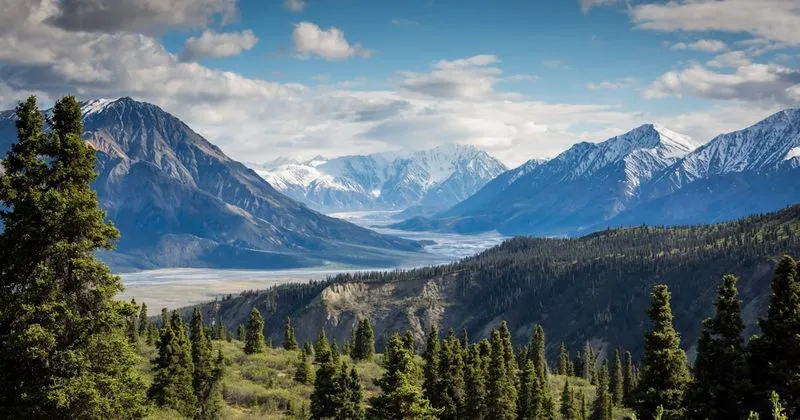
Grenoble is the flattest major city in France, yet look up: three mountain ranges topping 2,000 metres encircle the valley floor. This singular geography makes Isere a department where you can go from city centre to high mountains in twenty minutes, where the Chartreuse and the Vercors raise their cliffs like natural ramparts, and where you can ski in the morning and linger on a terrace in the afternoon.
Grenoble, Capital of the Alps
The Bastille and Its Cable Car
Grenoble is best discovered from above. The famous "bubbles" — transparent spherical cable cars linking the city centre to the Bastille fort — have been a city icon since 1934. The five-minute ride delivers spectacular views of the Grenoble skyline, the confluence of the Isère and Drac rivers, and a panorama spanning three massifs: Chartreuse, Vercors and Belledonne (around 7 € return).
At the top, the Bastille site includes 19th-century fortifications, a mountain troops museum and a contemporary art centre. You can walk back down through the pleasant Jardin des Dauphins and Parc Guy Pape.
Old Town and Museums
Grenoble's historic quarter, centred on Place Saint-André and Place aux Herbes, retains its medieval and Renaissance houses. The Musée de Grenoble, one of France's leading fine arts museums, holds outstanding collections spanning old masters to modern art — Rubens to Matisse, Picasso to Warhol (around 8 €). Place Grenette, ringed by cafés, is the heart of daily life.
With 65,000 students, Grenoble is also a buzzing university and research city, which gives it a youthful energy and a lively nightlife scene.
Alpe d'Huez and the 21 Hairpins
The Mythical Tour de France Climb
Alpe d'Huez is one of cycling's most famous ascents. Its 21 numbered hairpin bends, each named after a Tour de France stage winner, stretch over 13.8 km at an average gradient of 8.1%. Markers count down from bend 21 at the bottom to bend 1 at the top. Every summer, thousands of amateur cyclists come to test themselves against this legendary climb.
In winter, the resort offers 250 km of runs between 1,100 and 3,330 metres, with exceptional sunshine that has earned it the nickname "Island in the Sun." A day pass costs around 55 €.
The Chartreuse Massif
The Grande Chartreuse Monastery
The Chartreuse massif, cloaked in dense forest and limestone cliffs, is a pocket of wilderness on Grenoble's doorstep. The Grande Chartreuse Monastery, founded by Saint Bruno in 1084, is still home to Carthusian monks and cannot be visited. However, the Musée de la Grande Chartreuse, housed in a neighbouring building called the Correrie, brings monastic life vividly to life through an excellent exhibition (around 9 €).
The Chartreuse Distillery
In Voiron, the Caves de la Chartreuse reveals the secrets of the famous liqueur, produced since 1737 from 130 plants. The tour passes through the world's longest liqueur cellars (164 metres) and ends with a free tasting. Green Chartreuse (55%) or yellow (40%) — the choice is yours. Admission is free.
Hiking in Chartreuse
The Chartreuse Regional Nature Park offers varied walking. The Charmant Som (1,867 m) is reachable by car up to the pass, then a 30-minute walk to the summit delivers a 360° panorama for minimal effort. The Hauts de Chartreuse ridge walk is more demanding but rewards with spectacular cliff-edge views.
The Vercors, a Natural Fortress
A Stronghold of the French Resistance
The Vercors is a vast limestone plateau that rises like a natural fortress above the plains of the Dauphiné. Its isolation made it a bastion of the French Resistance during the Second World War. The Mémorial de la Résistance at Vassieux-en-Vercors tells this tragic and heroic story in a powerful semi-underground building (around 6 €).
The Combe Laval Road
The Route de Combe Laval, carved into the cliff face in the 19th century, is one of France's most spectacular roads. Clinging to the rock wall with tunnels hewn from the stone and sheer drops, it delivers dizzying views over the Combe Laval cirque. Note: the road is narrow and not suitable for motorhomes.
Via Ferrata and Outdoor Activities
The Vercors is a playground for thrill-seekers. Several via ferrata routes offer a safe introduction to rock climbing, notably near Grenoble and at the Mont Aiguille viewpoint. Canyoning, caving and hiking complete an extensive outdoor offering.
Vizille and the French Revolution
The Birthplace of the Revolution
Just 20 km from Grenoble, the Château de Vizille houses France's only Museum of the French Revolution. Set in a magnificent estate with a 100-hectare park where deer roam freely, the museum traces revolutionary history through paintings, sculptures and documents. Admission is free, making it one of the region's best cultural outings.
Saint-Antoine-l'Abbaye
Listed among France's Plus Beaux Villages, Saint-Antoine-l'Abbaye contains a monumental Gothic abbey church whose scale surprises in such a small village in southern Isère. The abbey complex, cradle of the Antonine order, deserves a visit for its architecture and reconstructed medieval gardens.
Practical Tips
When to Visit
Summer (June-September) for hiking and cycling. Winter (December-April) for skiing at Alpe d'Huez, Chamrousse or Villard-de-Lans. Spring brings snowmelt and spectacular waterfalls in the Vercors.
Getting Around
The TGV reaches Grenoble from Paris in 3 hours. Grenoble has an efficient tram network. A car is essential for the massifs. Mountain roads are well maintained but winding.
Budget
Accommodation ranges from 50 to 80 euros per night for a budget hotel, 80 to 130 euros for a B&B or charming hotel, and 130 to 220 euros for upscale options. Grenoble is more affordable than the big Alpine resorts. A restaurant lunch runs 14 to 22 euros, dinner 25 to 40 euros. Ski passes in the Chartreuse and Vercors are considerably cheaper than at major Savoie resorts. Hiking, village exploration and mountain panoramas are all free. To keep costs in check, opt for mountain gites, weekday set-lunch menus and produce from the Grenoble markets.
Explore on the map
Map →📚 Related collections
Related guides
 Regions
Ain: Bresse, Dombes and Pays de Gex
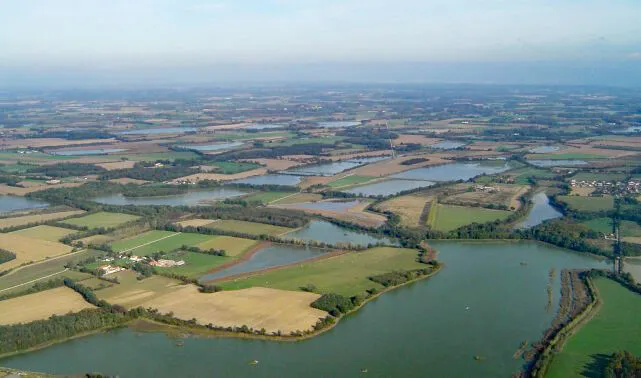
Discover the Ain: world-famous Bresse poultry, the thousand ponds of the Dombes, Pays de Gex facing Mont Blanc and the emerald gorges of Nantua. Complete guide.
 Regions
Aisne: Laon's Medieval Citadel and the Chemin des Dames
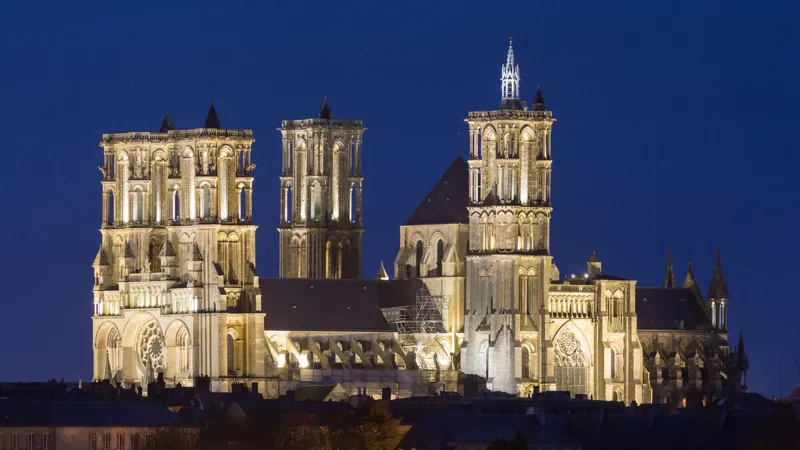
Discover the Aisne département: Laon's hilltop medieval city, the Chemin des Dames battlefields, Soissons, the Familistère de Guise and Champagne vineyards. Complete travel guide.