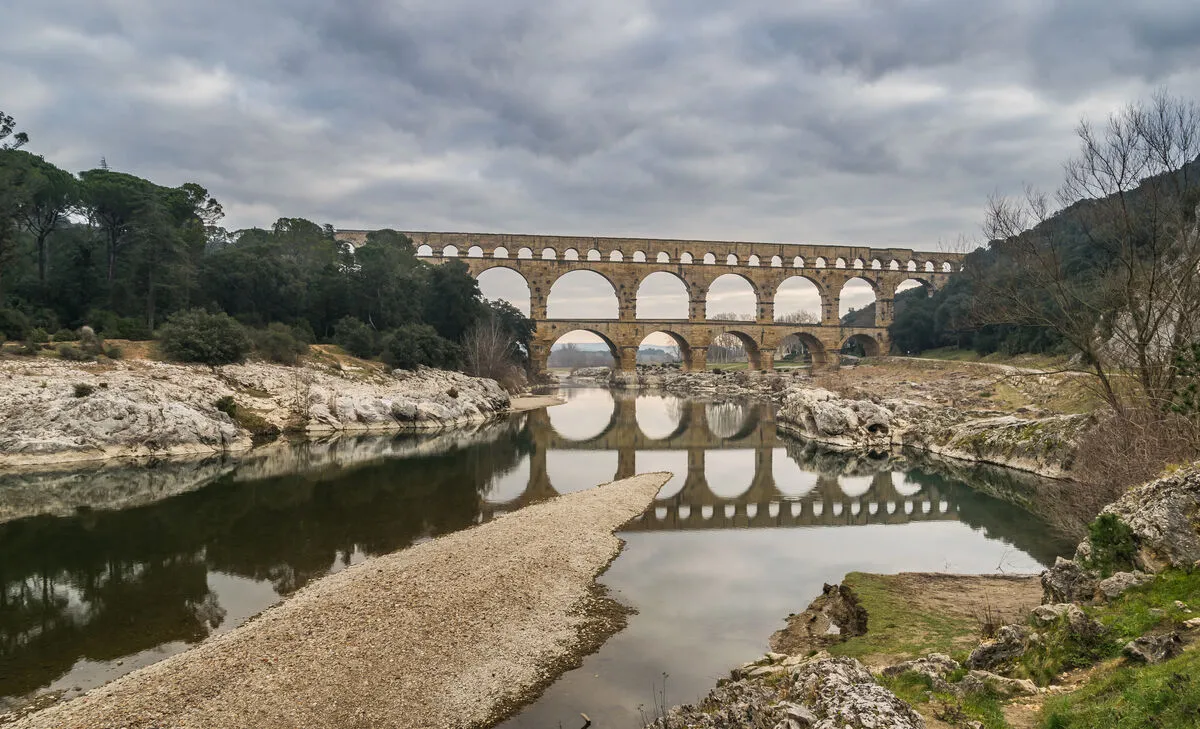
The amphitheatre at Nimes is so well preserved that it still hosts spectacles, two thousand years after it was built. Thirty kilometres away, the Pont du Gard spans the Gardon with a grace that leaves visitors speechless. The Gard is a department where Roman antiquity meets the wild Cevennes highlands and the salty Camargue, creating a patchwork of landscapes and cultures found nowhere else.
Nîmes: The French Rome
Nîmes boasts the best-preserved Roman monuments in France, the legacy of a city that ranked among the wealthiest in Gallia Narbonensis.
The Arena
The Arènes de Nîmes, a first-century Roman amphitheatre, is among the best preserved in the world. Built to seat 24,000 spectators for gladiatorial combat, it now hosts concerts and the famous Nîmes férias. A visit with audioguide costs about 10 euros and takes 1 to 1.5 hours. Climb to the upper tiers for sweeping views across the city rooftops. The Feria de Pentecôte (May or June) and the Feria des Vendanges (September) turn the entire city into a five-day street party.
The Maison Carrée
The Maison Carrée is a first-century Roman temple of extraordinary completeness, one of the most intact ancient temples anywhere. Its inscription on the UNESCO World Heritage List in 2023 confirmed its universal significance. Inside, an immersive film recounts the story of Nîmes (about 6 euros). Directly opposite, the Carré d'Art, designed by Norman Foster, houses a contemporary art museum and media library, creating a striking dialogue between antiquity and the present.
The Jardins de la Fontaine
The Jardins de la Fontaine, laid out in the eighteenth century around a sacred Roman spring, are one of the earliest public gardens in Europe. Classical basins, stone balustrades and shaded paths climb the hillside. At the summit stands the Tour Magne, a remnant of the Augustan city wall offering a panorama across the city and the garrigues (entry about 3.50 euros). Below it, the Temple of Diana, a romantic first-century ruin, adds to the atmosphere.
The Pont du Gard
The Pont du Gard is one of the most spectacular ancient monuments in Europe. This Roman aqueduct of three tiers of arches, rising 49 metres, spans the Gardon river in an unspoilt natural setting. Built in the first century to carry water from a spring near Uzès to Nîmes, it covered 50 kilometres through the garrigues.
Entry to the site costs about 8.50 euros (parking included) and gives access to the bridge, an interactive museum and the surrounding natural area. The museum traces the construction of the aqueduct and everyday Roman life with engaging displays. In summer, the Gardon riverbanks at the foot of the bridge become a popular bathing spot, with pebble beaches and clear water. The site has been a UNESCO World Heritage Site since 1985. Allow 2 to 3 hours for a complete visit, more if you wish to swim or walk the hiking trails that wind through the surrounding garrigue.
Uzès: First Duchy of France
Uzès is a small town of rare elegance perched above the Eure valley, at the opposite end of the Roman aqueduct that fed the Pont du Gard.
The Duchy and the Fenestrelle Tower
The Duchy of Uzès, seat of the Uzès dukes and inhabited for a thousand years, is partly open to visitors (about 15 euros for a guided tour). The Tour Fenestrelle, unique in France with its cylindrical form pierced by paired windows, draws on Italian campanile design and dominates the town skyline. Wander the medieval and Renaissance lanes, lined with honey-stone mansions.
Place aux Herbes
The Place aux Herbes, framed by arcades and plane trees, hosts one of the finest markets in the south every Saturday morning. Stalls of garrigue goat cheese, olives from the Baux valley, winter truffles and aromatic herbs make this square an unmissable food destination. A smaller but equally genuine market takes place on Wednesday mornings.
Aigues-Mortes and the Camargue
The Medieval Ramparts
Aigues-Mortes is a thirteenth-century fortified town founded by King Louis IX as an embarkation port for the Crusades. Its ramparts, perfectly preserved over 1,600 metres, can be walked in their entirety along the chemin de ronde (entry about 8 euros, 45-minute loop). From the corner towers, the view stretches across pink salt pans, lagoons and the Camargue plain. Below, the grid-pattern streets of the medieval bastide hold artisan shops and restaurants. The Tour de Constance, a massive circular tower, recalls the imprisonment of Protestant women in the eighteenth century.
Salt Marshes and the Camargue
South of Aigues-Mortes, the Salins du Midi salt works stain the landscape in shades of pink and white. Guided visits by miniature train or on foot (about 10 euros) explain the salt harvest that has been practised here since antiquity. The Camargue gardoise offers landscapes of pink flamingos, white horses and black bulls. The Centre du Scamandre, a nature reserve between Vauvert and Saint-Gilles, has wildlife observation trails with free access.
The Cévennes National Park
The northern Gard rises into the Cévennes, a mountain range inscribed on the UNESCO World Heritage List for its agro-pastoral cultural landscapes. The Cévennes National Park, the only national park in mainland France with a permanent population, shelters chestnut forests, deep valleys and a night sky recognised as an International Dark Sky Reserve.
From the village of Anduze, the gateway to the Cévennes, visit the Bambouseraie en Cévennes, a unique exotic garden harbouring giant bamboo, sequoias and a reconstructed Laotian village. Entry costs about 15 euros and the visit takes 1.5 to 2 hours. Anduze is also the departure point for the Train à Vapeur des Cévennes, a heritage steam railway that runs 13 kilometres through dramatic scenery to Saint-Jean-du-Gard (about 15 euros return).
Sommières and the Villages of the Gard
Sommières is a medieval market town straddling the Vidourle river, crowned by castle ruins and centred on an arcaded square that hosts a lively market on Saturday mornings. Its Roman bridge, partly swallowed beneath medieval buildings, is one of the oldest bridges still in use in France. The town makes an excellent base for exploring the wine villages of the Costières de Nîmes and the Nîmes garrigue. The hilltop village of Sauve, about twenty minutes away, charms with its vaulted alleyways and its famous Mer de Rochers, a chaos of limestone rocks sculpted by erosion (free access).
Practical Tips
Getting Around
Nîmes is reachable by TGV from Paris in 2 hours 50 minutes. Nîmes-Alès-Camargue-Cévennes airport serves a handful of destinations. A car is essential for the Pont du Gard, the Cévennes and the Camargue. Departmental roads cross beautiful scenery but can be narrow.
Best Time to Visit
April to June and September to October offer ideal conditions. The Nîmes férias enliven the city in May-June and September. Summer is very hot (often exceeding 35 degrees Celsius) but perfect for swimming in the Gardon. Autumn is chestnut season in the Cévennes and truffle season in the garrigue.
Budget
Accommodation ranges from 50 to 80 euros per night for a budget hotel, 80 to 130 euros for a B&B or charming hotel, and 130 to 220 euros for upscale options. A restaurant lunch runs 14 to 22 euros, dinner 25 to 40 euros. Local farmers' markets provide excellent produce for picnics at reasonable prices. Hiking, village exploration and most churches are free. Paid sites and museums cost 6 to 15 euros per person. To keep costs in check, look for weekday set-lunch menus, stay in rural gites or quality campsites, and enjoy the free tastings many local producers offer.
Explore on the map
Map →📚 Related collections
Related guides
 Road trips
The Alsace Wine Route: Vineyards and Charming Villages
Explore the Alsace Wine Route from Marlenheim to Thann. Picturesque villages, wine tastings and tips for an unforgettable road trip.
 Road trips
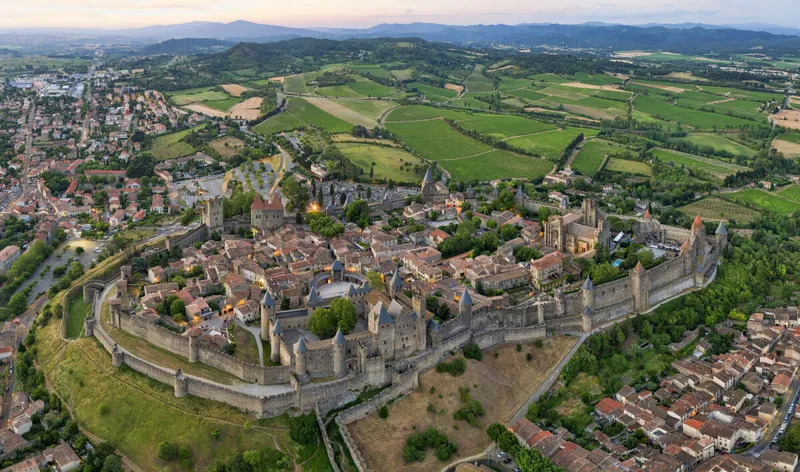
Aude: Carcassonne and Cathar Country
Guide to the Aude: Carcassonne citadel, Cathar castles, Canal du Midi, Narbonne, Fontfroide Abbey. Vertiginous fortresses and Languedoc vineyards.