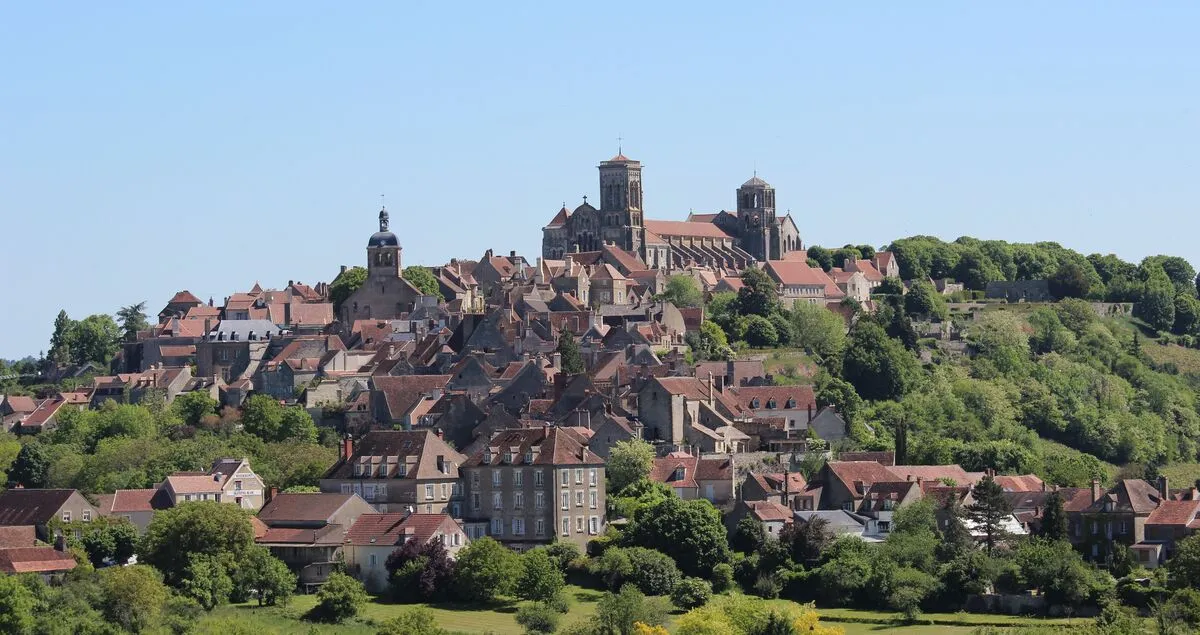
At Vezelay, the light streaming through the windows of the Basilique Sainte-Madeleine creates, every summer solstice, a luminous path across the nave floor. This nine-century-old optical miracle sets the tone for the Yonne: a department where the light possesses a golden, gentle quality that has bathed the vineyards of Chablis, the lanes of Auxerre and the forests of the Tonnerrois since time immemorial.
Auxerre, Pearl of the River Banks
The Quayside Panorama
Auxerre reveals itself first from the right bank of the Yonne, through the panorama that has made its fame: a silhouette of spires and slate rooftops reflected in the calm waters of the river. This view, which painters and photographers never tire of capturing, is one of the most beautiful in Burgundy. Cross the Pont Paul-Bert at sunset to feel its full magic.
The Cathedral of Saint-Étienne
The Cathédrale Saint-Étienne is a masterwork of Gothic art, built between the thirteenth and sixteenth centuries. Its stained-glass windows, among the finest in France, display blues and reds of remarkable intensity. The Romanesque crypt, a remnant of an earlier cathedral, preserves eleventh-century frescoes — among the oldest known in France — depicting Christ on horseback, an extremely rare iconography. Entry to the cathedral is free; access to the crypt and treasury costs around 5 euros.
The Abbey of Saint-Germain
The Abbaye Saint-Germain, founded in the fifth century, is one of the major monuments of Carolingian art in France. Its Carolingian crypts, the oldest in France still decorated with frescoes (ninth century), constitute an exceptional testimony to early medieval wall painting — colours and figures that have survived over a thousand years. The adjoining museum presents remarkable archaeological collections. Admission is approximately 7 euros.
The Clock Tower and the Old Town
The historic centre of Auxerre is best explored on foot, wandering through its medieval lanes. The Tour de l'Horloge, a remnant of the fifteenth-century fortifications, bears an astronomical clock whose hands indicate the phases of the moon and the movements of the sun. The half-timbered houses around the Place de l'Hôtel-de-Ville and the Rue de l'Horloge form a perfectly preserved setting.
Vézelay, the Inspired Hill
The Basilica of Sainte-Marie-Madeleine — UNESCO
The hill of Vézelay is a place of memory and spirituality that transcends the centuries. The Basilica of Sainte-Marie-Madeleine, a UNESCO World Heritage Site, is the supreme masterwork of Burgundian Romanesque art. Its narthex tympanum, depicting Pentecost, is a composition of exceptional breadth and finesse. The narrative capitals of the nave form a veritable bible in stone, deploying biblical scenes, allegories and fantastical creatures with astonishing virtuosity.
Light plays an essential role in the Vézelay experience. At the summer solstice, a solar alignment projects a series of luminous patches along the central axis of the nave — a phenomenon that draws thousands of visitors each year. Admission is free.
The Village and Its Artisans
The village of Vézelay, listed among the Most Beautiful Villages of France, stretches along a single ascending street lined with art galleries, bookshops, wine cellars and artisan workshops. The terrace behind the basilica commands a grandiose panorama over the Morvan hills. The village is also one of the four historic starting points for the Way of Saint James pilgrimage to Santiago de Compostela.
Sens, the First Gothic Cathedral
The Cathedral of Saint-Étienne
Sens holds a national treasure that is often underappreciated: its Cathedral of Saint-Étienne, consecrated in 1164, is the first great Gothic cathedral in France, predating even Notre-Dame de Paris. Its pioneering architecture — sexpartite rib vaults, flying buttresses, three-level elevation — served as a model for Canterbury and numerous European cathedrals. The Cathedral Treasury (around 6 euros), one of the richest in France, preserves liturgical textiles, ivories and the chasuble of Thomas Becket, murdered in 1170.
The Synodal Palace and Museums
Adjacent to the cathedral, the thirteenth-century Palais synodal, restored by Viollet-le-Duc, houses the Museums of Sens (around 6 euros), whose Gallo-Roman archaeological collections are particularly impressive. The old town of Sens preserves fine half-timbered houses and a lively covered market.
Chablis, King of Dry Whites
Burgundy's Most Northern Vineyard
Chablis is a name that resonates around the world. This small wine-growing town of 2,300 inhabitants gives its name to one of the most famous white wines on the planet. The vineyard, the most northerly in Burgundy, is planted exclusively with Chardonnay on Kimmeridgian soils — a limestone rich in tiny fossilised oyster shells that imparts the wine's characteristic sharp minerality.
Tastings and Estates
The appellation hierarchy runs from Petit Chablis to Chablis Grand Cru (seven climats: Blanchot, Bougros, Les Clos, Grenouilles, Preuses, Valmur, Vaudésir). Tastings at the estates are common and often free. The Maison du Chablisien offers an educational introduction to the terroir (around 8 euros). A village Chablis can be found from 10 euros per bottle; a premier cru between 15 and 30 euros; a grand cru from 35 euros upward.
The Chablis Wine Festival
Every fourth weekend of October, the Fête des Vins de Chablis brings together winemakers and enthusiasts in a convivial atmosphere. The tasting pass (around 18 euros) gives access to dozens of stands. It is the ideal occasion to compare different terroirs and vintages side by side.
The Burgundy Canal and the Tonnerrois
Tonnerre and the Fosse Dionne
Tonnerre is a small town of character dominated by the Former Hospital, founded in 1293 by Marguerite of Burgundy. Its great hall, 90 metres long, is one of the largest medieval civic halls in Europe (around 5 euros). The Fosse Dionne, a Vaucluse-type spring of deep blue-green water in the heart of the town, is a fascinating geological phenomenon whose bottom has never been reached despite numerous exploratory dives.
Cruising the Burgundy Canal
The Canal de Bourgogne crosses the département from east to west, offering 212 kilometres of peaceful navigation between flower-decked locks and rolling landscapes. Self-drive houseboat hire (no licence required) is available from 700 euros per week in low season. The stretch between Tonnerre and Montbard, punctuated by tunnels and vaulted passages, is particularly picturesque.
Practical Information
Getting there: Auxerre is 1 hour 40 minutes from Paris via the A6 motorway. Direct trains connect Paris-Bercy to Auxerre in 1 hour 50 minutes. Sens is even closer, just 1 hour from Paris by train.
Getting around: A car is recommended for exploring the vineyards and villages. Cycling is ideal along the Burgundy Canal, with dedicated cycle paths. Bike hire is available in Auxerre and Tonnerre from 15 euros per day.
Best time to visit: April to October. Spring is magnificent in the vineyards, with cherry trees in blossom. Summer brings concerts in Romanesque churches. Autumn is the season of the grape harvest and the Chablis Wine Festival. Winter is quiet but Auxerre and Sens remain lively.
Budget: The Yonne offers excellent value for money. Restaurants in Auxerre offer set menus from 14 euros. Bed-and-breakfasts in the Chablis vineyard provide rooms from 55 euros for two. Local specialities to discover: gougères (cheese puffs), andouillette de Chablis (tripe sausage), Chaource (a creamy, bloomy-rind cheese) and of course Chablis itself, best enjoyed chilled on the terraces of Auxerre.
Explore on the map
Map →📚 Related collections
Related guides
 Regions
Ain: Bresse, Dombes and Pays de Gex
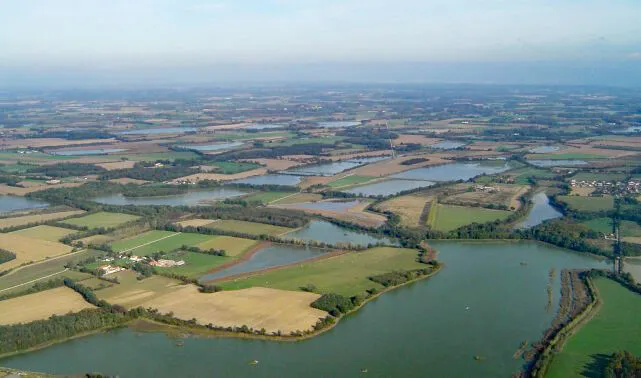
Discover the Ain: world-famous Bresse poultry, the thousand ponds of the Dombes, Pays de Gex facing Mont Blanc and the emerald gorges of Nantua. Complete guide.
 Regions
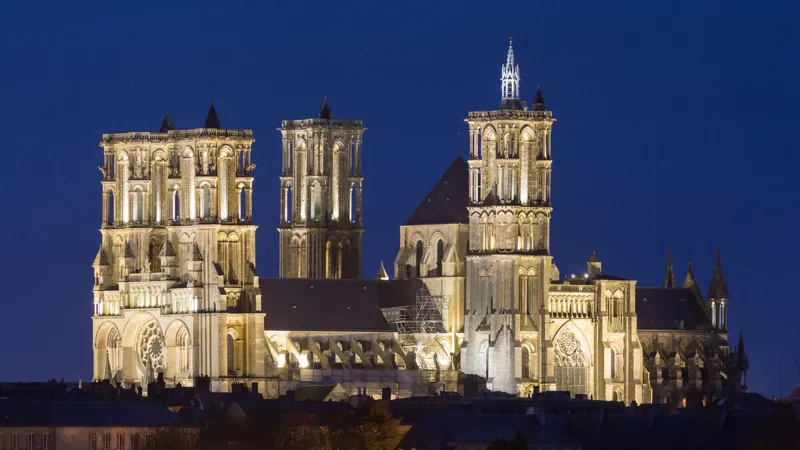
Aisne: Laon's Medieval Citadel and the Chemin des Dames
Discover the Aisne département: Laon's hilltop medieval city, the Chemin des Dames battlefields, Soissons, the Familistère de Guise and Champagne vineyards. Complete travel guide.