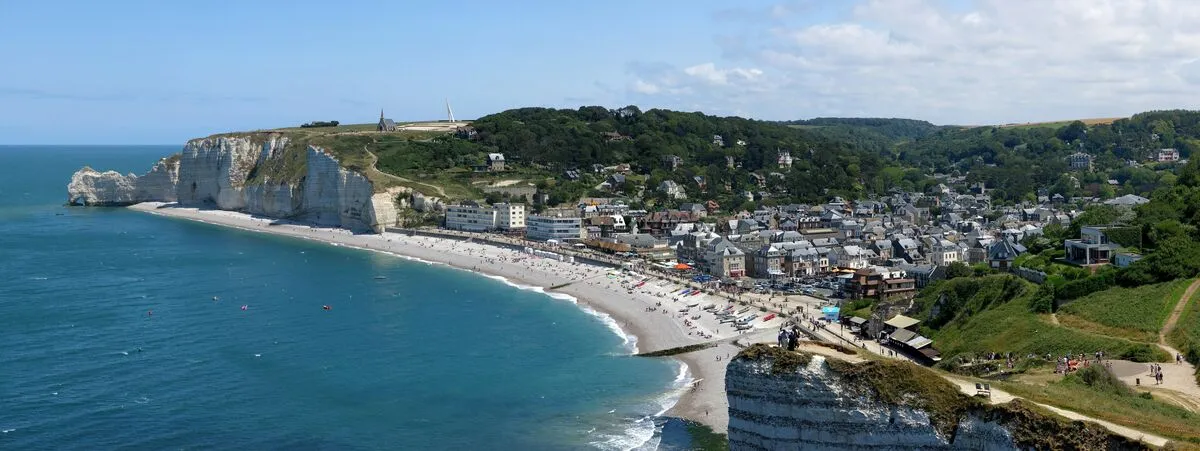
The cliffs of Etretat -- the Needle, the white-stone arch plunging into the Channel -- are among the most photographed landscapes in France. Monet painted them, Maupassant described them, Lupin made them legend. Seine-Maritime continues the spectacle along the Alabaster Coast, then follows the Seine upstream to Rouen, city of a hundred spires where Joan of Arc and the Impressionists left their mark.
Étretat: France's Most Iconic Cliffs
The cliffs of Étretat need no filter. These towering white chalk walls, carved by wind and tide into soaring natural arches, have captivated artists since the Impressionists set up their easels here. Monet, Courbet, and Boudin all painted them, and the reality remains just as stunning.
Three formations define the skyline. The Falaise d'Aval and its great arch — Maupassant compared it to "an elephant dipping its trunk into the sea." The Aiguille (Needle), a 51-metre freestanding pillar. And the Falaise d'Amont, topped by a sailors' chapel and a monument to the aviators Nungesser and Coli.
A cliff-top walk connecting both sides takes about 2 hours round-trip, with jaw-dropping views at every turn. Atop the Aval cliff, the Étretat Gardens (~8.50 euros) blend contemporary sculpture with landscaping and offer a bird's-eye perspective on the coastline.
Tip: Park on the outskirts and walk down to the beach. The town centre gridlocks in summer. For the best light and thinner crowds, come at dawn or in the late afternoon.
Rouen: City of a Hundred Spires
Rouen is one of France's great medieval cities, and one of its most walkable. Victor Hugo dubbed it the "city of a hundred spires," and the skyline of Gothic towers backing a compact, half-timbered old town justifies the title.
The Cathedral of Notre-Dame is a Gothic masterpiece built over four centuries. Monet painted it obsessively, capturing the facade in thirty different lights. The Tour de Beurre (Butter Tower) — financed by parishioners who paid for the right to eat butter during Lent — rises 75 metres above the south transept.
The Gros-Horloge, a 14th-century astronomical clock mounted on a Renaissance arch spanning the main street, is Rouen's emblem. You can climb the belfry (~7 euros) for a panoramic view over the rooftops. Steps away, the Place du Vieux-Marche marks where Joan of Arc was burned at the stake in 1431; a modern church shaped like an overturned ship honours her memory.
Do not miss the Aitre Saint-Maclou, a former plague cemetery turned courtyard lined with carved skulls and crossbones — one of the last surviving medieval ossuaries in Europe. Free to enter. The Museum of Fine Arts (also free) holds one of France's finest Impressionist collections outside Paris, with works by Monet, Renoir, and Sisley.
Fecamp: Benedictine and the Open Sea
Fecamp spent centuries as France's leading cod port, sending ships across the Atlantic to the Grand Banks of Newfoundland. Two remarkable buildings anchor the town.
The Benedictine Palace (~12 euros) is a flamboyant hybrid of neo-Gothic and Renaissance architecture, built in the 19th century to house the distillery of the famous herbal liqueur. The visit takes you through the production process, a collection of sacred art, and ends with a tasting. It is one of the most unexpected buildings in Normandy.
The Abbatiale de la Trinite, as vast as a cathedral, once housed a relic of the Holy Blood that made Fecamp a pilgrimage site rivalling Canterbury. From the harbour, cliff paths lead to Cap Fagnet, the highest point on the Alabaster Coast (105 metres), where a sailors' chapel commands vast sea views.
The Alabaster Coast and Dieppe
Between Étretat and Le Treport, the Alabaster Coast (Cote d'Albatre) unfolds 130 kilometres of chalk cliffs interrupted by valleuses — hanging valleys that drop to the sea and often shelter small pebble beaches accessible only on foot. These hidden coves are perfect for solitary swimming.
Dieppe claims to be France's oldest seaside resort, popular with Parisians since the 19th century. Its castle museum overlooks the beach and the active fishing port. The Saturday market along the seafront is one of Normandy's best, piled with fresh fish, local cheeses, and seasonal produce. Order the smoked herring or the dieppoise — a creamy stew of fish and shellfish that is the town's signature dish.
Between Dieppe and Saint-Valery-en-Caux, Varengeville-sur-Mer deserves a detour for its clifftop church with a cemetery overlooking the sea, and the Bois des Moutiers, an exceptional garden designed by Edwin Lutyens and Gertrude Jekyll (~10 euros). The rhododendrons in May are spectacular.
The Abbey Route: Jumieges and Saint-Wandrille
The Seine valley between Rouen and Le Havre shelters some of France's most evocative monastic ruins. The Abbey of Jumieges, which Victor Hugo called "the most beautiful ruin in France," lifts its roofless white walls from a clearing surrounded by ancient trees. Founded in the 7th century and dismantled during the Revolution, it retains an almost spiritual grandeur. Admission is about 7 euros; an augmented reality app lets you visualise the abbey as it once stood.
A few kilometres away, the Abbey of Saint-Wandrille is still home to a community of Benedictine monks who brew artisanal beer and produce wax-based household products. Gregorian chant services are open to the public and offer a rare moment of contemplation.
The ideal way to discover these abbeys is a day's drive along the Seine, using the free river ferries (bacs) that cross between the banks.
Le Havre: Modernism by the Sea
Le Havre was 80% destroyed in the Second World War. Architect Auguste Perret rebuilt it in a bold geometric style using coloured concrete, earning the city centre UNESCO World Heritage status in 2005. The Church of Saint-Joseph, with its 107-metre lantern tower pierced by thousands of coloured glass panels, is Perret's masterwork — stepping inside feels like entering a kaleidoscope.
The MuMa (Modern Art Museum, ~7 euros) holds the second-largest Impressionist collection in France after the Musee d'Orsay, with major works by Monet, Boudin, and Dufy displayed in a light-filled waterfront gallery.
Practical Tips
- Best time to visit: May to June for wildflowers on the cliffs; September to October for golden light on the chalk
- Getting around: Rouen is 75 minutes from Paris by train; Étretat is best reached by car from Le Havre (30 min) or Fecamp (20 min)
- Suggested duration: 4 to 5 days for a comprehensive loop; 2 days for Rouen and Étretat
- Don't miss: A seafood lunch in Dieppe, morning light on the Étretat cliffs, and the ruins of Jumieges at sunset
- Budget: Expect 60 to 100 euros per night for a hotel or charming B&B, 100 to 170 euros on the coast in high season. A restaurant lunch costs 14 to 22 euros, a seafood platter 25 to 45 euros. Cliff walks and coastal paths are free. Rouen museums cost 5 to 11 euros per person. To save money, shop at the Dieppe and Fecamp markets, opt for weekday lunch menus, and stay in rural gites inland.
Explore on the map
Map →📚 Related collections
Related guides
 Regions
Ain: Bresse, Dombes and Pays de Gex
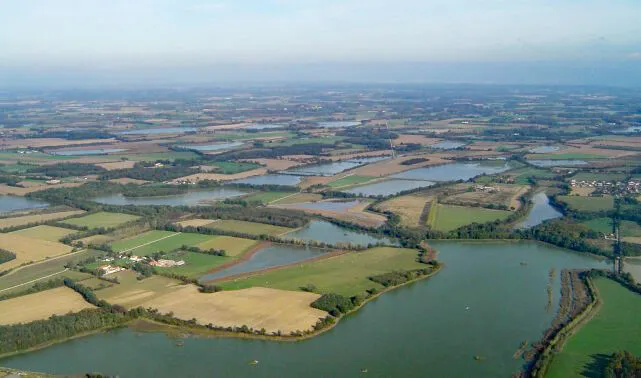
Discover the Ain: world-famous Bresse poultry, the thousand ponds of the Dombes, Pays de Gex facing Mont Blanc and the emerald gorges of Nantua. Complete guide.
 Regions
Aisne: Laon's Medieval Citadel and the Chemin des Dames
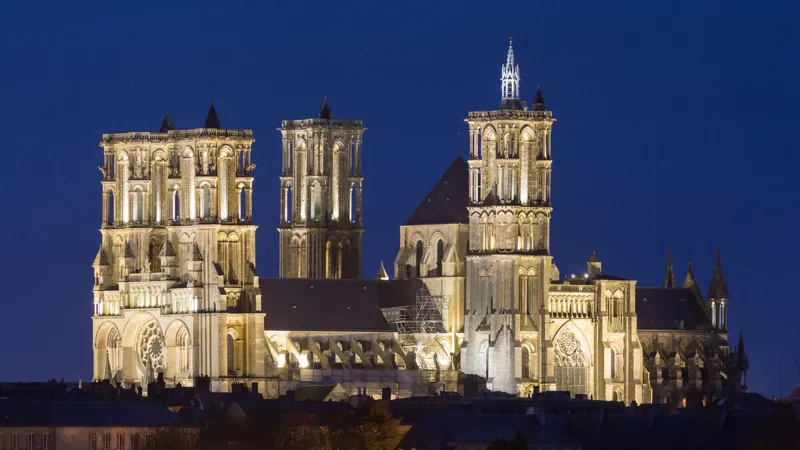
Discover the Aisne département: Laon's hilltop medieval city, the Chemin des Dames battlefields, Soissons, the Familistère de Guise and Champagne vineyards. Complete travel guide.