Every sunken lane in Normandy tells a story. From the D-Day beaches that changed the course of the twentieth century to the streets of Rouen where Joan of Arc met her fate, from Mont-Saint-Michel rising alone above the sands to the Etretat cliffs that Monet painted tirelessly, Normandy is an open-air history book you turn by walking.
The D-Day Beaches
On June 6, 1944, the Normandy coastline entered history. Today, the stretch of shore between Ouistreham and Sainte-Mère-Église forms a vast open-air museum, lined with memorials, cemeteries and remnants that command silence and reflection.
Omaha Beach and the Colleville Cemetery
Omaha Beach, nicknamed "Bloody Omaha", is arguably the most emblematic of the D-Day beaches. On the bluff above, the American Cemetery at Colleville-sur-Mer aligns 9,387 white marble crosses facing the ocean — a sight of overwhelming solemnity. The fully renovated visitor center offers an immersive and free exhibition. Allow at least 90 minutes on site. Entry is free, open daily from 9 am to 6 pm (5 pm in winter).
Utah Beach and Pointe du Hoc
Further west, Utah Beach presents a different face: the flatter shore helps visitors understand the colossal logistics of the amphibious landings. The Utah Beach Museum (entry about 8 euros) displays an authentic B-26 bomber. Midway between Omaha and Utah, Pointe du Hoc preserves its bomb craters and shattered bunkers — a striking testimony of the American Rangers' assault on the cliffs.
The Caen Memorial
To place D-Day in the broader context of the Second World War, the Mémorial de Caen is essential. Allow half a day to explore its exhibitions covering the rise of Nazism, the Cold War and the pursuit of peace. Adult entry is about 20 euros. Tip: book online to skip the queue in high season.
Mont-Saint-Michel
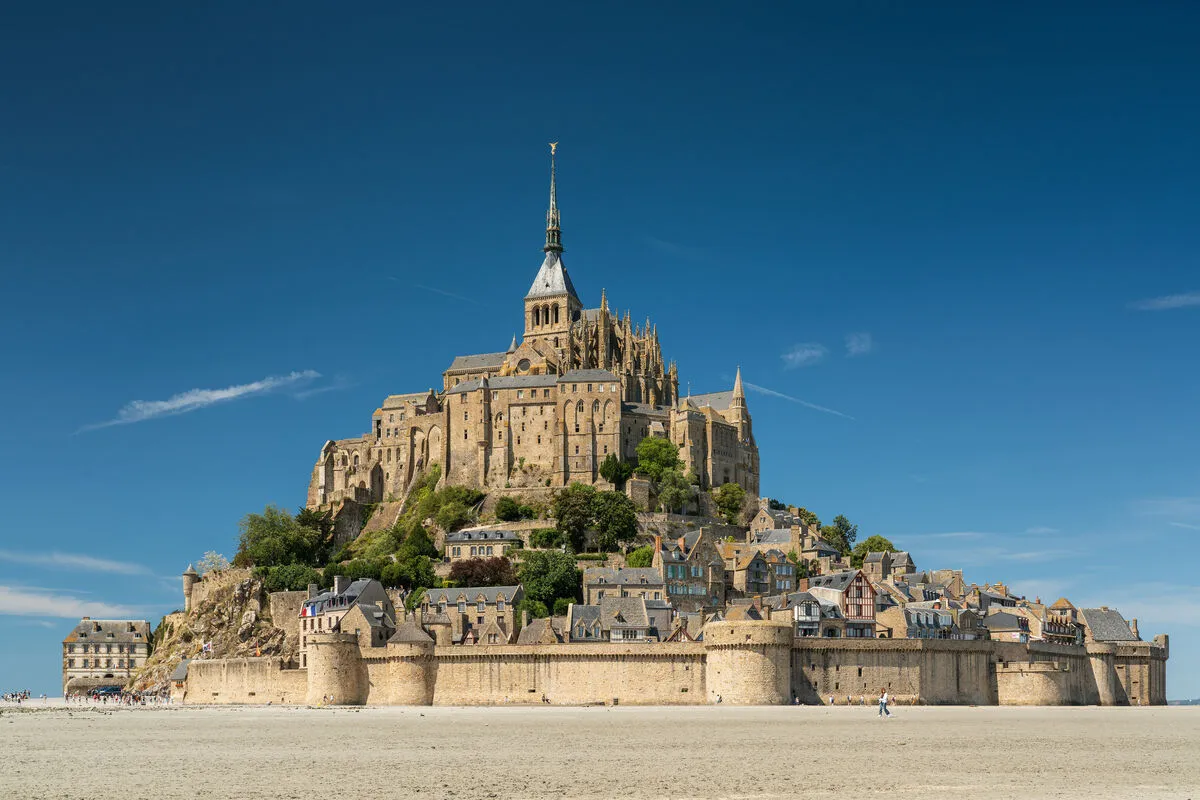
A UNESCO World Heritage Site since 1979, Mont-Saint-Michel is one of the most visited sites in France, welcoming nearly 2.5 million visitors a year. Yet it still manages to take the breath away of anyone seeing it for the first time.
The Abbey and Village
The Abbey of Mont-Saint-Michel, perched 80 metres above sea level, is a masterpiece of medieval architecture. La Merveille, a thirteenth-century Gothic complex, includes the cloister, the refectory and the Hall of Guests. Entry costs about 11 euros (free for EU residents under 26). Below, the winding village streets are packed with shops and restaurants, but venture beyond the Grande Rue: the rampart walks offer spectacular views with far more tranquillity.
The Bay and Guided Crossings
The Bay of Mont-Saint-Michel is a unique ecosystem, with the most powerful tides in continental Europe (up to 15 metres of tidal range during spring tides). Crossing the bay on foot with a licensed guide is an unforgettable experience: barefoot in the wet sand, you learn to spot quicksand, tidal flats and coastal wildlife. Allow about 25 euros per adult for a 2.5-hour crossing. Advance booking is essential.
The Alabaster Coast and Étretat
In the northeast of Normandy, the Alabaster Coast unrolls 130 kilometres of chalk cliffs plunging abruptly into the English Channel — a landscape of raw beauty carved by the elements.
The Cliffs of Étretat
Étretat is the jewel of this coast. The Porte d'Aval, a monumental natural arch, and the Aiguille, a 55-metre rock pinnacle, form a tableau immortalized by Monet, Courbet and Maupassant. For the best view, take the path up the Amont cliff (chapel side): the panorama over the Porte d'Aval and the Aiguille is spectacular, especially in late afternoon when the slanting light turns the chalk golden. Access to the cliffs is free. Insider tip: come early morning or off-season to enjoy the site without crowds.
Fécamp and the Bénédictine Palace
Twenty minutes north, Fécamp deserves a stop for its extraordinary Palais Bénédictine, a flamboyant blend of Gothic and Renaissance built by the industrialist Alexandre Le Grand to celebrate his famous liqueur. The visit (about 12 euros) ends with a tasting. The genuine, unpretentious port of Fécamp also has excellent fishmonger shops.
Honfleur and the Côte Fleurie
The Old Harbour of Honfleur
Honfleur is a small wonder. Its Vieux Bassin (Old Harbour), lined with narrow, colourful half-timbered houses, is one of the most photographed ports in France. The Sainte-Catherine Church, built entirely of wood by shipwrights in the fifteenth century, is unique in France. The Eugène Boudin Museum honours the painter who was Monet's mentor, with luminous canvases capturing the changing skies over the Seine estuary. Entry is about 8 euros.
Deauville and Trouville
Fifteen kilometres from Honfleur, Deauville displays its elegance through its famous boardwalk, casino and Belle Époque villas. On the other side of the bridge, Trouville-sur-Mer has a more down-to-earth, authentic atmosphere, with its fish market on the harbour and long sandy beach. The two resorts are connected by a footbridge — you can cross from glamour to the picturesque in five minutes.
Rouen: Historic Capital
Rouen, the capital of Seine-Maritime, is a city of art and history best explored on foot. Its old centre, magnificently restored after the 1944 bombings, holds an exceptional concentration of heritage.
The Cathedral and the Gros-Horloge
Rouen Cathedral, painted over thirty times by Monet to capture the changing light on its facade, is a Gothic masterpiece whose spire reaches 151 metres. Steps away, the Gros-Horloge, a fourteenth-century astronomical clock mounted on a Renaissance arch, is the symbol of the city. Climb the belfry (about 7 euros) for commanding views over the rooftops.
Joan of Arc and the Medieval Quarter
It was in Rouen that Joan of Arc was tried and burned at the stake on May 30, 1431. The Place du Vieux-Marché, where a modern church shaped like a Viking longship now stands, marks the site of her execution. The Historial Jeanne d'Arc, housed in the archiepiscopal palace where her trial took place, offers an immersive and moving experience (about 11 euros). Afterwards, wander the Rue du Gros-Horloge and Rue Saint-Romain, lined with fifteenth- and sixteenth-century half-timbered houses, among the finest in France.
Norman Specialities
Normandy is a food lover's paradise, and it would be unforgivable to pass through without honouring its products.
Cheese and Dairy
Camembert, the king of Norman cheeses, deserves to be tasted in its raw-milk form, bought directly from a farmhouse in the Pays d'Auge. But don't overlook the pungent Livarot, the creamy Pont-l'Évêque and the heart-shaped Neufchâtel, one of the oldest cheeses in France. Norman cream and butter, of incomparable richness, elevate every dish.
Cider and Calvados
Norman cider, drunk from a ceramic bowl, pairs wonderfully with buckwheat crêpes and galettes. The Route du Cidre in the Pays d'Auge winds between orchards and half-timbered manors. Calvados, apple brandy aged in oak casks, is sipped as a digestif or as a "trou normand" between courses. The best distilleries offer tours with tastings for 5 to 10 euros.
Signature Dishes
Try teurgoule, rice pudding with cinnamon baked for five hours in a bread oven — a comforting speciality from the Cotentin. Barfleur mussels, small and flavourful, are fished off the northeastern tip of the Cotentin from May to January. On the coast, the oysters of Saint-Vaast-la-Hougue rival the finest from Brittany. Everywhere, country terrines, andouilles de Vire and tripes à la mode de Caen carry on centuries-old charcuterie traditions.
Practical Tips
Best Season
Normandy can be visited year-round, but May to September offers the best balance of mild weather and long days. June is ideal for D-Day commemorations. September and October reveal splendid light and lower prices. In winter, Mont-Saint-Michel wreathed in mist and the Étretat cliffs battered by storms provide dramatic atmospheres with very few tourists.
Getting Around
A car is the most practical way to explore Normandy in depth. From Paris, allow about 2 hours for Rouen, 2.5 hours for Caen and 3.5 hours for Mont-Saint-Michel via the A13 and A84 motorways. Intercités trains connect Paris-Saint-Lazare to Rouen in 1 hour 15 minutes and to Caen in 1 hour 50 minutes. For the D-Day beaches and the countryside, a rental car is essential. Budget for fuel and tolls: about 150 to 200 euros per week.
Budget
Accommodation ranges from 50 to 80 euros per night for a budget hotel, 80 to 130 euros for a B&B or charming hotel, and 130 to 220 euros for upscale options. A restaurant lunch runs 14 to 22 euros, dinner 25 to 40 euros. Local farmers' markets provide excellent produce for picnics at reasonable prices. Hiking, village exploration and most churches are free. Paid sites and museums cost 6 to 15 euros per person. To keep costs in check, look for weekday set-lunch menus, stay in rural gites or quality campsites, and enjoy the free tastings many local producers offer.
Explore on the map
Map →📚 Related collections
Related guides
 Regions
Ain: Bresse, Dombes and Pays de Gex
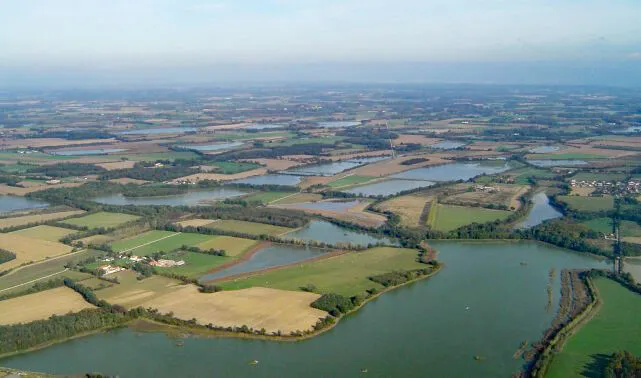
Discover the Ain: world-famous Bresse poultry, the thousand ponds of the Dombes, Pays de Gex facing Mont Blanc and the emerald gorges of Nantua. Complete guide.
 Regions
Aisne: Laon's Medieval Citadel and the Chemin des Dames
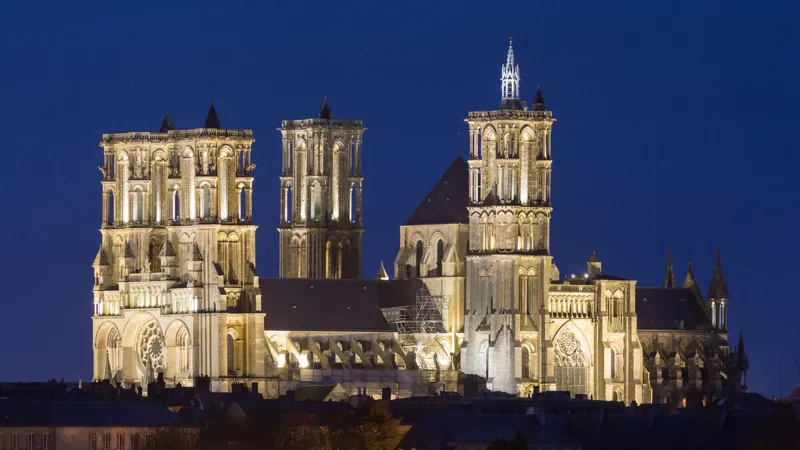
Discover the Aisne département: Laon's hilltop medieval city, the Chemin des Dames battlefields, Soissons, the Familistère de Guise and Champagne vineyards. Complete travel guide.