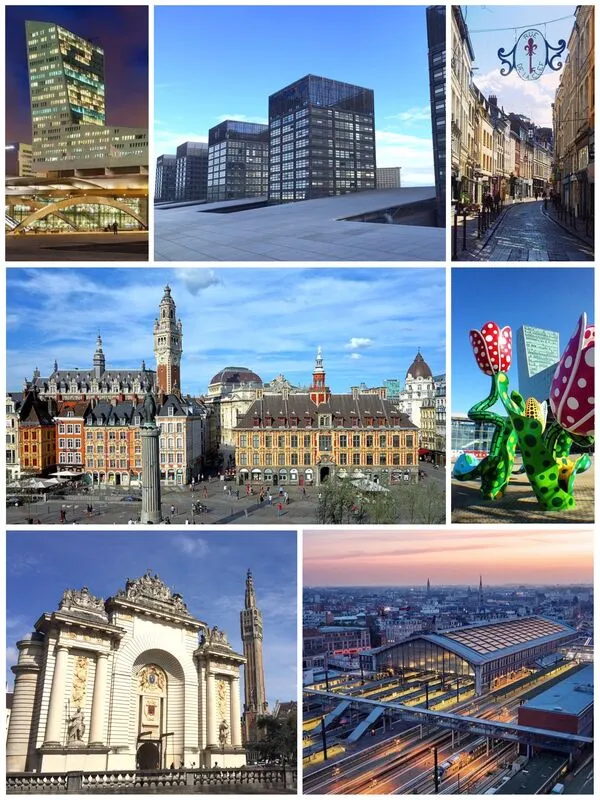
Long dismissed as a grey, post-industrial landscape, the Nord is in fact one of the most rewarding departments in France. Lille, its capital, has swapped factories for art galleries, its estaminets serve hearty Flemish cooking, and its Palais des Beaux-Arts rivals the Louvre in richness. Beyond the metropolis, UNESCO-listed Flemish belfries, the wild beaches of the Opal Coast and slag heaps reborn as green spaces create a territory in full renaissance.
Lille: France's Flemish Capital
Lille has reinvented itself magnificently. Once a declining textile hub, the city is now a thriving cultural metropolis that rivals Lyon and Bordeaux for energy and ambition. Its designation as European Capital of Culture in 2004 accelerated a transformation that was already well underway, and today it attracts visitors with a compelling blend of Flemish heritage, contemporary creativity, and an irrepressible appetite for celebration.
Vieux-Lille (Old Lille) is where most visitors spend the bulk of their time, and with good reason. The quarter is a masterpiece of Flemish Baroque architecture: rows of richly decorated brick-and-stone townhouses, ornate facades with stepped gables, and intimate courtyards hidden behind heavy wooden doors. Start at the Grand'Place (officially Place du Général-de-Gaulle, who was born here), dominated by the Goddess column and flanked by the magnificent Vieille Bourse, a 17th-century merchants' exchange whose arcaded courtyard now hosts second-hand booksellers and chess players. From there, wander the Rue de la Monnaie and Rue de la Clef to discover antique shops, concept stores, and some of the finest chocolate and pastry boutiques in northern France.
The Palais des Beaux-Arts (around 7 euros) is France's second-largest fine-arts museum after the Louvre, and it fully deserves the comparison. The painting galleries move from Flemish primitives through Rubens, Van Dyck, and Delacroix to the Impressionists and beyond. Downstairs, the relief-map gallery displays astonishing scale models of fortified towns built for Louis XIV — enormous, exquisitely detailed works that bring Vauban's military genius to life. Set aside at least two hours, preferably three.
No mention of Lille is complete without the Braderie, held on the first weekend of September. Europe's largest flea market takes over 100 kilometres of streets for a non-stop 48-hour extravaganza that draws over two million people. The entire city becomes an open-air bazaar, with restaurants competing to build the tallest pile of discarded mussel shells outside their doors. Book your accommodation months ahead — the city sells out completely.
Dunkirk: Carnival and Maritime Grit
Dunkirk (Dunkerque) lacks the architectural beauty of Lille — wartime bombing saw to that — but it has a fierce, salt-spray character all its own. The city is inseparable from two things: the sea and its extraordinary carnival.
The Dunkirk Carnival (January to March) is one of the last authentic popular carnivals in Europe. Unlike polished events aimed at tourists, this is raw, chaotic, and joyfully inclusive. Costumed bands march through the streets accompanied by fife and drum, the mayor hurls smoked herrings from the town hall balcony, and the chapelles (popular dance halls) keep the party going until dawn. It is messy, loud, unforgettable, and wonderfully free.
For a calmer experience, the Port Museum (around 7 euros) is housed in a former tobacco warehouse and tells the story of Dunkirk's maritime heritage. You can board three museum ships moored alongside, including the tall ship Duchesse Anne. The FRAC Grand Large, a striking contemporary building on the waterfront, stages excellent free exhibitions of cutting-edge art.
Douai and Its UNESCO Belfry
Douai is an elegant, canal-threaded town whose 54-metre belfry is part of the UNESCO-listed ensemble of belfries across northern France and Belgium. Its carillon of 62 bells — the largest in the Nord — chimes every quarter hour. Climb the 196 steps (around 5 euros) for sweeping views over the Scarpe valley. Each July, the Fêtes de Gayant parade features colossal processional giants, a Flemish tradition recognised by UNESCO as intangible cultural heritage.
Cambrai: Bêtises and Baroque Splendour
Quiet and understated, Cambrai is best known across France for its bêtises, mint-flavoured boiled sweets said to have been created by accident in the 19th century. The Afchain family still makes them by hand. Beyond confectionery, the Cathedral of Notre-Dame de Grâce contains extraordinary trompe-l'oeil grisaille paintings by Geeraerts that are among the finest in the country. The town centre preserves handsome Spanish-era mansions and a worthwhile fine-arts museum with strong Dutch and Flemish holdings.
Cassel: Flanders from Above
Standing atop Mont Cassel at 176 metres, the village of Cassel is classified among France's Most Beautiful Villages. That may not sound high, but in the pancake-flat Flemish plain, it amounts to a commanding viewpoint: on a clear day, you can see five départements, the North Sea, and the English coast.
The village itself is a delight — a cobbled main square ringed by traditional estaminets (Flemish tavern-restaurants), a collegiate church, and a gracious public garden on the summit. Duck into an estaminet to try carbonade flamande (beef braised in dark beer) or potjevleesch (a cold terrine of four meats in jelly), washed down with a locally brewed ale. The Musée de Flandre (around 5 euros) houses an impressive collection of old and contemporary Flemish art.
Valenciennes: The Athens of the North
Historically nicknamed the Athens of the North for its artistic heritage, Valenciennes boasts a Musée des Beaux-Arts (around 5 euros) with one of the finest collections of Flemish and Dutch painting in the region. Works by Rubens, Watteau (a native son), and the sculptor Carpeaux are particular highlights. The city has undergone an ambitious regeneration, with a modern tramway and redesigned public spaces breathing new life into the centre.
The Avesnois: Unexpected Pastoral Beauty
The southeastern corner of the département conceals a landscape that could hardly be more different from the industrial image of the Nord. The Avesnois is a region of rolling hedgerow-bounded pastures, apple orchards, and lush green valleys — more reminiscent of Normandy than northern France. This is the home of Maroilles, a pungent, washed-rind cheese that is a point of fierce local pride. The Parc Naturel Régional de l'Avesnois is crisscrossed with walking and cycling trails, passing through villages built from the region's distinctive blue-grey Hainaut stone.
The fortified town of Le Quesnoy, liberated by New Zealand troops in a daring escalade in 1918 (a moving memorial marks the spot), retains intact Vauban ramparts surrounded by water-filled moats. The village of Maroilles itself, with its ruined abbey and working dairy farms, offers tastings and direct-from-producer purchases.
Practical Information
Lille is served by TGV (1 hour from Paris, 35 minutes from Brussels) and has an efficient automated metro system. A car is essential for exploring the wider département, particularly the Avesnois and inland Flanders. Many estaminets close on Mondays and Tuesdays. Budget-wise, the Nord remains very affordable compared to southern France: expect 60 to 90 euros for a decent double room, and 15 to 25 euros for a hearty estaminet meal. May to September offers the best weather, but the Dunkirk Carnival (winter) and the Braderie (September) are unmissable highlights in their own right.
Explore on the map
Map →📚 Related collections
Related guides
 Regions
Ain: Bresse, Dombes and Pays de Gex
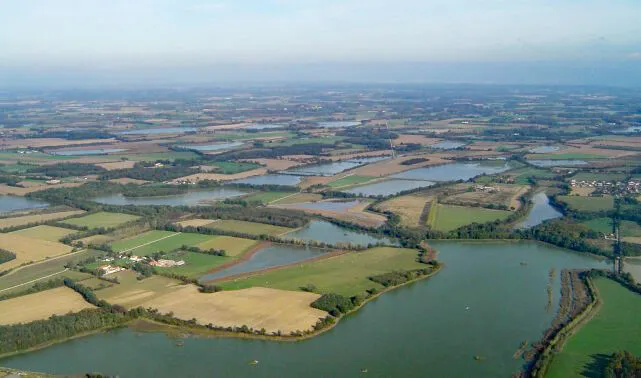
Discover the Ain: world-famous Bresse poultry, the thousand ponds of the Dombes, Pays de Gex facing Mont Blanc and the emerald gorges of Nantua. Complete guide.
 Regions
Aisne: Laon's Medieval Citadel and the Chemin des Dames
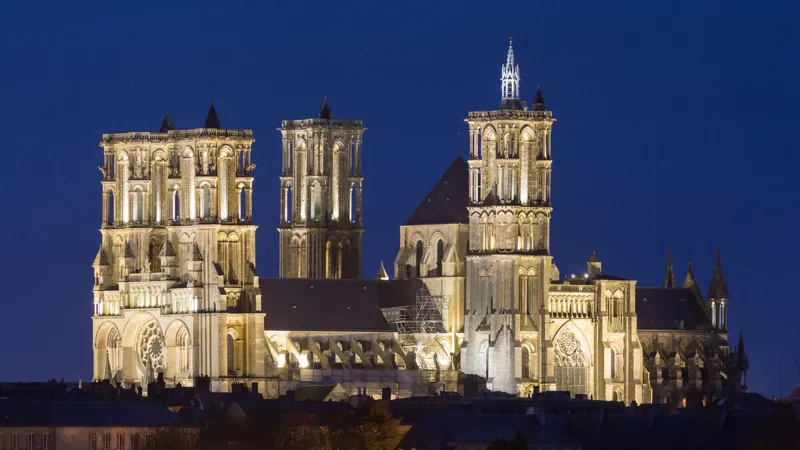
Discover the Aisne département: Laon's hilltop medieval city, the Chemin des Dames battlefields, Soissons, the Familistère de Guise and Champagne vineyards. Complete travel guide.