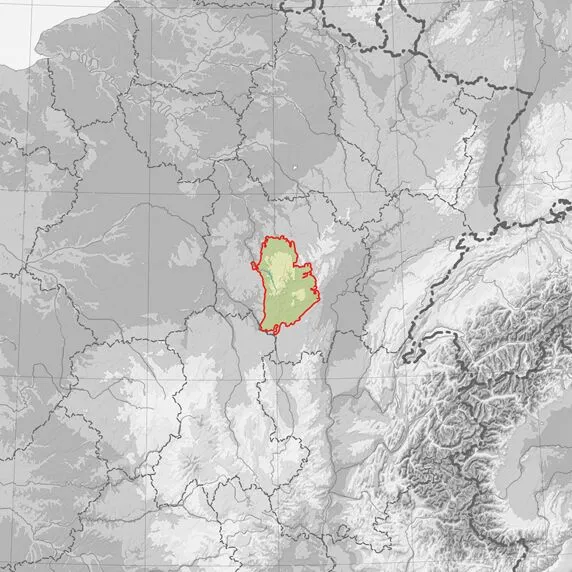
The Nievre is the Burgundy that guidebooks forget. No star vineyard, no Route des Grands Crus: here it is the Morvan, a granite massif cloaked in forests and lakes, that takes centre stage. Yet Nevers guards its famous faience, the Loire flows wide and wild, and the cheeses -- Epoisses, Charolais -- rival the best Burgundy vintages.
Nevers, City of Art and Faience
The Ducal Palace and the Old Town
Nevers, préfecture of the Nièvre, is a city you discover first through its silhouette: the Palais Ducal, the first château on the Loire when travelling upstream, raises its elegant turrets above the slate rooftops. Built in the fifteenth and sixteenth centuries, this jewel of Renaissance architecture can be visited freely and hosts temporary exhibitions. The old town unfolds its medieval streets around the Cathedral of Saint-Cyr-et-Sainte-Julitte, an architectural curiosity unique in France with its two opposing apses — one Romanesque, the other Gothic.
The Faience Tradition
Nevers has been the French capital of faience since the sixteenth century, when Italian potters settled here under the patronage of the Dukes of Gonzaga. The Musée de la Faïence et des Beaux-Arts (around 5 euros) displays an exceptional collection of pieces from the sixteenth to the twenty-first century, from grand narrative plates to contemporary creations. Several workshops continue the tradition and welcome visitors, notably the Faïencerie Georges and the Atelier de la Porte du Croux. Unique hand-painted pieces can be purchased from 15 euros.
Bernadette Soubirous
Nevers houses a major pilgrimage site: the Convent of Saint-Gildard, where the body of Bernadette Soubirous, the visionary of Lourdes, rests. She died here in 1879, and her preserved body is visible in a glass reliquary in the chapel. The site welcomes nearly 200,000 pilgrims each year. Access is free and open to all, whether believers or the simply curious.
The Morvan, Green Lung of Burgundy
The Morvan Regional Nature Park
The Morvan is an ancient granitic massif that rises from the surrounding limestone plains of Burgundy like an island of green. The Parc naturel régional du Morvan, established in 1970, covers 290,000 hectares of beech and fir forests, lakes, rivers and pastureland. It is a territory of wild, preserved nature — a paradise for hikers, anglers and outdoor enthusiasts of every kind.
The Morvan Lakes
The Morvan boasts six large lakes, all open for swimming and water sports in summer. The Lac des Settons, the oldest (created in 1858), is the most developed, with beaches, water-sport centres and walking trails circling its shores. The Lac de Pannecière, the largest, impresses with its sculpted shoreline and landscapes that shift dramatically with the seasons. The Lac de Chaumeçon is the wildest, ideal for white-water kayaking. Kayak and paddleboard hire starts at around 12 euros per hour.
Hiking and Mountain Biking
The Morvan is crisscrossed by hundreds of kilometres of marked trails. The GR 13 long-distance path traverses the massif from north to south, while the Tour du Morvan offers a 220-kilometre circuit completed in 10 to 12 days. For mountain bikers, the Grande Traversée du Morvan (GTM) provides 235 kilometres of forest tracks and technical single-track. Trail-side gîtes d'étape punctuate the routes, with dormitory beds from 20 euros per night.
The Log-Floating Heritage
For three centuries, the Morvan supplied Paris with firewood through an ingenious log-floating system: logs were thrown into the rivers and carried to the capital via the Yonne and the Seine. The Musée du Flottage in Clamecy recounts this fascinating history. Each July, a reconstruction of the floating on the Cure river brings this vanished tradition vividly back to life.
The Magny-Cours Racing Circuit
A Temple of Speed
The Circuit de Nevers Magny-Cours is one of the most prestigious racing circuits in France. A former Formula One venue (which hosted the French Grand Prix from 1991 to 2008), it now welcomes the Superbike World Championship, GT racing events and numerous automotive gatherings. Race weekends draw tens of thousands of spectators (tickets from 25 euros for a day pass).
Driving Experiences
Outside competition weekends, the circuit offers driving experiences open to all. Take the wheel of a Formula Renault, a Porsche or a Ferrari for sessions ranging from 20 minutes (around 100 euros) to full days. It is an unforgettable experience, accessible even to complete beginners. Passenger ride-alongs are available from 50 euros.
Vézelay, the Eternal Hill
The Basilica of Sainte-Marie-Madeleine — UNESCO
At the north-eastern edge of the Nièvre, the hill of Vézelay is one of the high places of Western Christianity. The Basilica of Sainte-Marie-Madeleine, a UNESCO World Heritage Site, is a masterwork of Burgundian Romanesque art. Its sculpted tympanum, depicting Christ sending the apostles to evangelise the world, and its narrative capitals are of exceptional iconographic richness. Admission is free. The narthex bathed in light on the summer solstice is a spectacle that must be witnessed at least once.
The Village and the Way of Saint James
The village of Vézelay, listed among the Most Beautiful Villages of France, stretches along a single street climbing toward the basilica. Art galleries, bookshops, wine cellars and restaurants line the ascent. Vézelay is also one of the four starting points for the Way of Saint James (Camino de Santiago) in France, lending it a particular spiritual dimension that has drawn pilgrims for nearly a thousand years.
Clamecy and the Canal du Nivernais
An Unforgettable River Cruise
The Canal du Nivernais is considered one of the most beautiful canals in France. Over 174 kilometres, it winds between wooded hills, meadows and sleepy villages, passing through 116 locks — many of them charmingly decorated with flowers. Hiring a self-drive houseboat (no licence required) is one of the finest ways to discover the Nièvre. Rates start at around 800 euros per week for a 4-person boat in low season. The stretch between Clamecy and Châtillon-en-Bazois is unanimously regarded as the most picturesque.
Practical Information
Getting there: Nevers is 2 hours from Paris by motorway (A77). Direct trains connect Paris-Bercy to Nevers in 2 hours 10 minutes. Vézelay is more easily reached from Auxerre or Avallon.
Getting around: A car is essential for exploring the Morvan and the Nivernais countryside. Roads are quiet and pleasant. Cycling is excellent along the Canal du Nivernais, which has a dedicated cycle path running its full length.
Best time to visit: May to October for outdoor activities and the Morvan lakes. September for race weekends at Magny-Cours. Autumn is sublime in the Morvan forests, with beech and oak turning blazing shades of gold and copper. Winter is peaceful but many accommodations close.
Budget: The Nièvre is one of the most affordable destinations in Burgundy. Restaurants offer set menus from 13 euros. Bed-and-breakfasts in the Morvan provide rooms from 50 euros for two including breakfast. Local specialities to taste: jambon du Morvan (dry-cured ham), galette au fromage (cheese pastry) and Pouilly-Fumé, the great white wine of the Nivernais Loire.
Explore on the map
Map →📚 Related collections
Related guides
 Regions
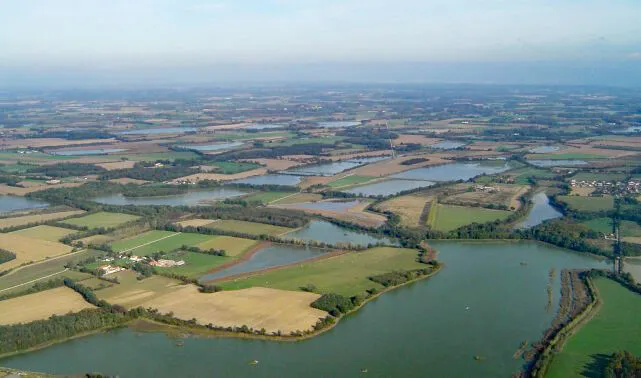
Ain: Bresse, Dombes and Pays de Gex
Discover the Ain: world-famous Bresse poultry, the thousand ponds of the Dombes, Pays de Gex facing Mont Blanc and the emerald gorges of Nantua. Complete guide.
 Regions
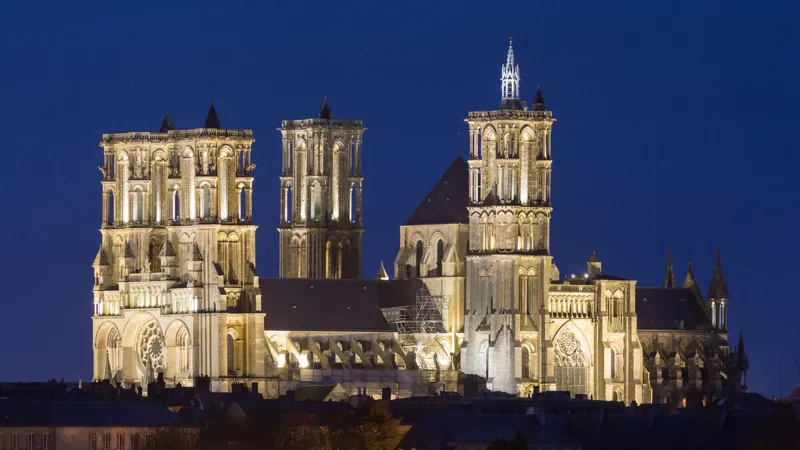
Aisne: Laon's Medieval Citadel and the Chemin des Dames
Discover the Aisne département: Laon's hilltop medieval city, the Chemin des Dames battlefields, Soissons, the Familistère de Guise and Champagne vineyards. Complete travel guide.