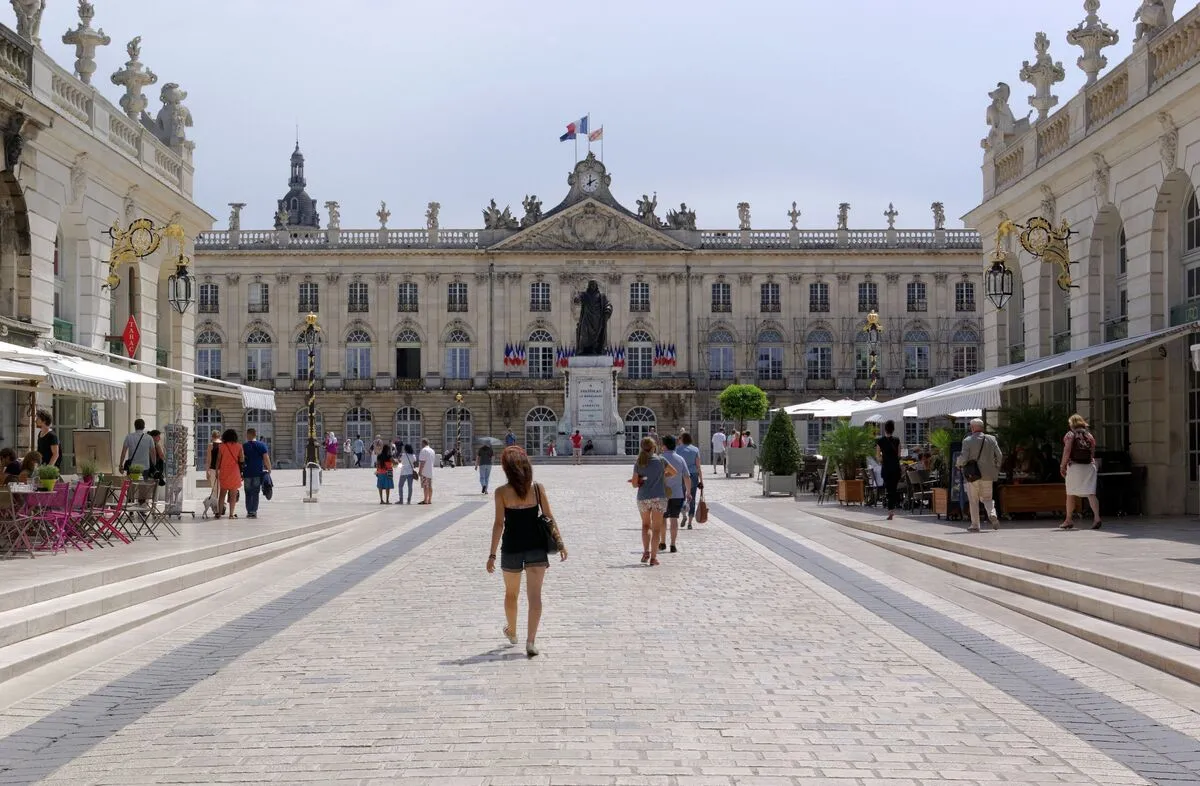
Many consider the Place Stanislas in Nancy to be the most beautiful square in Europe. Jean Lamour's gilded wrought-iron gates, monumental fountains, harmonious eighteenth-century facades -- you understand the superlative at first glance. Meurthe-et-Moselle is the department of this elegant city, capital of the Dukes of Lorraine and cradle of Art Nouveau, where Galle and Daum's stained glass still illuminates interiors.
Nancy: The Place Stanislas, a UNESCO Jewel
The Place Stanislas
The Place Stanislas is one of the finest 18th-century architectural ensembles in the world. Created between 1751 and 1755 by exiled Polish king Stanislas Leszczynski, father-in-law of Louis XV and the last Duke of Lorraine, it is inscribed on the UNESCO World Heritage List together with the adjacent Place de la Carrière and Place d'Alliance.
The harmony is breathtaking: classical facades of golden stone frame a pedestrianised space measuring 124 by 106 metres, punctuated by monumental fountains (Neptune and Amphitrite) and linked to neighbouring streets by spectacular gilded wrought-iron gates crafted by Jean Lamour. The Hôtel de Ville, the Fine Arts Museum, and the Opera house line the square with sovereign dignity. On summer evenings (June to September), a sound-and-light show (free) projects animations onto the facades that elevate the architecture to something almost magical.
The Fine Arts Museum
Housed in one of the Place Stanislas pavilions, the Musée des Beaux-Arts (environ 7 euros) holds a distinguished collection spanning the 14th to the 21st centuries. Caravaggio, Rubens, Delacroix, Monet, and Modigliani all feature. In the basement, the Daum gallery displays 350 pieces of Daum glassware — an Art Nouveau and Art Deco collection of dazzling beauty unique to Nancy. Allow 1.5 to 2 hours.
Art Nouveau in Nancy: The École de Nancy
Together with Brussels and Barcelona, Nancy is one of the European capitals of Art Nouveau. The École de Nancy, founded in 1901 by Émile Gallé, brought together artists, architects, and craftsmen around a shared vision: integrating art into everyday life by drawing on the forms of nature.
The Musée de l'École de Nancy (environ 7 euros), set in a Belle Époque villa surrounded by a garden, is enchanting. Furniture by Gallé and Majorelle, stained glass by Gruber, glassware by Daum: every piece is a total work of art in which botanical motifs — water lilies, thistles, orchids — invade furniture, lighting, and household objects.
Art Nouveau facades are scattered across the city: the Chamber of Commerce (Gruber stained glass, freely visible), the Brasserie Excelsior (intact Majorelle interior — ideal for lunch at 18 to 30 euros), and the houses of Rue Félix-Faure and the Saurupt quarter. The tourist office provides a self-guided "Nancy Art Nouveau" walking trail covering some fifteen sites.
The Old Town and the Ducal Palace
Nancy's Vieille Ville (Old Town), the medieval seat of the Dukes of Lorraine, provides a striking contrast to the classical elegance of the Place Stanislas. Narrow lanes, Renaissance mansions, baroque churches, and the magnificent 14th-century Porte de la Craffe — the city's oldest gate — compose a picturesque tableau.
The Ducal Palace houses the Musée Lorrain (undergoing renovation — check reopening dates). Its Renaissance façade, crowned by a famous equestrian statue above the entrance pavilion, is one of the finest pieces of 16th-century civic architecture in France. The adjoining Église des Cordeliers serves as the ducal necropolis.
Lunéville: The Versailles of Lorraine
Thirty kilometres from Nancy, Lunéville boasts a sumptuous château built in the early 18th century for Duke Léopold I and later embellished by Stanislas. The Château de Lunéville (environ 8 euros), with its 300-metre facade, formal French gardens, and wooded park, fully justifies its "Versailles of Lorraine" sobriquet. A devastating fire in 2003 destroyed much of the building, but the ongoing restoration already allows visitors to tour reconstituted apartments and an exhibition on Lunéville-Saint-Clément faience, celebrated for its floral motifs on white backgrounds.
Longwy: Enamels and a Vauban Citadel
At the département's northern tip, Longwy is famous for its Longwy enamels, a decorative technique on faience that produces pieces of vivid colour outlined in golden cloisonné. The tradition, born in the 19th century under Asian artistic influence, remains alive today. The Espace Faïences et Émaux in the Vauban citadel traces the history and displays sumptuous examples.
The Longwy citadel, fortified by Vauban and inscribed on the UNESCO World Heritage List as part of the Vauban fortifications network, is a remarkable example of a new fortified town. Its perfect hexagonal form, visible from above, and its massive ramparts testify to 17th-century military genius.
Toul: Cathedral and Vineyards
Toul, a former episcopal city encircled by ramparts, preserves a Cathedral of Saint-Étienne whose Flamboyant Gothic west front (15th century) rivals that of Reims in audacity. The adjoining cloister, one of the largest in France, is a haven of tranquillity.
The surrounding countryside harbours the Côtes de Toul vineyard, a small Lorraine AOC producing excellent vin gris (delicate, pale rosé), Pinot Noir reds, and Auxerrois whites. Winemakers readily open their cellars for tastings (environ free to 5 euros). The village of Lucey and the slopes around Bruley offer appealing vineyard panoramas.
Pont-à-Mousson and the Moselle Valley
Pont-à-Mousson, midway between Nancy and Metz, merits a detour for its Premonstratensian Abbey, an 18th-century monastic complex of spectacular scale that now functions as a cultural centre. Three cloisters, a monumental staircase, and an oval library display rare elegance. Admission to the common areas is free.
The Moselle valley, between Nancy and the Luxembourg border, unrolls a landscape of wooded hills, wine villages, and orchards of mirabelle plum trees. The Lorraine mirabelle, a small golden plum, is the star of late summer: in August, mirabelle festivals animate the entire region.
Practical Information
- When to visit: April to October for fine weather; summer for the Place Stanislas light show and August's mirabelle festivals; December for Nancy's Christmas market
- Getting around: Nancy is 1 hour 30 minutes from Paris by TGV; the city centre is easily walkable; a car is needed for Lunéville, Longwy, and the vineyards
- Budget: Nancy is a university city and reasonably priced — expect 65 to 100 euros for a double room, 15 to 25 euros for a restaurant meal
- Suggested duration: 2 to 3 days for Nancy and surroundings; add 1 day for Lunéville and Longwy
- Don't miss: the Place Stanislas illuminated at night, the Musée de l'École de Nancy, lunch at the Brasserie Excelsior, and a vin gris tasting at Côtes de Toul
Explore on the map
Map →📚 Related collections
Related guides
 Regions
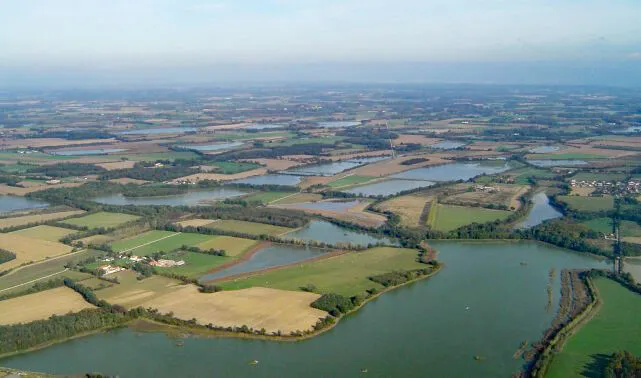
Ain: Bresse, Dombes and Pays de Gex
Discover the Ain: world-famous Bresse poultry, the thousand ponds of the Dombes, Pays de Gex facing Mont Blanc and the emerald gorges of Nantua. Complete guide.
 Regions
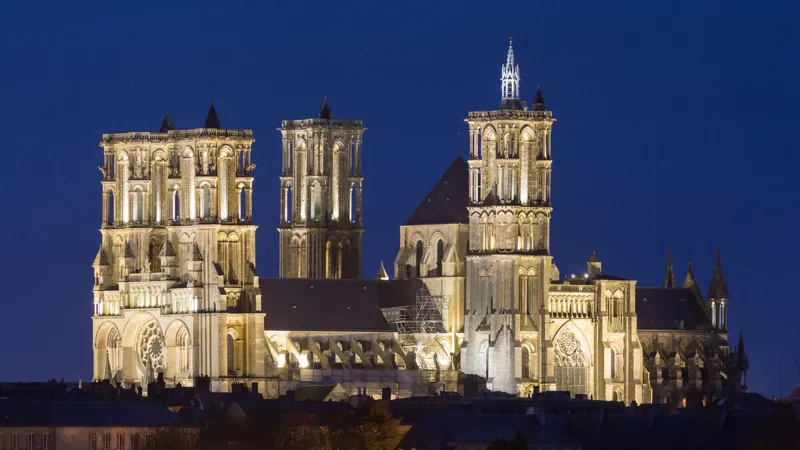
Aisne: Laon's Medieval Citadel and the Chemin des Dames
Discover the Aisne département: Laon's hilltop medieval city, the Chemin des Dames battlefields, Soissons, the Familistère de Guise and Champagne vineyards. Complete travel guide.