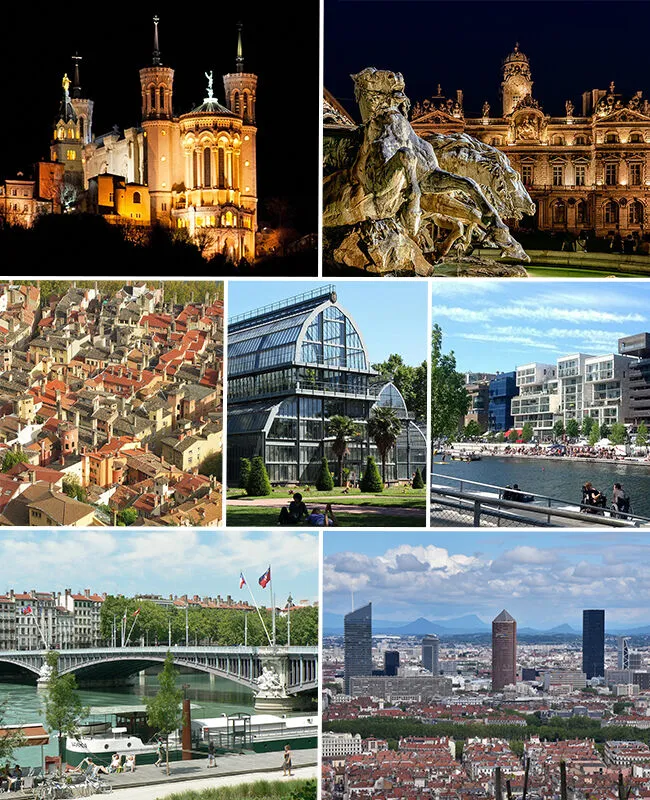
Paul Bocuse used to say that Lyon is the world capital of gastronomy, and he had a point. But this city founded by the Romans in 43 BC is far more than a string of bouchons and Michelin-starred restaurants. Twenty centuries of history can be read in its Presqu'ile traboules, its giant wall murals, its Fourviere hilltop and its Confluence district, where contemporary architecture converses with industrial heritage.
Vieux Lyon and the Traboules
The Vieux Lyon (Old Lyon) district, wedged between the Saône riverbank and the Fourvière hillside, is one of the largest intact Renaissance quarters in Europe and has been a UNESCO World Heritage Site since 1998.
Renaissance Architecture and Saint-Jean Cathedral
Three distinct neighbourhoods make up Vieux Lyon — Saint-Jean, Saint-Paul and Saint-Georges — each with its own personality but sharing the same narrow cobbled lanes, warm ochre and pink facades, and ornate courtyards. The heart of the district is the Cathédrale Saint-Jean-Baptiste, a Gothic masterpiece built between the twelfth and fifteenth centuries. Inside, look for the fourteenth-century astronomical clock in the north transept — it animates at noon, 2 pm, 3 pm and 4 pm daily. Entry to the cathedral is free.
The Traboules — Lyon's Secret Passages
Lyon's most distinctive architectural feature is the traboule — a passageway that cuts through a building from one street to another, often via a succession of courtyards and spiral staircases. There are roughly 400 traboules in Lyon, originally used by silk merchants to transport fabrics without exposing them to rain. In Vieux Lyon, about 40 are open to the public during the day. The most famous include the traboule at 27 Rue Saint-Jean and the Tour Rose passage at 16 Rue du Boeuf, with its pink Renaissance tower. Push the doors gently, walk quietly — residents live upstairs — and discover a hidden world behind the facades.
Gadagne Museums
The Musées Gadagne, housed in a magnificent Renaissance mansion on the Place du Petit Collège, contains two museums in one: the Musée d'Histoire de Lyon and the Musée des Marionnettes du Monde (Lyon being the birthplace of the Guignol puppet tradition). Entry costs about 8 euros. The rooftop café terrace has a lovely view over the old town rooftops.
Fourvière Hill
Rising steeply above Vieux Lyon, Fourvière is where Lyon began — the Romans founded Lugdunum here in 43 BC, making it the capital of the Gauls.
The Basilica of Notre-Dame de Fourvière
The most visible landmark in Lyon, the Basilique Notre-Dame de Fourvière (1884), crowns the hilltop in a profusion of white marble, Byzantine domes and gilded statues. The exterior is imposing; the interior is overwhelming — every surface is covered in mosaics, stained glass and gilt. Entry is free. For the best rooftop view, book the guided tour of the observation tower (about 8 euros), which gives a 360-degree panorama from the cathedral spire to Mont Blanc on clear days.
Roman Theatres and the Gallo-Roman Museum
Just behind the basilica, the Théâtre Antique and the smaller Odéon form one of the most important Roman archaeological sites in France. The grand theatre, built around 15 BC, seats 10,000 and still hosts the Nuits de Fourvière summer festival (June-July) with concerts, theatre and dance. The adjacent Musée Gallo-Romain de Fourvière, built into the hillside, displays mosaics, bronzes and the famous Claudius Tablet. Entry is about 7 euros; free on the first Sunday of each month.
Getting to Fourvière
Two funicular lines climb from the Vieux Lyon metro station to Fourvière. A standard TCL transport ticket (about 2 euros) covers the ride. The view from the Esplanade de Fourvière at the top is one of the classic Lyon panoramas — the city spread below, the two rivers converging, and the Alps on the eastern horizon.
La Presqu'île
The Presqu'île — literally "almost-island" — is the long peninsula between the Rhône and the Saône, and it is the commercial and social heart of Lyon.
Place Bellecour
At its centre, the Place Bellecour is one of the largest public squares in Europe, a vast open expanse dominated by an equestrian statue of Louis XIV. The tourist office is located here, and the square is a useful orientation point for exploring the rest of the Presqu'île.
Place des Terreaux
At the northern end of the Presqu'île, the Place des Terreaux hosts the magnificent Bartholdi Fountain and the Musée des Beaux-Arts de Lyon, housed in a seventeenth-century former abbey. This is one of France's finest art museums outside Paris, with an outstanding collection spanning antiquity to contemporary art. Entry is about 8 euros. Adjacent, the recently renovated Opéra de Lyon, with its striking glass barrel vault designed by Jean Nouvel, anchors the city's performing arts scene.
Traditional Bouchons
The bouchon lyonnais is Lyon's most beloved culinary institution — a small, convivial restaurant serving hearty traditional fare at communal tables, often with checkered tablecloths and handwritten menus.
What to Eat
A bouchon meal is an education in Lyonnaise cuisine. Start with a salade lyonnaise (frisée lettuce with lardons, croutons and a poached egg) or a plate of warm cervelle de canut — despite the name ("silk worker's brains"), this is a fresh cheese whipped with herbs, shallots and cream. Main courses revolve around offal and slow-cooked meats: tablier de sapeur (breaded, fried tripe — crunchy outside, melting inside) is the city's signature dish. Quenelle de brochet — a delicate pike dumpling in creamy crayfish sauce, gratinéed until golden — is equally iconic. Finish with a tarte aux pralines, a startlingly pink tart made with sugar-coated almonds. A full bouchon lunch with a pot of Beaujolais runs about 25 to 35 euros per person.
Authentic vs. Tourist Bouchons
Not every restaurant calling itself a bouchon is genuine. Look for the "Les Bouchons Lyonnais" certification label. Reliable addresses include Chez Georges (8 Rue du Garet), Le Café Comptoir Abel (25 Rue Guynemer, the oldest bouchon in Lyon, operating since 1928), and Daniel et Denise (156 Rue de Créqui), run by a Meilleur Ouvrier de France. Book ahead, especially for Friday and Saturday lunch.
Les Halles Paul Bocuse
Lyon's great indoor food market, Les Halles de Lyon — Paul Bocuse, named in honour of the city's most famous chef, is a temple to French gastronomy packed under one roof.
A Tour of the Halles
Located at 102 Cours Lafayette (metro Part-Dieu), the market holds about 60 stalls selling the finest produce in the region. Wander between fromageries with towering displays of Saint-Marcellin, Comté and Beaufort; charcuteries offering rosette de Lyon, cervelas truffé and jambon persillé; fishmongers, bakers, chocolatiers and wine merchants. Several stalls have small counters where you can sit and eat. The market is open Tuesday to Sunday, 7 am to 10:30 pm (food stalls close earlier). Saturday morning is the liveliest time.
The Bocuse Legacy
Paul Bocuse, who died in 2018, was instrumental in making Lyon synonymous with fine dining. His flagship restaurant, L'Auberge du Pont de Collonges (about 12 km north of Lyon), remains a landmark. In the city itself, the Bocuse group operates several brasseries serving excellent Lyonnaise classics at accessible prices (mains about 18 to 28 euros).
La Croix-Rousse and Street Art
The hill of La Croix-Rousse, on the north side of the Presqu'île, is Lyon's bohemian quartier — historically the neighbourhood of the canuts (silk workers) who powered Lyon's textile industry in the eighteenth and nineteenth centuries.
The Silk Workers' Heritage
The canuts worked in tall buildings with high ceilings designed to accommodate their enormous Jacquard looms. You can see a working loom at the Maison des Canuts (10-12 Rue d'Ivry, entry about 7 euros). Like Vieux Lyon, Croix-Rousse has its own network of traboules — the passage at 9 Place Colbert to 14bis Montée Saint-Sébastien is one of the longest in the city.
Murals and Organic Market
Lyon is a European capital of trompe-l'oeil murals, and Croix-Rousse has some of the best. The Fresque des Canuts (Boulevard des Canuts) is one of the largest painted walls in Europe — a hyper-realistic depiction of the neighbourhood's buildings and inhabitants, repainted every decade to reflect changes. The Croix-Rousse market (Boulevard de la Croix-Rousse, every day except Monday) is one of Lyon's finest, with a strong organic section.
Beyond the City Centre
Beaujolais Wine Country
Just 30 minutes north of Lyon, the rolling hills of Beaujolais produce far more than the light Nouveau for which the region is unfairly known. The ten crus — Morgon, Fleurie, Moulin-à-Vent, Côte de Brouilly and others — are serious, age-worthy wines. Many domaines offer tastings and cellar visits.
Pérouges
The medieval walled village of Pérouges, about 35 kilometres northeast of Lyon, is one of the most beautiful villages in France. Its cobbled streets and half-timbered houses look almost unchanged since the fifteenth century. Come for the atmosphere and the famous galette de Pérouges, a buttery sugar flatbread baked in wood-fired ovens.
Parc de la Tête d'Or and Confluence
Within the city, the Parc de la Tête d'Or (free entry) offers 117 hectares of lakeside gardens, a botanical garden, a free zoo, and shaded paths. At the southern tip of the Presqu'île, the Confluence district is Lyon's boldest contemporary architecture project — the Musée des Confluences, a stunning deconstructivist building, houses permanent collections on natural science and human civilisation (entry about 9 euros).
Practical Tips
Lyon City Card
The Lyon City Card (about 28 euros for one day, 38 for two, 48 for three) covers unlimited public transport, entry to 23 museums, a river cruise and a Fourvière funicular ride. It pays for itself quickly if you visit two or more museums per day.
Getting Around
Lyon's metro, tram and bus network (TCL) is efficient and covers all major sites. Single tickets cost about 2 euros and are valid for one hour on all modes. The city is also very walkable — Vieux Lyon to the Presqu'île is a pleasant 10-minute stroll across the Saône.
Best Time to Visit
May, June and September offer warm weather and comfortable sightseeing temperatures. Lyon's famous Fête des Lumières (December 8 and surrounding days) transforms the city into an extraordinary light-art installation — book accommodation months ahead. July and August are hot (regularly above 35 degrees Celsius) and many bouchons close for summer holidays.
Budget
This area is pricier than the French average, especially in high season. Expect to pay 70 to 110 euros per night for a decent hotel, 110 to 170 euros for a charming B&B or boutique hotel, and 170 to 300 euros for premium establishments. Meals range from 18 to 28 euros for lunch to 30 to 55 euros for dinner. To save money, book well in advance, stay slightly away from the most touristy zones (prices drop 20-30%), eat at markets and local food stalls rather than seafront restaurants, and take advantage of the many free activities: hiking, beaches, village walks, panoramic viewpoints.
Explore on the map
Map →📚 Related collections
Related guides
 Regions
Ain: Bresse, Dombes and Pays de Gex
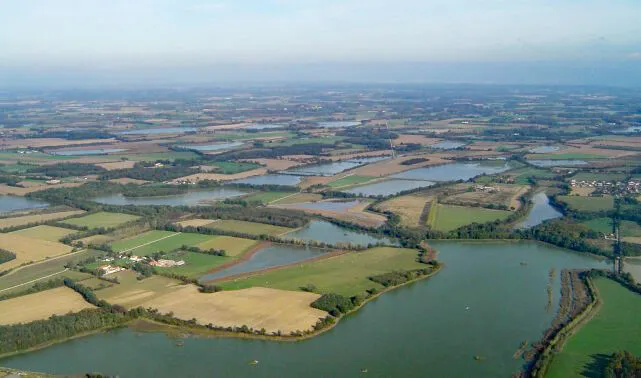
Discover the Ain: world-famous Bresse poultry, the thousand ponds of the Dombes, Pays de Gex facing Mont Blanc and the emerald gorges of Nantua. Complete guide.
 Regions
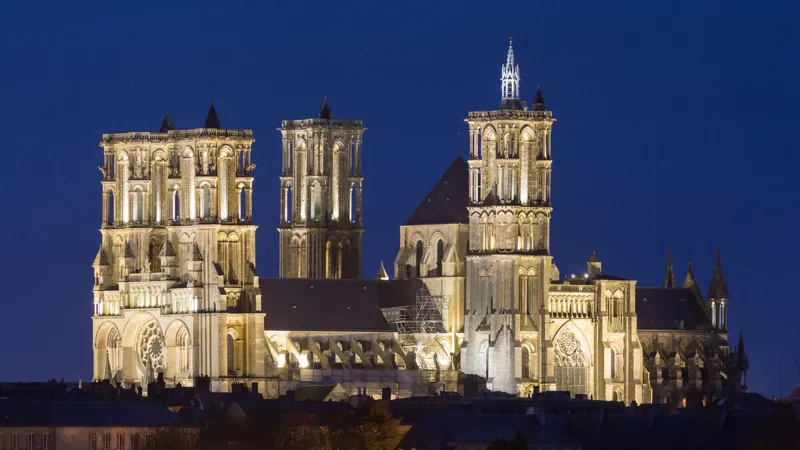
Aisne: Laon's Medieval Citadel and the Chemin des Dames
Discover the Aisne département: Laon's hilltop medieval city, the Chemin des Dames battlefields, Soissons, the Familistère de Guise and Champagne vineyards. Complete travel guide.