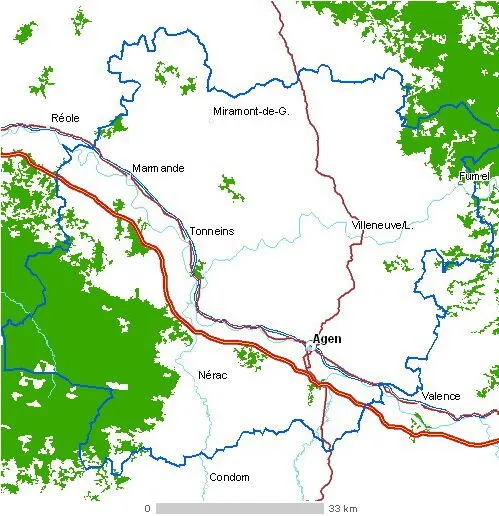
The plum trees of Agen blossom in March, turning the Lot-et-Garonne hillsides into a cloud of white and pink. This sunny department, crossed by the Garonne and Lot rivers, is the orchard of the southwest: plums, strawberries, tomatoes, melons, hazelnuts. The medieval bastides perched on the ridges are a reminder that this land of plenty was also, in the thirteenth century, a frontier disputed between the kings of France and England.
Agen: Capital of the Prune
Agen is a pleasant surprise. This manageable préfecture, too often reduced to its famous prune, has varied architecture and a lively cultural scene. The Musée des Beaux-Arts (~4 euros), spread across four linked Renaissance and classical townhouses, holds an impressive collection ranging from prehistoric artefacts to Impressionist paintings, with a Goya among its treasures.
The Canal de Garonne, the historic waterway linking Toulouse to Bordeaux, threads through the city and provides a shaded towpath ideal for cycling or walking. The canal aqueduct crossing the Garonne is a remarkable feat of engineering — 539 metres long, the second longest in France.
No visit to Agen is complete without tasting the pruneau. The Ente plum, sun-dried and then oven-finished, produces a soft, intensely flavoured fruit that locals transform into chocolate-dipped confections, Armagnac-soaked treats, and savoury accompaniments to foie gras. Several producers welcome visitors for tastings that trace this eight-century-old tradition from orchard to finished product.
Monflanquin: The Model Bastide
Monflanquin, classified among France's Most Beautiful Villages, is one of the best-preserved bastides in the southwest. Founded in 1256 by Alphonse de Poitiers, this planned medieval town retains its original grid layout: an arcaded central square surrounded by a neat chessboard of streets, the whole ensemble set atop a hill overlooking the surrounding countryside.
The Musée des Bastides (modest admission fee) explains the remarkable bastide phenomenon with engaging clarity. Between the 13th and 14th centuries, hundreds of these new towns were founded across the southwest, offering land and legal freedoms to settlers willing to colonise frontier territories. Walking the village is a delight: half-timbered facades, shaded arcades called cornières, terraced gardens, and sweeping views over the rolling farmland below. Allow a good hour.
Château de Bonaguil: The Castle That Time Forgot
Château de Bonaguil (~7 euros) is a one-of-a-kind fortress. Built between the 13th and 16th centuries by the reputedly paranoid lord Bérenger de Roquefeuil, it is one of the last medieval castles constructed in France — erected at a time when such fortifications were already becoming obsolete in the face of artillery. The result is a hybrid stronghold, blending medieval towers with gun emplacements designed for cannon, that was never once besieged.
The guided tour (about 90 minutes) takes you through underground passages, the keep, wall-walks, and vaulted chambers. The setting is spectacular: the castle crowns a rocky spur surrounded by oak woodland with no modern intrusion in sight. Falconry displays and historical re-enactments enliven the site in summer.
Villeneuve-sur-Lot: Bastide on Two Banks
Villeneuve-sur-Lot, the largest bastide in Lot-et-Garonne, straddles the Lot river, its two halves linked by the Pont-Vieux, a 13th-century brick bridge whose three arches reflect handsomely in the water below. It is one of the most photographed views in the département.
The town retains two fortified gates — the Porte de Paris and the Porte de Pujols — that once marked the bastide's entrances. The Saturday morning market under the arcades of Place Lafayette is a must, with fruit growers, market gardeners, rotisseries, and winemakers setting out their best.
Nérac: In the Footsteps of Henri IV
Nérac is steeped in royal history. The future King Henri IV spent part of his youth here, and the Château-musée (modest admission) traces the life of the court of Navarre in this elegant Renaissance residence overlooking the Baïse river. The castle gardens, known as the Parc de la Garenne, are a charming place to walk — legend has it they inspired the setting for Shakespeare's A Midsummer Night's Dream.
The Baïse, a navigable river, can be explored by flat-bottomed gabarre or electric boat. The riverside promenade, lined with half-timbered houses and shaded quays, has an irresistibly southern French charm. The quarter of Petit Nérac on the left bank, with its restored tanneries and Romanesque bridge, deserves a wander.
Pujols: Balcony Over the Valley
Perched above Villeneuve-sur-Lot, Pujols is a tiny fortified village classified among France's Most Beautiful Villages. Its medieval lanes, frescoed church, and rampart walls command an extraordinary panorama over the Lot valley and the orchards stretching to the horizon. A handful of art galleries and restaurants take full advantage of the position. A visit takes about 45 minutes.
The Orchards: France's Fruit Bowl
Lot-et-Garonne is France's leading fruit-producing département. Plum orchards blanket the hillsides, but the harvest goes far beyond prunes: strawberries from April, Quercy melons through summer, Marmande heirloom tomatoes, and hazelnuts and kiwis in autumn. The diversity is remarkable, favoured by a climate at the crossroads of Atlantic and Mediterranean influences.
Many farms sell direct and welcome visitors. In season, pick-your-own outings are a popular family activity. The summer night markets — known as "marchés gourmands" — held in bastide squares across the département are convivial open-air feasts where you buy dishes directly from producers and eat at communal tables under the stars. Budget 15 to 20 euros for a full meal with local wine.
Practical Tips
- Best time to visit: May to June for strawberry season and mild weather; July to August for night markets and melons; September for grape harvest and figs
- Getting around: A car is essential for the bastides and countryside. Agen has TGV service from Paris (about 3 hours 20 minutes) and Bordeaux (1 hour)
- Food budget: 13 to 22 euros for a set lunch; night markets let you eat well for 15 to 20 euros
- Suggested duration: 3 to 5 days to tour the bastides, Bonaguil, and enjoy the markets
- Don't miss: Bonaguil at sunset, a summer night market in a bastide square, and Armagnac-soaked pruneaux
Explore on the map
Map →📚 Related collections
Related guides
 Regions
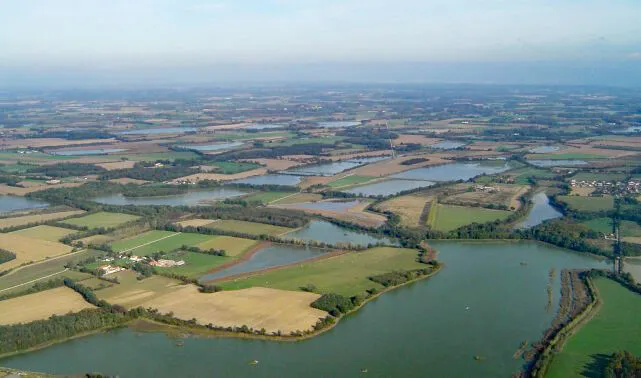
Ain: Bresse, Dombes and Pays de Gex
Discover the Ain: world-famous Bresse poultry, the thousand ponds of the Dombes, Pays de Gex facing Mont Blanc and the emerald gorges of Nantua. Complete guide.
 Regions
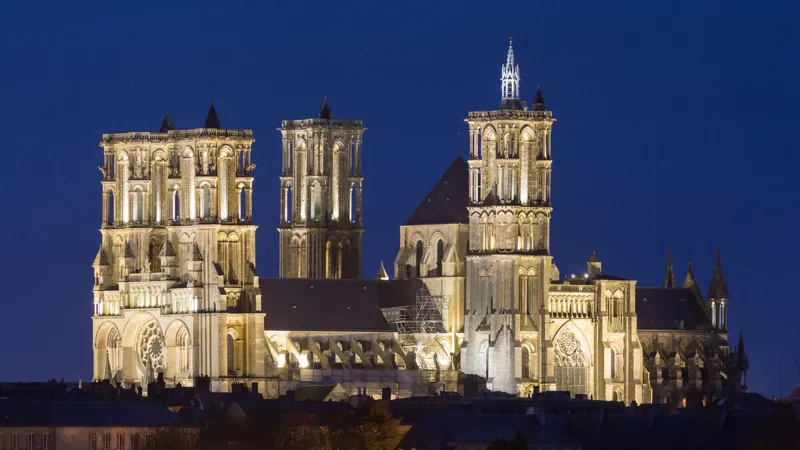
Aisne: Laon's Medieval Citadel and the Chemin des Dames
Discover the Aisne département: Laon's hilltop medieval city, the Chemin des Dames battlefields, Soissons, the Familistère de Guise and Champagne vineyards. Complete travel guide.