France's longest river completes its journey to the Atlantic here, passing Renaissance chateaux, troglodyte villages carved into white limestone cliffs, and Nantes, a city that has reinvented urban living with a giant mechanical elephant and former shipyard islands turned into creative quarters. The Pays de la Loire is a mosaic best explored by bicycle along the river or by kayak through the salt marshes of Guerande.
Nantes: Where Imagination Takes Flight
Les Machines de l'Île
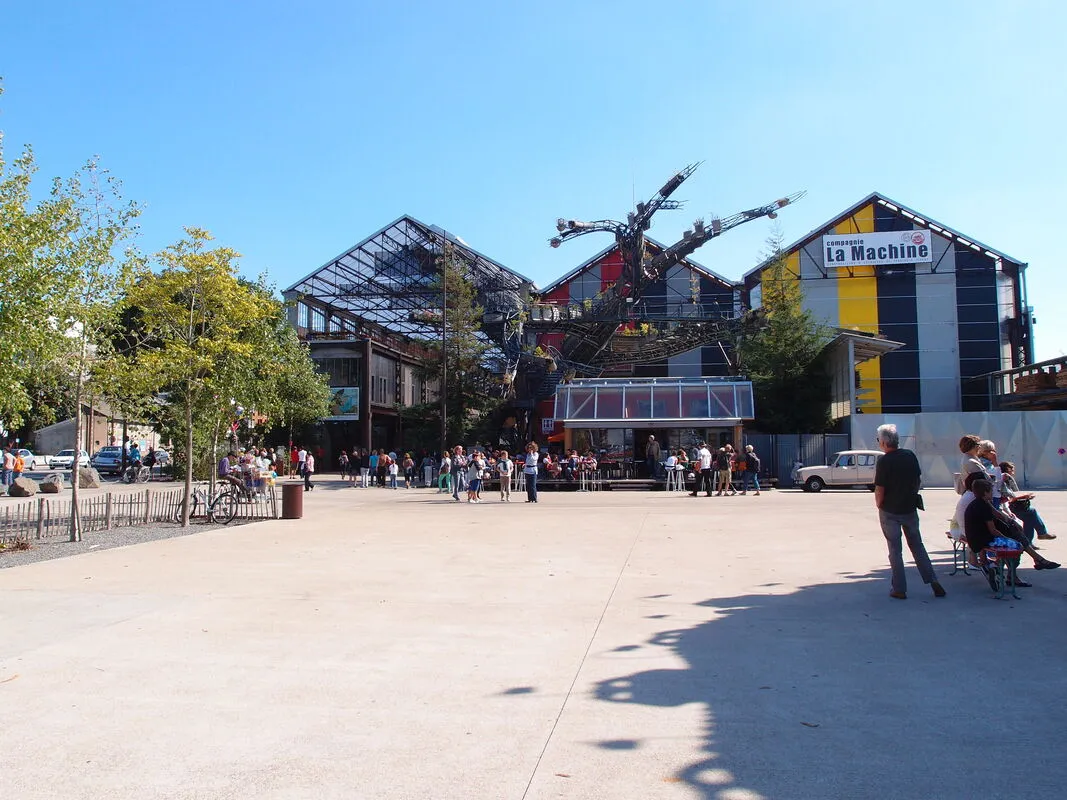
On the site of Nantes' former shipyards, the Machines de l'Île project has created something genuinely unlike anything else in Europe. Drawing on the worlds of Jules Verne (a Nantes native) and Leonardo da Vinci, a team of artists and engineers has built extraordinary mechanical creatures. The star is the Grand Éléphant, a 12-metre-tall articulated structure that carries about 40 passengers on a slow, surreal walk along the quays, spraying water from its trunk (~9 EUR). The Galerie des Machines (~9 EUR) opens the workshop doors: watch a giant heron stretch its wings or ride a mechanical ant. The three-storey Carrousel des Mondes Marins, an ocean-themed merry-go-round, completes the experience (~9 EUR). Allow half a day to take it all in.
Château des Ducs de Bretagne
The Château des Ducs de Bretagne stands in the city centre, its medieval towers surrounded by a dry moat and Renaissance facades. The courtyard and ramparts are free to enter and make for a lovely evening stroll when the walls are lit up. Inside, the Nantes history museum (~8 EUR) covers the city's story from its origins to the present, with a particularly powerful section on the transatlantic slave trade and its abolition.
Le Voyage à Nantes and the Passage Pommeraye
Every summer, Le Voyage à Nantes turns the city into an open-air gallery. A green line painted on the pavement guides visitors from one art installation to the next, all free of charge. Permanent works remain year-round, scattered along the Loire and through the streets.
Between explorations, step into the Passage Pommeraye, a 19th-century covered shopping arcade classified as a historic monument. Its ornate staircase, glass roof and sculpted columns make it one of the finest arcades in France and a favourite backdrop for filmmakers.
Guérande and the Salt Marshes
A Medieval Town Behind Ramparts
The walled town of Guérande is remarkably well preserved. Nearly circular ramparts with four fortified gates enclose cobbled lanes, half-timbered houses and the collegiate church of Saint-Aubin. The Saturday morning market, spilling out of the covered hall into the surrounding streets, is one of the liveliest in western France.
The Marais Salants
South of Guérande, more than 2,000 hectares of salt marshes stretch to the horizon, a grid of shallow basins glinting silver in the sunlight. Paludiers (salt workers) harvest sea salt here using methods unchanged for centuries, from June to September. The most prized product is fleur de sel, a delicate crystallisation that forms on the surface in warm, dry conditions and is gathered by hand.
Terre de Sel offers guided walks along the narrow levees between the salt pans (~6 EUR), explaining the patient craft of the paludiers. Book ahead in summer. For the freshest salt at the best price, buy directly from the producers' cooperatives at the edge of the marshes.
The Atlantic Coast
La Baule and Le Croisic
La Baule claims one of the finest beaches in Europe, and the claim is hard to dispute. Nine kilometres of fine sand sweep around a perfect crescent bay, backed by Belle Epoque villas and maritime pines. The atmosphere is relaxed and family-friendly, with a seafront lined with restaurants and ice-cream stands.
At the western tip of the bay, Le Croisic is a working fishing port full of character. The Océarium (~16 EUR) showcases Atlantic marine life in an immersive walk-through aquarium. The old captains' houses and the harbour-side fish auction add to the appeal.
Île de Noirmoutier
You can reach the Île de Noirmoutier by bridge, but the more memorable approach is via the Passage du Gois, a 4.5-kilometre causeway that appears only at low tide. Check the tide tables carefully before setting out. The island charms visitors with mimosa blooming as early as February, salt marshes, sandy beaches and its famous Noirmoutier potatoes, an early-harvest variety with a subtly sweet flavour that commands premium prices in Parisian markets.
Île d'Yeu
Wilder and less developed, the Île d'Yeu is reached by ferry from Fromentine (~35 EUR return, 30-minute crossing). It is a cyclist's paradise: the wild coast on the south-western face presents dramatic schist cliffs, hidden coves and a ruined medieval castle perched above the waves. The colourful harbour of Port-Joinville makes a perfect base for exploring by bike, which is far and away the best way to see the island.
Saumur and the Loire Valley
The Château and the Cadre Noir
The Château de Saumur sits on a limestone bluff high above the Loire, so elegantly proportioned that it was chosen to illustrate the month of September in the medieval masterpiece Les Très Riches Heures du Duc de Berry. Inside, collections of decorative arts and ceramics are worth a visit. Below the castle, the Cadre Noir is one of the most prestigious riding academies in the world. Its public galas, held several times a year, showcase the legendary riders and their horses performing breathtaking classical dressage figures.
Troglodyte Caves, Mushrooms and Wine
The soft tuffeau limestone of the Loire valley has been quarried for centuries, leaving behind a network of caves now used as homes, restaurants, wine cellars and mushroom farms. The Musée du Champignon (~8 EUR) takes you underground to see how button mushrooms are cultivated in the cool, humid galleries.
The vineyards of Saumur-Champigny produce elegant reds from cabernet franc, ideal with local charcuterie and game. Many estates age their wines in tuffeau caves, where natural temperature and humidity create perfect cellaring conditions. Tastings are widely available and warmly welcoming.
Angers: la Douceur Angevine
The Château d'Angers bristles with seventeen massive towers of dark schist and pale limestone. Within its walls hangs a masterpiece: the Apocalypse Tapestry, the world's largest medieval tapestry. Woven in the 14th century, it stretches over 100 metres and depicts the visions of the Book of Revelation in colours that remain strikingly vivid (~9.50 EUR). Allow at least an hour to appreciate the full work.
Liqueur enthusiasts will enjoy the Cointreau distillery, where the famous orange liqueur has been produced since 1849. For families, Terra Botanica (~20 EUR) is a unique botanical theme park combining gardens, rides and interactive trails exploring the world of plants.
Le Mans: Medieval Quarter and Motorsport Legend
The Cité Plantagenêt in Le Mans is one of the best-preserved medieval quarters in all of France. Steep cobbled streets wind between 14th- and 15th-century half-timbered houses, enclosed by Gallo-Roman walls that are among the most intact in Europe. The Cathedral of Saint-Julien, with its soaring Gothic choir, rewards a careful visit.
Motorsport fans will head straight to the 24 Heures du Mans circuit and museum (~10 EUR), which traces the history of the world's most famous endurance race. The race itself takes place every June, but the circuit and museum welcome visitors year-round.
Puy du Fou: History on a Grand Scale
Puy du Fou is no ordinary theme park. Repeatedly voted the world's best, it forgoes roller coasters entirely in favour of lavish historical spectacles performed by hundreds of actors and animals. Vikings emerge from a blazing longship on a lake. Roman gladiators clash in a full-scale arena. Musketeers duel with acrobatic swordplay above the rooftops. Each show is a short film brought to life, with special effects, stunts and extraordinary sets.
The jewel in the crown is La Cinéscénie, a night show performed by 2,400 volunteer actors on a 23-hectare stage, tracing the story of a Vendée family across seven centuries. It runs on Friday and Saturday evenings from June to September, requires a separate ticket, and sells out months in advance. Day tickets for the Grand Parc cost approximately 45 EUR.
Local Flavours
The gastronomy of the Pays de la Loire celebrates its terroir with understated finesse. Muscadet, the crisp, mineral white wine grown south-east of Nantes, is the natural companion for the region's superb seafood, especially the plump oysters from the Bay of Bourgneuf. Rillettes du Mans, a slow-cooked pork spread with a silky texture, are served on crusty country bread. Beurre blanc, a classic Nantes sauce of white wine, shallots and butter, is traditionally paired with Loire pike.
For a sweet finish, look for berlingots de Nantes, small hard-boiled striped sweets, and fouace nantaise, a brioche scented with orange blossom. And of course, Guérande salt -- whether the coarse grey variety or the prized fleur de sel -- brings an unmistakable mineral, slightly briny note to every dish it touches.
Practical Tips
Getting There
The TGV connects Paris to Nantes in just 2 hours 15 minutes, making it an easy getaway. Angers is 1 hour 30 minutes from Paris, Le Mans just 55 minutes. To explore the coast and countryside properly, a car is strongly recommended.
When to Go
June to September is ideal for the coast, the salt marshes and Puy du Fou. Spring (April-May) brings mild temperatures and lush green landscapes, perfect for the Loire Valley and its vineyards. The cities -- Nantes, Angers, Le Mans -- are enjoyable year-round.
Budget
Accommodation ranges from 50 to 80 euros per night for a budget hotel, 80 to 130 euros for a B&B or charming hotel, and 130 to 220 euros for upscale options. A restaurant lunch runs 14 to 22 euros, dinner 25 to 40 euros. Local farmers' markets provide excellent produce for picnics at reasonable prices. Hiking, village exploration and most churches are free. Paid sites and museums cost 6 to 15 euros per person. To keep costs in check, look for weekday set-lunch menus, stay in rural gites or quality campsites, and enjoy the free tastings many local producers offer.
Explore on the map
Map →📚 Related collections
Related guides
 Regions
Ain: Bresse, Dombes and Pays de Gex
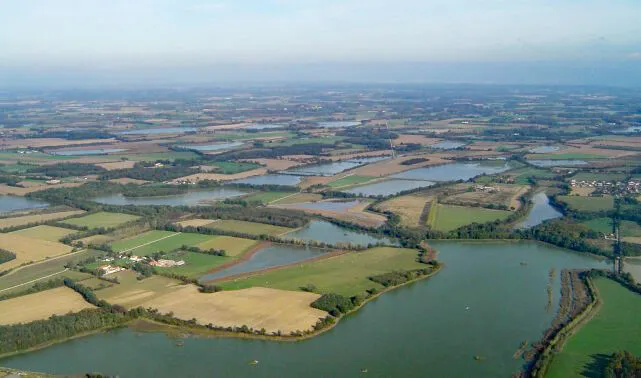
Discover the Ain: world-famous Bresse poultry, the thousand ponds of the Dombes, Pays de Gex facing Mont Blanc and the emerald gorges of Nantua. Complete guide.
 Regions
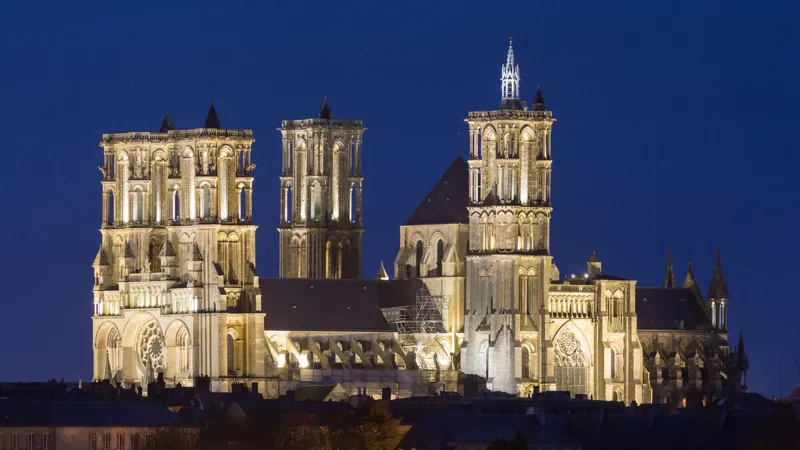
Aisne: Laon's Medieval Citadel and the Chemin des Dames
Discover the Aisne département: Laon's hilltop medieval city, the Chemin des Dames battlefields, Soissons, the Familistère de Guise and Champagne vineyards. Complete travel guide.