Nantes, once France's largest slave-trading port, has chosen to face its history head-on and reinvent itself. The Machines de l'Ile, a giant mechanical elephant parading through the former shipyards, is the symbol of that metamorphosis. Loire-Atlantique also offers the wild coast of Guerande and its salt marshes, the Muscadet vineyard rolling over the hillsides, and the Loire estuary turned into an open-air art gallery.
Nantes: A City That Reinvents Itself
Les Machines de l'Île
On the site of Nantes' former shipyards, the Machines de l'Île project has created something genuinely unlike anything else in Europe. Inspired by Jules Verne, who was born in the city, and the mechanical genius of Leonardo da Vinci, a team of artists and engineers has built extraordinary moving creatures. The star is the Grand Éléphant, a 12-metre-tall, 48-tonne articulated structure that carries about 40 passengers on a slow, surreal walk along the quays, spraying onlookers with water from its trunk (environ 9 EUR). The Galerie des Machines (environ 9 EUR) opens the workshop doors: watch a giant heron spread its wings, ride a mechanical ant, or observe new creatures taking shape. The three-storey Carrousel des Mondes Marins, an ocean-themed merry-go-round plunging into imaginary depths, completes the experience (environ 9 EUR).
Practical tip: in peak season, tickets for the Elephant sell out fast. Book online as soon as slots open. Allow at least half a day for the full site.
Château des Ducs de Bretagne
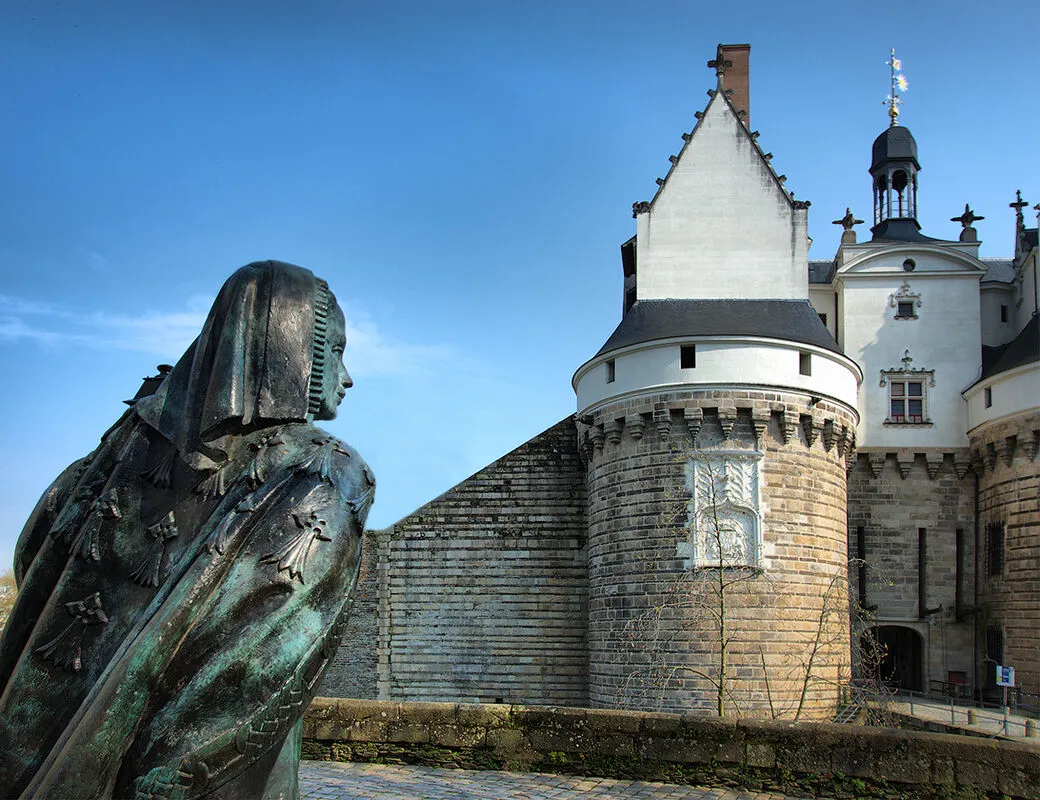
In the heart of the city, the Château des Ducs de Bretagne is one of the most impressive monuments in western France. A medieval fortress on its moat side, a Renaissance palace within, it houses the Nantes History Museum (environ 8 EUR). The collections trace the city's story from its Gaulish origins to the present day, with a particularly powerful and unflinching section on the transatlantic slave trade and its abolition. Walking the ramparts and exploring the inner courtyard is free, and the experience is especially atmospheric after dark when the facades are illuminated.
Le Voyage à Nantes and the Passage Pommeraye
Every summer, Le Voyage à Nantes transforms the city into an open-air gallery. A green line painted on the pavement guides visitors from one art installation to the next, through former industrial sites and hidden gardens. The entire trail is free. Outside the festival season, permanent works continue to dot the urban landscape.
Among the must-see stops, the Passage Pommeraye deserves a visit in its own right. This 19th-century covered shopping arcade, classified as a historic monument, unfolds its sculpted staircases, ornate columns and glass canopy in a setting where time seems to stand still. It has also served as a film location for French cinema, from Jacques Demy to the present day.
The Nantes Food Scene
Nantes takes its food seriously. The pedestrianised Bouffay quarter is packed with terraces and bistros where you can enjoy oysters from the coast paired with a glass of Muscadet-Sèvre-et-Maine sur lie (environ 4 EUR a glass). The Halles de Talensac, a covered market open every morning, gathers the best local producers: cheese mongers, fishmongers, market gardeners. Before leaving the city, make sure you try the gâteau nantais, a moist almond-and-rum cake that is the city's signature pastry, not to be confused with Breton quatre-quarts.
Guérande: Medieval Walls and Salt Marshes
Behind the Ramparts
The ramparts of Guérande form an almost perfect circle around the old town. Four fortified gates pierce this remarkably well-preserved 15th-century wall. Inside, cobbled lanes, half-timbered houses and artisan shops create a timeless atmosphere. The Collégiale Saint-Aubin, a mix of Romanesque and Gothic, dominates the central square. The Saturday morning market, overflowing from the covered hall into the surrounding streets, is one of the finest in the region: local honey, sea salt, salted butter, seasonal vegetables.
The Salt Marshes and Fleur de Sel
South of the town, more than 2,000 hectares of salt marshes stretch towards the horizon, a mosaic of shallow basins glinting silver under the shifting Atlantic sky. Paludiers (salt workers) harvest the salt here using ancestral methods passed down through generations, from June to September. Fleur de sel, a delicate crystallisation that forms on the surface in warm, dry conditions, is the jewel of these marshes. Gathered by hand with a traditional wooden tool called a lousse, it develops a subtle violet fragrance.
Terre de Sel runs guided walks (environ 6 EUR) along the narrow levees between the salt pans, explaining the paludiers' patient craft, the role of wind and sun, and the fragility of this ecosystem. Buy your salt directly from the producers' cooperatives for a fair price and guaranteed traceability.
Le Croisic: A Port With Character
At the tip of the Guérande peninsula, Le Croisic retains the soul of a genuine fishing port. The old harbour, lined with colourful captains' houses, is the departure point for boat trips to spot dolphins (environ 35 EUR, spring and summer). The Océarium du Croisic (environ 16 EUR) showcases Atlantic marine life in an immersive circuit: sharks, penguins, jellyfish, sea turtles. Children particularly enjoy the touch pool.
The coastal path linking Le Croisic to Batz-sur-Mer provides a spectacular walk between granite boulders and small coves. Allow about 1 hour 30 minutes for the roughly 5-kilometre route. In Batz-sur-Mer, climbing the bell tower of the church of Saint-Guénolé (environ 2 EUR) rewards the effort with a 360-degree panorama over the coast and the marshes.
Saint-Nazaire: Ocean Liners and Industrial Heritage
Escal'Atlantic and the Shipyards
Saint-Nazaire is inseparable from the history of the great ocean liners. The Normandie, the France and, more recently, the largest cruise ships in the world were all built here. Escal'Atlantic (environ 14 EUR), housed inside the former submarine base, recreates the transatlantic adventure: first-class cabins, corridors, the engine room. The immersion is total and fascinating, even for those with no particular interest in ships.
A guided tour of the Chantiers de l'Atlantique shipyard (environ 15 EUR, by reservation only) allows visitors to see a cruise ship under construction from a viewing platform above the dry docks. It is an awe-inspiring industrial spectacle. Book several weeks in advance, as places are limited.
The Seafront and the Beaches
The long beach at Saint-Marc-sur-Mer, made famous by Jacques Tati's film Monsieur Hulot's Holiday, remains a popular family bathing spot. A statue of Monsieur Hulot, pipe in hand, gazes out over the sand. Further south, the beach at Pornichet offers a more upmarket seaside atmosphere with its early 20th-century villas.
The Nantes Vineyard and Muscadet
The Loire-Atlantique hinterland is the home of Muscadet, a dry, mineral white wine that is the natural partner for the coast's seafood. The wine route winds between Clisson, a small town with unexpected Italianate charm, its terracotta roofs and Tuscan-inspired architecture the legacy of 19th-century local notables, and Vallet, the Muscadet capital. Wine estates offer tastings, often free or at modest cost (environ 5 EUR for a guided tasting).
Clisson deserves a longer stop: the medieval castle (environ 4 EUR), the banks of the Sèvre Nantaise river and the surprising southern-flavoured architecture make it an ideal half-day excursion from Nantes.
Practical Information
Getting there: Nantes is 2 hours 15 minutes from Paris by TGV. Nantes-Atlantique airport serves many European cities. The coast (Guérande, Le Croisic, La Baule) is about 1 hour from Nantes via the N171 or by regional TER train.
Getting around: a car is recommended for exploring the salt marshes and vineyards. The TAN network (Nantes public transport) covers the metropolitan area well, including tram and busway. Cycling is an excellent option: the Loire à Vélo route crosses the département from east to west.
Best time to visit: May to September to enjoy the coast and watch the salt harvest in action. Le Voyage à Nantes is in full swing in July and August. Early autumn (September to October) brings beautiful light and fewer crowds.
Food budget: expect 12-18 EUR for a weekday lunch menu in a brasserie, 25-40 EUR for a seafood dinner on the coast. A galette complète (buckwheat crêpe with ham, egg and cheese) remains a reliable and affordable classic at around 8 EUR.
Don't miss: crossing the Passage du Gois to Noirmoutier at low tide (check tide times carefully!), sunset over the Guérande salt pans, and an evening stroll along the Nantes quays with the château reflected in the moat.
Explore on the map
Map →📚 Related collections
Related guides
 Regions
Ain: Bresse, Dombes and Pays de Gex
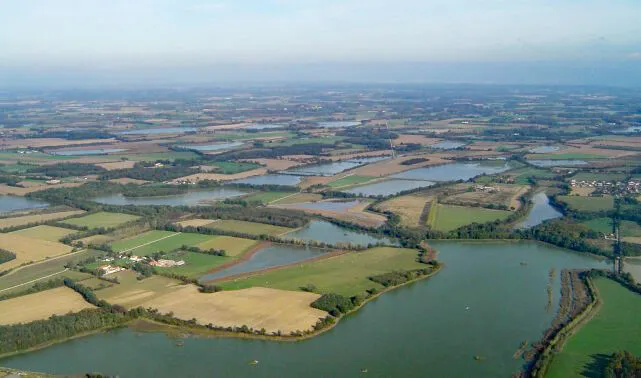
Discover the Ain: world-famous Bresse poultry, the thousand ponds of the Dombes, Pays de Gex facing Mont Blanc and the emerald gorges of Nantua. Complete guide.
 Regions
Aisne: Laon's Medieval Citadel and the Chemin des Dames
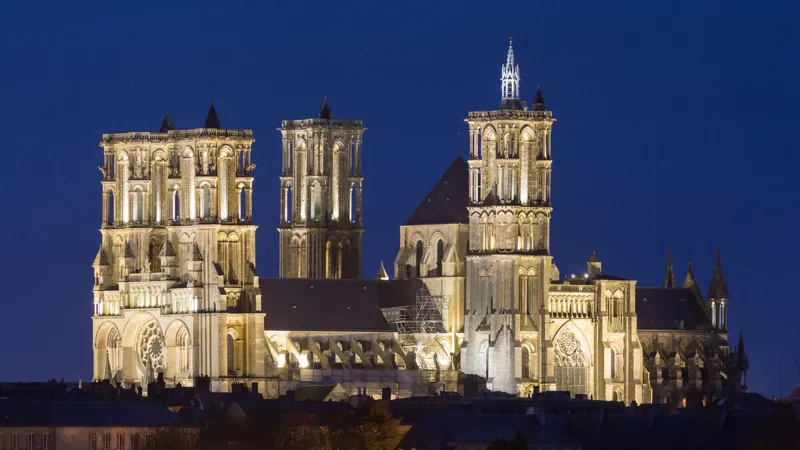
Discover the Aisne département: Laon's hilltop medieval city, the Chemin des Dames battlefields, Soissons, the Familistère de Guise and Champagne vineyards. Complete travel guide.