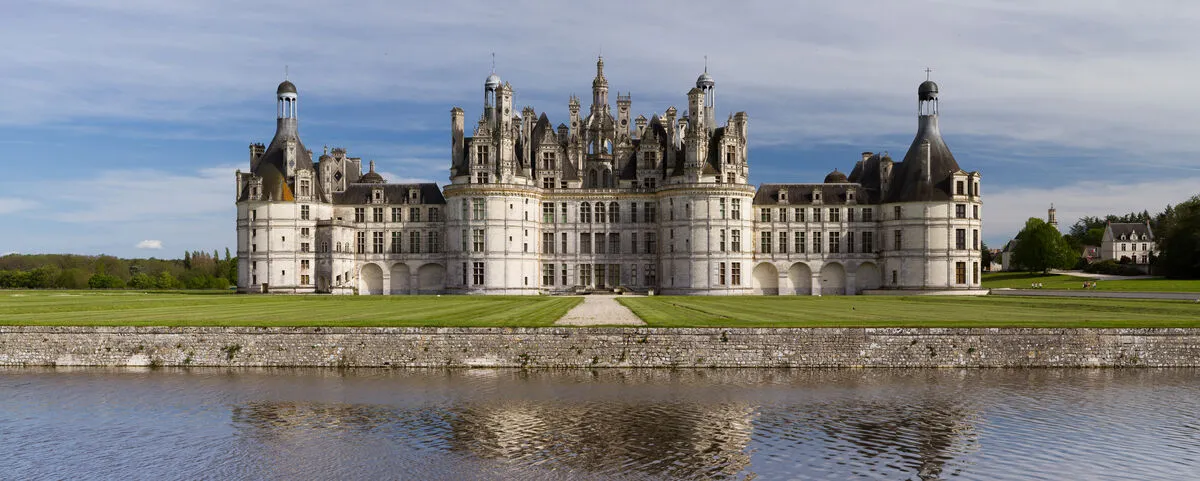
When Francois I commissioned Chambord, he wanted the largest and most extravagant castle in the world. Five centuries on, the effect is undiminished: 426 rooms, 282 fireplaces, a double-helix staircase attributed to Leonardo da Vinci. Loir-et-Cher holds this trump card, but also reveals other marvels: the Royal Chateau of Blois, the Beauval Zoo, and the troglodyte wine cellars of the Cher valley.
Chambord: The Dream of Francis I
Chambord is not a château. It is a vision. Rising from a clearing within a 5,440-hectare walled park — the largest enclosed park in Europe — this colossus of 440 rooms, 365 chimneys and 84 staircases defies comprehension. Francis I ordered its construction in 1519, possibly from plans sketched by Leonardo da Vinci, not as a residence but as a statement to the world. Five centuries later, the statement still holds.
Admission is around 16 euros. The visit begins with the famous double-helix staircase, an engineering marvel in which two people can ascend and descend simultaneously without ever meeting. The royal apartments, hunting halls and chapel are worth attention, but the rooftop terrace is the climax: a forest of turrets, dormers and sculpted chimneys creates a fantastical stone landscape overlooking the park as far as the eye can see. Allow two to three hours for the château, more if you explore the grounds.
The Chambord Estate
The park is a world of its own. Deer, wild boar and birds of prey inhabit this former royal hunting reserve turned nature sanctuary. Observation platforms allow visitors to watch stags during the rutting season in September and October. The estate can also be explored by bicycle (hire from 7 euros), by rowing boat on the Cosson canal, or by electric car for families.
The Chambord, Dream of Lights show, projected onto the château facade on summer evenings, is a magical experience (included with the evening ticket, around 19 euros).
Blois: Royal City and Art Capital
Blois is one of the most appealing towns on the Loire. Tiered like an amphitheatre above the river, it possesses an architectural heritage of remarkable density. The Royal Château of Blois (~13 euros) is unique: its four wings juxtapose four different architectural styles — Gothic, Renaissance, Classical and Flamboyant — encapsulating four centuries of French architecture in a single courtyard. The Renaissance wing of Francis I, with its monumental loggia staircase, is the centrepiece.
It was in this château that King Henry III had the Duke of Guise assassinated in 1588, a dramatic episode re-created in the royal apartments. The visit takes about 90 minutes and the audioguide is exceptionally well produced.
The Old Town of Blois
Around the château, the old town is a maze of medieval lanes, hidden stairways and half-timbered houses. The House of Magic (~11 euros), facing the château, is an interactive museum devoted to the art of illusion, named after Robert-Houdin, the father of modern magic and a native of Blois. Six mechanical dragons periodically burst from the windows of the facade, to the delight of passers-by. It is an entertaining visit for all ages.
The Fondation du Doute, created by the artist Ben, is an original contemporary art space in the heart of the town (~6 euros). The Church of Saint-Nicolas, the Cathedral of Saint-Louis, and the Bishop's Gardens, which offer panoramic views over the Loire, round out a surprisingly rich urban itinerary.
Cheverny: Perfection in Stone
The Château de Cheverny (~13 euros) is perfection made real. Built between 1624 and 1634 in a white limestone that bleaches with age, it achieves a symmetry and luminosity that set it apart from every other Loire château. The interiors, still furnished and still inhabited by the same family for six centuries, are exquisitely refined: tapestries, paintings, period furniture and, above all, a Guards' Room lined with Cordovan leather walls.
Fans of comic books will recognise in Cheverny the model for Marlinspike Hall, Captain Haddock's residence in the Tintin adventures. A permanent exhibition, "The Secrets of Marlinspike", pays tribute to the connection with humour and fidelity.
The 100-hectare park can be toured by electric mini-train or on foot. The château's kennel, home to some sixty Anglo-French hounds, is a spectacle in itself, especially during the daily feeding of the hounds (times posted at the entrance). Allow two hours in total.
Vendôme: The Charm of the Loir
Vendôme is a town of water. The River Loir — not to be confused with the Loire — divides here into several channels that embrace the town centre, creating islands, gardens and charming perspectives. The town has an air of Bruges in miniature, with its canals, bridges and weeping willows.
The Abbey of the Trinity, founded in 1040, is a remarkable monument whose Flamboyant facade rivals Chartres in delicacy. The detached Romanesque bell tower is one of the finest in France. Entry is free.
The Château de Vendôme, ruined on its hilltop, offers a magnificent view over the town and the Loir valley. The landscaped gardens at its foot make for a peaceful stroll. The Friday morning market in Vendôme is renowned for its local produce: Vendômois hillside wines, goat cheeses, asparagus in spring.
The Sologne: Forest, Ponds and Mystery
The Sologne covers the southern part of the département in an immense stretch of pine and oak forest, heathland and ponds. This flat, wooded territory, long considered inhospitable, is now a paradise for lovers of nature, hunting and fishing.
Exploring the Sologne
Chambord marks the northern gateway to the Sologne, but the heart of the region lies further south around Romorantin-Lanthenay, the former capital. The Musée de Sologne (~6 euros), housed in three heritage buildings, traces the life of the Solognots across the centuries: hunting, poaching, farming, local building traditions. It is a fascinating ethnographic museum.
The ponds of the Sologne, reached by forest tracks, are havens of tranquillity where herons, ducks, deer and roe deer can be observed. The Domaine du Ciran (~8 euros), near Ménestreau-en-Villette, is a Sologne conservation centre offering nature trails, hides and exhibitions on local ecosystems.
Food and Drink in Loir-et-Cher
The département sits at the crossroads of two terroirs: the Loire and the Sologne.
- Tarte Tatin, born in Lamotte-Beuvron in the Sologne, is the most famous tart in France
- Sologne game — deer, roe deer, wild boar, pheasant — appears in terrines, stews and roasts
- Sologne asparagus, white and tender, is a prized spring delicacy
- Cheverny AOP wines and Cour-Cheverny (made from the unique romorantin grape) accompany meals with elegance
- Sologne strawberries and forest mushrooms complete a cuisine that is at once rustic and refined
Restaurants in Blois offer menus between 16 and 30 euros. Sologne inns, more rustic in character, serve set menus between 14 and 22 euros with game taking pride of place.
Practical Tips
- Best time to visit: April to June for gardens and spring mildness; September to October for the stag rut at Chambord and autumn colours in the Sologne
- Getting there: Blois is 1 hour 30 minutes from Paris by TGV. A car is essential for Chambord, Cheverny and the Sologne
- Visit budget: Expect 40 to 55 euros per person for 3 major châteaux
- Suggested duration: 3 to 5 days for the châteaux, Blois, Vendôme and a foray into the Sologne
- Don't miss: the Chambord rooftop at sunset, the Renaissance staircase at Blois, the interiors of Cheverny, and a walk along the Loir in Vendôme
Explore on the map
Map →📚 Related collections
Related guides
 Regions
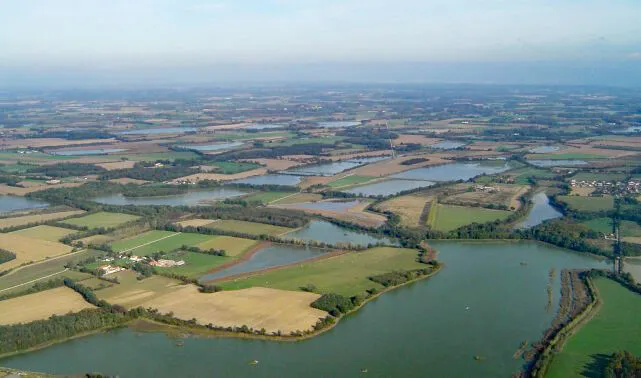
Ain: Bresse, Dombes and Pays de Gex
Discover the Ain: world-famous Bresse poultry, the thousand ponds of the Dombes, Pays de Gex facing Mont Blanc and the emerald gorges of Nantua. Complete guide.
 Regions
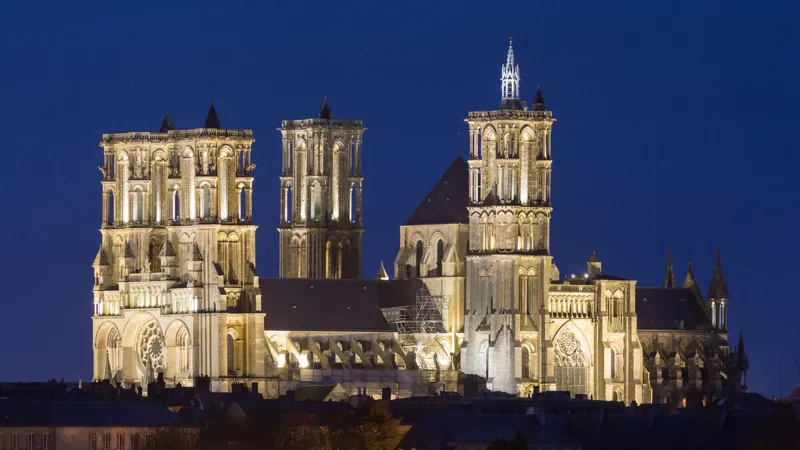
Aisne: Laon's Medieval Citadel and the Chemin des Dames
Discover the Aisne département: Laon's hilltop medieval city, the Chemin des Dames battlefields, Soissons, the Familistère de Guise and Champagne vineyards. Complete travel guide.