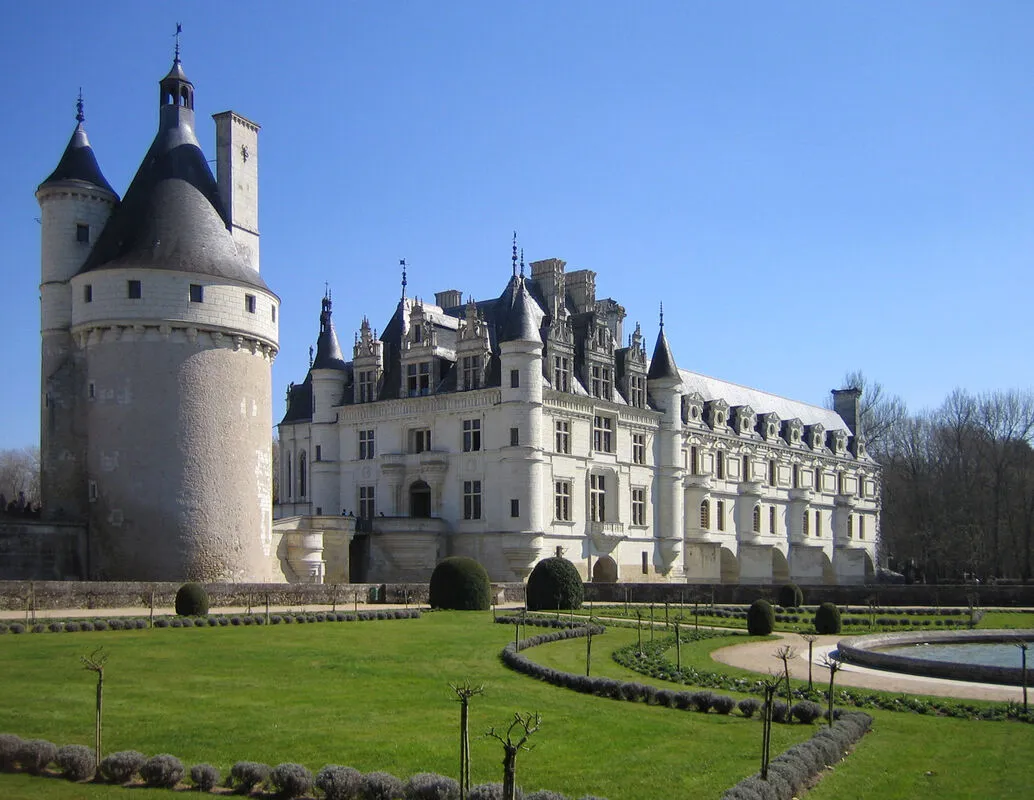
Chenonceau, the 'Chateau des Dames', spans the Cher with a grace that five centuries have not diminished. Villandry lines up its geometric gardens like a living painting. Azay-le-Rideau gazes at its own reflection in the Indre. Indre-et-Loire is the beating heart of the Loire Valley, where the finest Renaissance chateaux in France cluster between Tours and Chinon.
Chenonceau: The Ladies' Castle
Chenonceau is arguably the most elegant château in France. Built across the River Cher, its arched gallery stretches over the water like a stone bridge, creating reflections that have inspired painters for centuries. The castle owes its beauty to the succession of remarkable women who shaped it: Diane de Poitiers built the bridge, Catherine de Medici added the double-storey gallery, and Louise de Lorraine spent her widowhood in a chamber draped entirely in black.
Allow 90 minutes to two hours for the visit. The interiors are richly furnished, and the gallery crossing the Cher offers a mesmerising perspective over the still water below. The two formal gardens — Diane's orderly parterre and Catherine's more flamboyant design — deserve time as well. Admission is around 15 euros and includes an audioguide. Arrive early or visit late in the day to avoid the summer crowds.
Amboise: Where Leonardo Came to Rest
Amboise commands the Loire from a rocky bluff above the town. The Royal Château (~14 euros) was the preferred residence of Charles VIII and the setting for lavish Renaissance celebrations. The terrace views over the Loire and the slate rooftops of the old town are magnificent. Inside the tiny Chapel of Saint-Hubert lies the presumed tomb of Leonardo da Vinci, who died at Amboise in 1519.
A short walk away, the Clos Lucé (~18 euros) is the manor house where Leonardo spent his final three years under the patronage of Francis I. Now an interactive museum devoted to his inventions, it features full-scale models of his machines — rotating bridge, armoured vehicle, flying apparatus — scattered through the landscaped park. Children can operate several of them. Budget two to three hours for the château and Clos Lucé combined.
The town of Amboise repays a stroll of its own: cobbled streets, troglodyte dwellings carved into the cliff face, and a lively market on Friday and Sunday mornings.
Villandry: Gardens Without Equal
Every Loire château has gardens, but Villandry is in a league of its own. Its Renaissance gardens cascade down three terraces: a decorative kitchen garden, ornamental flower gardens, and a water garden. The kitchen garden is the showpiece — nine squares of vegetables and flowers planted in geometric patterns that shift colour with the seasons.
Entry to the château and gardens costs around 12 euros (gardens only ~7 euros). Set aside at least 90 minutes for the gardens alone, longer if you enjoy photography or botany. The château itself, restrained and graceful, houses a fine collection of Spanish paintings.
Tours: The Capital of Touraine
Tours is far more than a staging post for château visits. The city has a beautifully restored historic centre anchored by the Place Plumereau, a square lined with half-timbered houses and café terraces that buzzes with life from morning until late at night. It is one of the most atmospheric gathering spots in the entire Loire Valley.
The Cathedral of Saint-Gatien, a Gothic masterpiece built between the 13th and 16th centuries, dazzles with its flamboyant stained-glass windows and intricately carved facade. Nearby, the Psalette cloister is open for a small fee. The streets around Rue Colbert are packed with artisan shops, restaurants, and wine bars pouring Vouvray and Montlouis.
The Saturday morning Grand Marché is a Touraine institution. Tours rillettes, Sainte-Maure goat cheese, Rivarennes dried pears — the gastronomy of the region is best explored here, one stall at a time.
Azay-le-Rideau and Langeais: Grace and Might
The Château d'Azay-le-Rideau (~11 euros) is a jewel of early French Renaissance architecture. Set on an island in the River Indre, it mirrors itself perfectly in the calm water — one of the most photographed scenes in the Loire Valley. The interiors have been painstakingly restored in recent years. Allow roughly 75 minutes for the visit.
Twenty kilometres west, the Château de Langeais offers a sharp contrast. Its stern medieval exterior conceals lavishly furnished 15th-century rooms, including a dramatic re-enactment of the 1491 marriage of Charles VIII and Anne of Brittany. The working drawbridge and accessible battlements will satisfy anyone with a taste for military architecture.
Chinon: Rabelais, Fortress and Wine
Chinon is a town of real personality, sprawled along the banks of the Vienne beneath a colossal fortress. The Royal Fortress of Chinon (~10 euros) stretches nearly 500 metres along the ridge and is where Joan of Arc famously recognised the disguised King Charles VII in 1429. The ruins have been superbly restored, and a modern exhibition brings the history to life. Allow about 90 minutes.
The old town below, with its medieval streets and timber-framed houses, was the birthplace of François Rabelais. His childhood home, La Devinière, can be visited in the surrounding countryside. But Chinon is equally celebrated for its wine. The reds, made from cabernet franc, are among the finest on the Loire. Several estates welcome visitors for cellar-door tastings, usually free of charge.
Loire à Vélo: The River by Bicycle
One of the finest ways to experience Indre-et-Loire is on two wheels. The Loire à Vélo route crosses the département from east to west, linking Amboise to Chinon via Tours and Villandry. The paths are mostly flat, well signposted, and run along the banks of the Loire and the Indre through landscapes of vines, white tufa stone, and alluvial forest.
The Tours-to-Villandry stretch (about 20 km) is gentle enough for anyone and pairs perfectly with a garden visit. Many hire shops offer one-way rental with a shuttle return, so you can pedal at leisure without doubling back. A standard bicycle costs roughly 15 to 20 euros per day; an electric bike runs between 30 and 40 euros.
Practical Tips
- Best time to visit: April to June for gardens in bloom and mild weather; September for the grape harvest and smaller crowds
- Getting there: Tours is 1 hour 15 minutes from Paris by TGV. A car is ideal for reaching the châteaux, but cycling is a magnificent alternative
- Visit budget: Expect to spend 50 to 60 euros per person on 3 to 4 château admissions. Multi-castle passes sometimes offer discounts
- Suggested duration: 4 to 6 days to cover the major châteaux, explore Tours, and cycle along the river
- Don't miss: Sunset from the terraces of Amboise, Villandry's kitchen garden in summer, and a tasting of red Chinon at a local winery
Explore on the map
Map →📚 Related collections
Related guides
 Regions
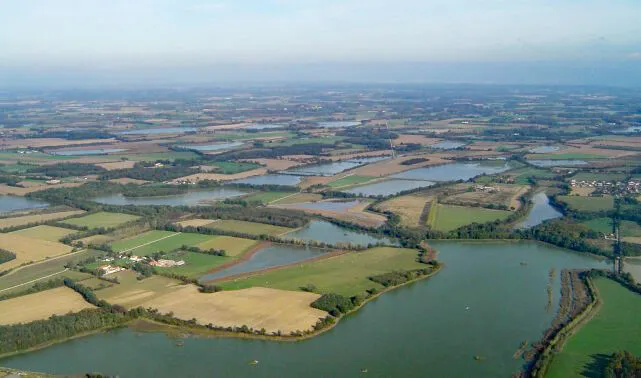
Ain: Bresse, Dombes and Pays de Gex
Discover the Ain: world-famous Bresse poultry, the thousand ponds of the Dombes, Pays de Gex facing Mont Blanc and the emerald gorges of Nantua. Complete guide.
 Regions
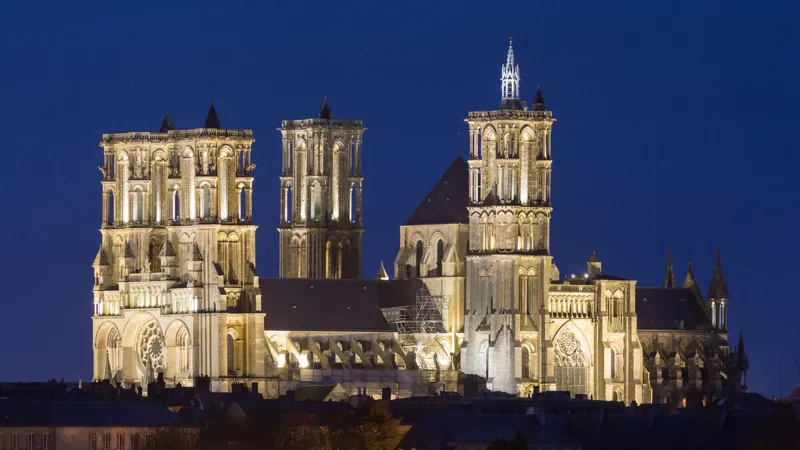
Aisne: Laon's Medieval Citadel and the Chemin des Dames
Discover the Aisne département: Laon's hilltop medieval city, the Chemin des Dames battlefields, Soissons, the Familistère de Guise and Champagne vineyards. Complete travel guide.