Nobody counts calories in the Gers. This Gascon department, beating heart of a region where good living is a centuries-old art, rolls its golden vineyard-covered hills below medieval bastides and serves tables so generous that a simple lunch can stretch well into mid-afternoon. Foie gras, armagnac, magret and Henri IV's poule au pot are serious business here.
Auch: Capital of Gascony
Auch, the préfecture of the Gers, is a human-scale town perched on a hill above the Gers river. Its historic centre holds unsuspected treasures and the atmosphere of a small southern town made for strolling.
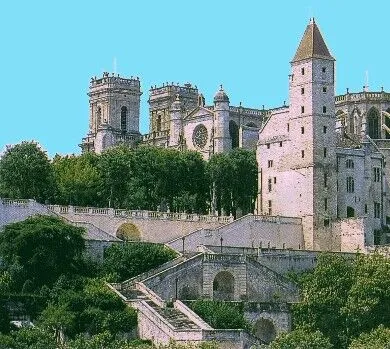
The Cathédrale Sainte-Marie
The Cathédrale Sainte-Marie, listed as a UNESCO World Heritage Site as part of the Routes of Santiago de Compostela, is an under-appreciated masterpiece of French religious art. Built between the fifteenth and seventeenth centuries, it houses an exceptional set of 18 Renaissance stained-glass windows by Arnaut de Moles, considered among the finest in France. The vivid colours and delicate detail rival the windows of Chartres. The 117 oak choir stalls, carved with more than 1,500 biblical, mythological and fantastical figures, form a unique ensemble in Europe. Cathedral entry is free but visiting the stalls and choir costs about 5 euros. Allow 1 hour to appreciate these marvels fully.
The Monumental Staircase and D'Artagnan
The Escalier Monumental, 374 steps linking the upper town to the riverbank, offers a theatrical perspective worthy of a film set. Halfway down, the statue of d'Artagnan, the most famous musketeer in France (a real historical figure, Charles de Batz, born in Lupiac in the Gers), watches over the town. The staircase is freely accessible and the climb (or descent) takes 15 minutes. From the top, the panorama across the Gers valley and the distant Pyrenees is superb on a clear day.
The Tour d'Armagnac and the Pousterles
The Tour d'Armagnac, a fourteenth-century former prison, dominates the medieval quarter. The pousterles, medieval stepped lanes descending from the upper town to the river, form a picturesque labyrinth to explore. The Musée des Amériques (formerly the Jacobins museum), housed in a restored convent, holds an unexpected collection of pre-Columbian art and paintings, including a remarkable group of Latin American works. Entry costs about 5 euros.
Armagnac: France's Oldest Brandy
Armagnac is the oldest brandy in France, distilled in the Gers since the fourteenth century, two centuries before cognac. The vineyard extends across three terroirs: Bas-Armagnac, Ténarèze and Haut-Armagnac.
The Estates and Cellars
The armagnac route winds between villages and wine estates, where the welcome is always warm. At the Château de Cassaigne, a former residence of the bishops of Condom, you can visit thirteenth-century vaulted cellars and taste vintage armagnacs in a splendid setting (visit and tasting about 6 euros). The Château du Tariquet, one of the largest estates, offers free tours of its modern facilities and a range of white Gascony wines alongside the armagnac. The Laballe estate in Parleboscq provides a family-run immersion in a property passed down through generations. Everywhere you discover the continuous armagnac still, a distillation apparatus unique in the world, and the art of ageing in Gascon-oak barrels.
Floc de Gascogne
Floc de Gascogne, an apéritif made by blending fresh grape juice with young armagnac, is the ideal partner for foie gras and melon. White or rosé, it is served chilled and makes a perfect summer aperitif. It is available at most armagnac-producing estates.
Bastides and Gascon Castles
The Gers ranks among the départements richest in medieval bastides and castles, relics of a tumultuous history between France and England.
Lectoure
Lectoure, perched on a rocky spur above the Gers valley, is one of the finest towns in the département. Its Cathédrale Saint-Gervais-et-Saint-Protais commands an immense panorama. The archaeological museum, housed in the town hall (former bishop's palace), holds a unique collection of Gallo-Roman votive bulls, stone altars dedicated to the cult of Cybele. Entry costs about 4 euros. Lectoure is also known for its pastel-blue dyeing workshops, a revived art that produces deep-blue pigments from the woad plant. Discovery workshops are offered from 15 euros.
Larressingle and Fourcès
Larressingle, nicknamed the "little Carcassonne of the Gers," is a tiny fortified village enclosed by intact ramparts, with its keep, church and stone houses. The whole place can be explored in 30 minutes and entry is free. A few kilometres away, Fourcès, the only circular bastide in the Gers, gathers around its round, plane-tree-shaded square and hosts a famous flower market in spring. Both villages are essential stops on the armagnac route.
Condom and Flaran
Condom, an elegant episcopal town, is the heart of the Ténarèze. Its Gothic cathedral, cloister and townhouses merit an hour's wander. Nearby, the Abbaye de Flaran, founded by the Cistercians in the twelfth century, is a restored architectural gem that now houses a remarkable art collection (Rembrandt, Courbet, Monet) bequeathed by a patron. Entry costs about 6 euros and the visit takes 1.5 hours. The abbey gardens and summer concerts add to the appeal.
Marciac and Jazz in Marciac
Marciac, a thirteenth-century bastide with a regular plan, is known worldwide for its Jazz in Marciac festival, founded in 1978. Every August, for three weeks, this village of 1,200 inhabitants welcomes the biggest names in world jazz under a 6,000-seat marquee and in the village streets. Main-stage concerts cost 30 to 80 euros depending on the artist, but many free concerts enliven the squares and bars.
Le Territoire du Jazz
Outside the festival period, the Territoire du Jazz, a permanent museum housed in a fifteenth-century convent, traces the history of jazz with screenings, listening stations and memorabilia. Entry costs about 5 euros. The bastide itself, with its arcaded square, lake and surrounding hills, is worth a visit in any season.
Gers Gastronomy
The Gers is the most food-loving département in France, the one where the density of good tables per square kilometre defies all competition. Foie gras, here an ancestral tradition, comes as terrine, mi-cuit, pan-fried or preserved. Magret de canard, a Gers invention of the 1960s, is grilled rare and served with ceps or pepper sauce. Garbure, a thick peasant soup of cabbage, beans and duck confit, warms Gascon winters. Croustade aux pommes, pastry stretched paper-thin and filled with apples doused in armagnac, is the traditional dessert. The marchés au gras, from November to March, are institutions where ducks, geese and foie gras are bought directly from producers. A gastronomic meal in a good Gers inn costs between 25 and 45 euros, unbeatable value.
Practical Tips
Getting Around
Auch is 1 hour 15 minutes from Toulouse via the N124. The nearest airport is Toulouse-Blagnac. Public transport is limited: a car is essential for exploring the département. The hilly départementale roads are a driving pleasure, with panoramas at every bend.
Best Time to Visit
April to October is ideal. Spring is glorious with sunflower and rapeseed fields in bloom. Summer is hot but nights remain pleasant. Autumn, the season of the grape harvest and the marchés au gras, is the most gastronomic period. The Marciac festival enlivens August.
Budget
Accommodation ranges from 40 to 70 euros per night for a budget hotel or quality campsite, 70 to 120 euros for a B&B or boutique hotel, and 120 to 200 euros for high-end establishments. A restaurant lunch costs 12 to 20 euros, dinner 20 to 35 euros. Local markets and picnics are an excellent way to eat well while keeping costs down. Many activities are free: hiking, village strolls, markets, churches. Paid museums and sites average 5 to 12 euros per person. To save money, book rural gites by the week, opt for weekday lunch menus, and take advantage of free tastings at local producers.
Explore on the map
Map →📚 Related collections
Related guides
 Regions
Ain: Bresse, Dombes and Pays de Gex
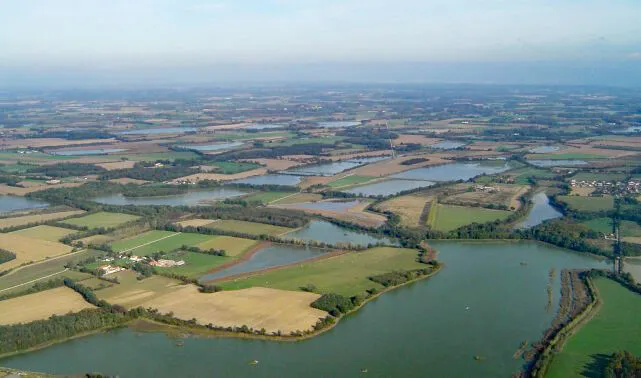
Discover the Ain: world-famous Bresse poultry, the thousand ponds of the Dombes, Pays de Gex facing Mont Blanc and the emerald gorges of Nantua. Complete guide.
 Regions
Aisne: Laon's Medieval Citadel and the Chemin des Dames
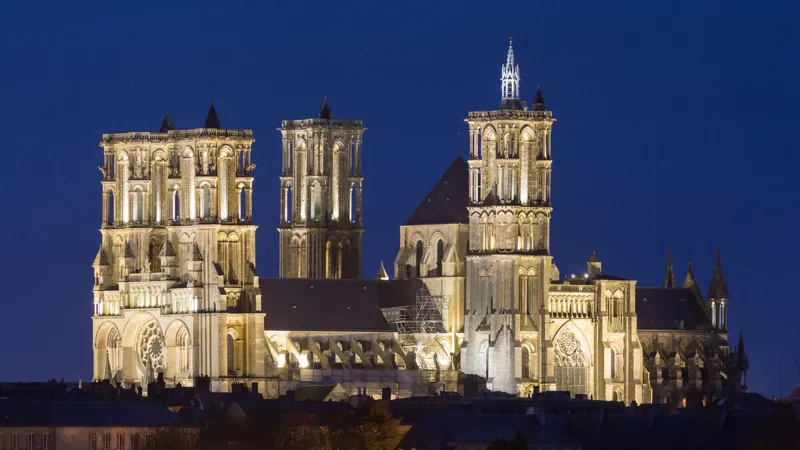
Discover the Aisne département: Laon's hilltop medieval city, the Chemin des Dames battlefields, Soissons, the Familistère de Guise and Champagne vineyards. Complete travel guide.