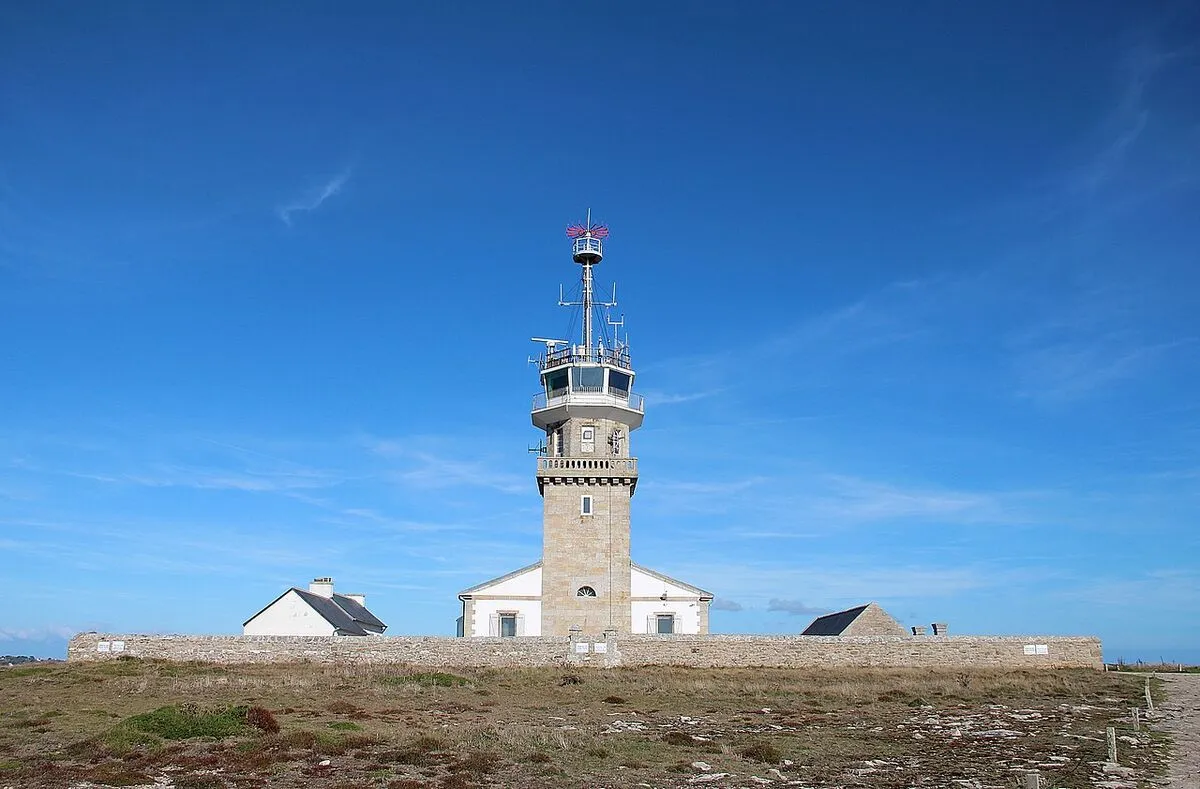
Finis Terrae -- the end of the earth. The name says it all. In Finistere, the European continent breaks off in a crash of waves and wind, between the cliffs of the Pointe du Raz and the islands of the Molene archipelago. This is Brittany at its wildest, but also its most endearing: sculpted parish enclosures, authentic fishing ports and creperies where salted butter reigns supreme.
Pointe du Raz and Cap Sizun
Pointe du Raz, a designated Grand Site de France, is where the continent truly ends. Granite cliffs drop 72 metres into churning waters, and the views stretch across the Iroise Sea to the lighthouse of La Vieille and, on clear days, the low-lying Île de Sein. A superb coastal walk connects the Pointe du Raz to the Pointe du Van further north, a 2-to-3-hour hike along a wilder, less-visited headland. Parking at Pointe du Raz costs around 8 euros per car; the site itself is free. Arrive early morning or late afternoon to dodge the summer crowds and catch the best light for photography.
The Crozon Peninsula and the GR34
The Crozon peninsula juts out between the Bay of Brest and the Bay of Douarnenez like a giant rocky cross, and it contains some of the finest coastal walking in all of France. The GR34 -- Brittany's legendary customs officers' path -- winds along every headland and inlet. Highlights include the sea stacks known as the Tas de Pois, the panoramic Cap de la Chèvre, and the sea caves at Morgat (boat excursions around 12 euros). Allow at least two full days to hike the peninsula properly. The charming harbour town of Camaret-sur-Mer, with its Vauban tower (a UNESCO World Heritage site), makes an ideal base.
Brest: An Ocean City
Brest was heavily bombed during World War II and rebuilt in a functional modernist style that won't win architectural beauty contests. But the city has reinvented itself around its deep connection to the sea. The standout attraction is Océanopolis, a world-class ocean discovery park with tropical, polar, and temperate pavilions. Expect to spend around 22 euros for an adult ticket and at least half a day inside. The Château de Brest, a medieval fortress overlooking the harbour, houses the National Maritime Museum and offers sweeping views of the roadstead. For a unique perspective, ride the urban cable car across the Penfeld River -- a short trip that delivers panoramic views of the naval port.
Insider tip
Every four years, Brest hosts the International Maritime Festival (next edition 2028), one of the world's largest gatherings of traditional sailing vessels. If your dates align, it is an unforgettable spectacle with tall ships, live music, and a festive atmosphere that takes over the entire waterfront.
Quimper: Brittany's Cultural Capital
Quimper is the kind of place that rewards aimless wandering. The Cathédrale Saint-Corentin, with its soaring Gothic spires and distinctively bent nave, anchors a medieval quarter of half-timbered houses, flower-draped footbridges over the Odet River, and cobblestone lanes that open onto lively café terraces. The city is famous for its hand-painted faience pottery -- visit the Henriot-Quimper factory for a guided tour (around 7 euros) and watch artisans at work. In late July, the Festival de Cornouaille celebrates Celtic culture with concerts, parades in traditional dress, and fest-noz dance parties that keep the streets alive until dawn. Street performances are free; ticketed concerts start at about 15 euros.
Island Escapes
Île d'Ouessant
Twenty kilometres off the coast, pounded by Atlantic swells and swept by powerful currents, Ouessant feels like a place outside of time. Ferries run from Brest or Le Conquet (1 hour 15 minutes to 2.5 hours depending on departure point; return ticket around 35 euros). The island is best explored on foot or by rented bicycle. The Créac'h Lighthouse, one of the most powerful in the world, houses a fascinating museum of lighthouses and beacons. The windswept moors, rugged cliffs, and vast seascapes create a raw, meditative atmosphere. Try to stay overnight -- watching the sun set from the western shore with only sheep and seabirds for company is a memory that stays with you.
Îles de Glénan
South of the mainland, the Glénan archipelago is often called the "Breton Caribbean" thanks to its startlingly clear turquoise waters and white sand beaches. Boats depart from Bénodet, Concarneau, or Fouesnant (about an hour each way; return tickets between 35 and 40 euros). Only Île Saint-Nicolas is open to the public, and you can walk around it in under an hour. Come for swimming, snorkelling, and spotting the rare Glénan narcissus, an endemic flower that blooms in April. There are no shops or restaurants on the island, so bring your own water and picnic.
The Parish Closes
Inland Finistère holds one of Europe's most distinctive architectural legacies: the enclos paroissiaux, or parish closes. Built between the 16th and 17th centuries during a boom in the linen trade, these monumental ensembles group together a church, a sculpted calvary, an ossuary, and a triumphal gateway within a walled enclosure. The finest examples are at Saint-Thégonnec (a 1610 calvary with an astonishing entombment scene), Guimiliau (over 200 carved figures on its calvary), and Lampaul-Guimiliau. A dedicated driving route links them all in a single day. Entry is free, and even in high season you are likely to have these extraordinary monuments largely to yourself.
Concarneau and Locronan
Concarneau centres on the Ville Close, a walled citadel perched on an islet in the middle of the harbour. Cross the footbridge, wander the narrow streets, and visit the Fishing Museum (about 6 euros) to learn about the port's long relationship with the sea. Concarneau remains one of France's busiest fishing ports, and watching the morning catch arrive at the auction hall is worth an early start.
Half an hour inland, Locronan is classified among the Most Beautiful Villages of France. Its grand central square, framed by 17th- and 18th-century granite mansions, has served as a backdrop for several films. The village is most atmospheric in the early morning light before the tour buses arrive.
Practical Information
- Getting there: TGV from Paris to Quimper in about 3 hours 30 minutes; Paris to Brest in roughly the same time. Brest Bretagne Airport offers flights from Paris, Lyon, and other cities.
- Best time to visit: May through September. July and August bring the warmest weather but also the biggest crowds. June and September offer a sweet spot of pleasant weather and thinner crowds.
- Getting around: a car is essential to fully explore the département, especially the Crozon peninsula and the parish closes. Roads are generally good but narrow on the coast.
- Food budget: a traditional crêperie meal runs between 10 and 18 euros per person; a seafood platter starts at around 25 euros.
- Weather: Finistère is Brittany's rainiest département. Always carry a waterproof jacket, even on sunny mornings. Conditions can shift several times in a single day -- locals call it "four seasons in one hour."
Explore on the map
Map →📚 Related collections
Related guides
 Nature
Ardennes: Meuse Valley and Forests
Discover the French Ardennes, from the Meuse Valley and Europe's largest medieval fortress at Sedan to Charleville-Mezieres's puppet festival and the wild forests of the Ardenne.
 Nature
Corsica: The Island of Beauty
Discover Corsica: paradise beaches, GR20, Bonifacio, Porto and Scandola, hilltop villages. Complete guide with itineraries and Corsican flavours.