There is a place in France where limestone plateaux plunge abruptly into forested gorges, where the woods close in with almost Nordic intensity, and where legends -- the Four Sons of Aymon, the Ladies of the Meuse turned to stone -- still seem to drift through the mist. Welcome to the Ardennes, a border department between France and Belgium, home to the largest medieval fortress in Europe and a world-renowned puppet festival.
Charleville-Mezieres: Puppet Capital of the World
Place Ducale
Twin sister of the Place des Vosges in Paris, the Place Ducale in Charleville-Mezieres was built in 1606 by Charles de Gonzague, the town's founder. Its harmonious facades of pink brick and pale stone, regular arcades and sandstone paving create one of the finest public squares in northern France. Cafes nestle beneath the arcades and a lively market fills the square on Saturday mornings.
Every day at 10am, the Grand Marionnettiste, a monumental automaton housed in the mill on the square, tells the legend of the Four Sons of Aymon in twelve scenes. The show is free and captivating for all ages.
World Puppet Theatre Festival
Every two years (odd-numbered years), Charleville-Mezieres hosts the Festival Mondial des Theatres de Marionnettes, the largest puppet arts event on the planet. For ten days in September, more than 150 companies from 30 countries take over the entire city — theatres, streets, courtyards, gardens. The International Puppet Institute and its adjoining museum are well worth visiting outside festival time too.
Arthur Rimbaud
Charleville is the birthplace of Arthur Rimbaud, the enfant terrible of French poetry who wrote his major works before the age of twenty. The Musee Arthur Rimbaud, housed in the Old Mill on the banks of the Meuse, traces his turbulent life and blazing literary career through manuscripts, photographs and personal belongings. Admission is around 5 euros. A stroll along the Quai Rimbaud and past the family home near the station completes the pilgrimage.
Sedan: Europe's Largest Medieval Fortress
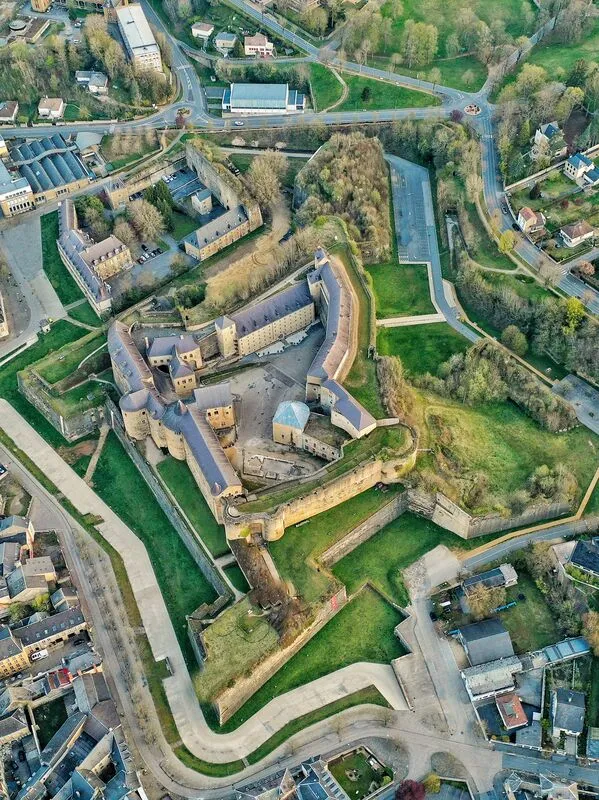
Twenty kilometres southeast of Charleville, the Chateau Fort de Sedan looms over the Meuse River. Covering 35,000 square metres, it holds the title of the largest medieval castle in Europe. Founded in the 15th century by the La Marck princes and expanded over three centuries, it became a veritable city within a city. The guided tour (around 8 euros) takes visitors through seven storeys of vaulted halls, rampart walkways and casemates. A four-star hotel occupying one wing offers the unusual opportunity to sleep inside the fortress walls.
Sedan was also the scene of France's defeat by Prussia in 1870 and saw fierce fighting in both world wars. The Museum of the Last Headquarters documents these dramatic chapters.
The Meuse Valley
The River Meuse has carved a winding valley of wild beauty through the Ardennes plateau. Between Charleville and Givet, it loops between schist cliffs and dense forest in a series of spectacular meanders.
Montherme and the Ladies of the Meuse
Montherme, at the confluence of the Meuse and the Semoy, is the starting point for outstanding hikes. The Roche a Sept Heures offers a dizzying panorama over the valley's tightest meander. On the opposite bank, the Dames de Meuse — four rocky peaks rising above the river — are linked to a medieval legend: four unfaithful wives were said to have been turned to stone by God as punishment while their husbands were away on crusade.
The ridgetop trail from Montherme to Laifour (roughly three hours) is widely regarded as one of the finest hikes in northeastern France.
Givet
On the Belgian border, Givet stretches along the Meuse beneath the Fort de Charlemont, a bastioned fortress built by Charles V and later reinforced by Vauban. The town is known for its violette de Givet — a delicate violet-flavoured sweet — and serves as a gateway to the Belgian Ardennes just across the border.
Rocroi: The Star Fortress
Away from the valley, the small town of Rocroi preserves its intact star-shaped bastioned walls, built on the orders of Francis I and later perfected by Vauban. It was here in 1643 that the Grand Conde won the famous Battle of Rocroi, ending the reputation of the Spanish tercios as invincible. A marked trail along the ramparts (free) and a local history museum recount the event. Seen from the air, the fortress's perfect geometry is breathtaking.
The Forest of Ardenne
Covering the north of the department, the Forest of Ardenne is one of the last great semi-wild woodlands in France. Oak, beech and birch form a dense canopy sheltering wild boar, red deer, roe deer and a small number of reintroduced lynx. Waymarked hiking trails wind through rolling terrain dotted with clearings, peat bogs and crystal-clear streams.
The GR 12 long-distance footpath crosses the Ardennes from east to west and offers a demanding but magnificent multi-day trek. For those seeking shorter outings, numerous loop trails of two to four hours start from villages in the Semoy Valley.
The forest is also a haven for mountain biking and, in winter, for quiet cross-country skiing when snow conditions allow. Accommodation in forest gites and chambres d'hotes is simple but welcoming, with home-cooked meals often featuring local game — wild boar stew, venison pate, forest mushrooms.
Practical Tips
When to Visit
Autumn is the finest season: the forests blaze with gold and crimson, and morning mists drape the Meuse Valley in a ethereal veil. Summer provides long days for hiking and canoeing. In September of odd-numbered years, the Puppet Festival is a unique cultural experience.
Getting There
Charleville-Mezieres is 2 hours 15 minutes from Paris-Est by TGV. A car is essential for exploring the Meuse Valley and the Forest of Ardenne.
Budget
Accommodation ranges from 40 to 70 euros per night for a budget hotel or quality campsite, 70 to 120 euros for a B&B or boutique hotel, and 120 to 200 euros for high-end establishments. A restaurant lunch costs 12 to 20 euros, dinner 20 to 35 euros. Local markets and picnics are an excellent way to eat well while keeping costs down. Many activities are free: hiking, village strolls, markets, churches. Paid museums and sites average 5 to 12 euros per person. To save money, book rural gites by the week, opt for weekday lunch menus, and take advantage of free tastings at local producers.
Explore on the map
Map →📚 Related collections
Related guides
 Nature
Corsica: The Island of Beauty
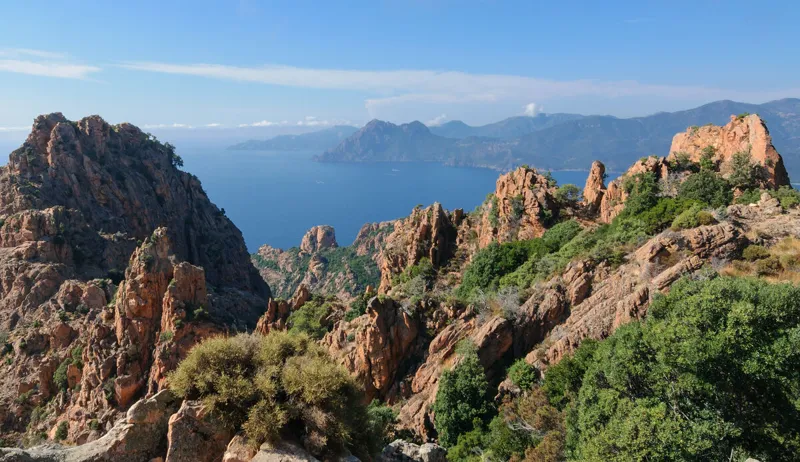
Discover Corsica: paradise beaches, GR20, Bonifacio, Porto and Scandola, hilltop villages. Complete guide with itineraries and Corsican flavours.
 Nature
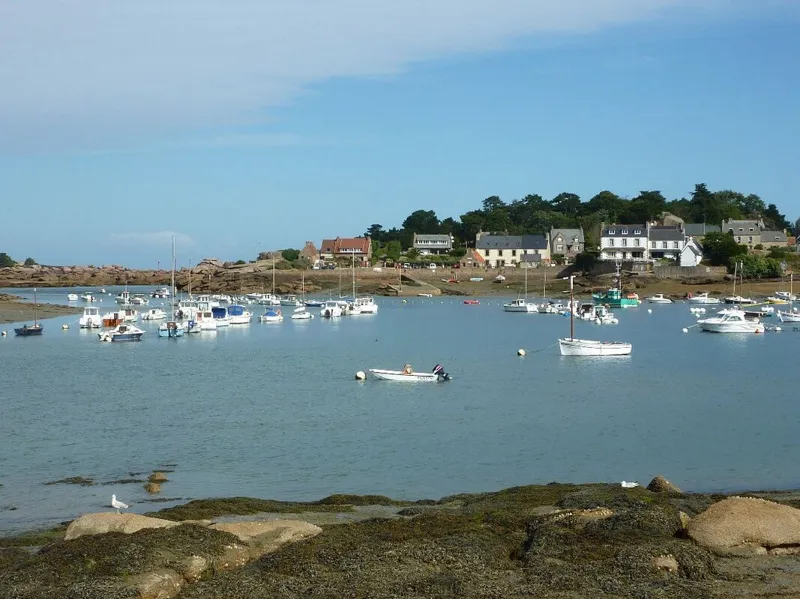
Côtes-d'Armor: The Pink Granite Coast
Discover Côtes-d'Armor: Pink Granite Coast, Cap Fréhel, Dinan, Île de Bréhat, Paimpol. Complete guide to this Breton département.