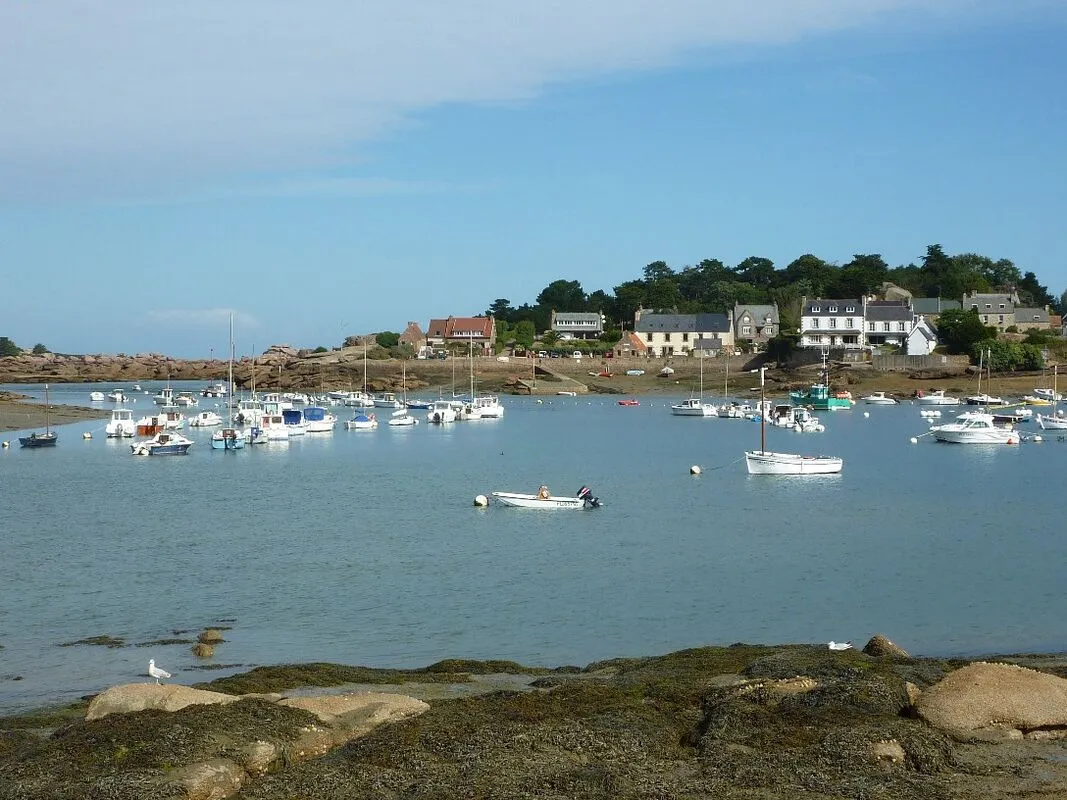
Only three places on Earth have pink granite coastlines, and the most accessible lies along the northern shore of Brittany. Between Perros-Guirec and Trebeurden, enormous boulders sculpted by 300 million years of erosion stack into surreal compositions -- a dinosaur skull here, a giant mushroom there -- all in a palette that shifts from pale pink to fiery rust depending on the hour.
The Pink Granite Coast
The magic begins at Ploumanac'h, voted France's favourite village in 2015. The coastal footpath (the GR34, or sentier des douaniers) threads between towering granite formations that have been shaped by 300 million years of erosion into a gallery of natural sculptures. The rock owes its colour to feldspar crystals that catch the light differently throughout the day, turning from pale blush at noon to deep rose at dusk.
The essential walk is the 3-kilometre stretch between the beach of Saint-Guirec and the Mean Ruz lighthouse. From there, you can continue along the coast to Trégastel (half a day) or all the way to Trébeurden (a full day). The path is well-marked and suitable for all fitness levels, though some sections over bare rock can be slippery when wet. Wear shoes with good grip and time your visit for late afternoon to see the granite at its most radiant.
Trégastel Planetarium
Tucked beneath a massive pink granite boulder, the Trégastel Planetarium (around 7 euros) offers stargazing sessions in a truly unusual setting. It is a good option for families or a rainy-day alternative.
Cap Fréhel and Fort La Latte
On the eastern edge of the département, Cap Fréhel stands as one of Brittany's most dramatic headlands. Its cliffs of pink sandstone and grey schist rise 70 metres above the sea, and on a clear day you can make out the island of Jersey on the horizon. The heather-clad moorland that blankets the cape erupts into vivid purple in August and September. Access is free; the lighthouse can be visited in summer for about 3 euros.
A 4-kilometre walk along the clifftop path (or a short drive) leads to Fort La Latte, a 14th-century castle clinging to a rocky spur and connected to the mainland by two drawbridges. It looks as though it belongs in a storybook, and indeed it has appeared in several films. Admission is around 6 euros, and the views from the ramparts across the Emerald Coast are outstanding.
Planning tip
Combine Cap Fréhel and Fort La Latte into a single half-day excursion. The coastal path between them is easy and beautiful -- bring a picnic and find a spot on the cliffs overlooking the sea.
Dinan: A Medieval Gem
Dinan is one of Brittany's best-preserved medieval towns and consistently ranks among the most charming small cities in France. Nearly 3 kilometres of 13th-century ramparts encircle a centre of half-timbered houses, stone churches, and atmospheric lanes. The Rue du Jerzual, a steep cobbled street lined with artists' studios and craft shops, descends from the old town down to the picturesque port on the River Rance.
Climb the keep (around 5 euros) for panoramic views over the rooftops and the wooded Rance valley. On Thursdays, a large market fills the squares with stalls selling local produce, fresh crêpes, and Breton cider. From the port, river boats run downstream to Dinard and Saint-Malo (about 25 euros return), a 2.5-hour cruise through the scenic Rance estuary that makes for an excellent day trip.
Île de Bréhat
Known as the "island of flowers," Bréhat enjoys a microclimate mild enough for mimosa, agapanthus, and fig trees to flourish -- an unexpected pocket of Mediterranean-style vegetation off the Breton coast. A 10-minute boat ride from the Pointe de l'Arcouest near Paimpol brings you to the island (return ticket around 10 euros). No cars are allowed; you explore on foot or by rented bicycle.
Bréhat is actually two islands linked by a bridge. The southern half is lush with gardens and sheltered paths; the northern half is wild, windswept, and studded with pink granite outcrops reminiscent of the Ploumanac'h coast. Walking the entire circumference takes 3 to 4 hours. Highlights include the Paon lighthouse at the northern tip and the Chapelle Saint-Michel, a hilltop chapel offering 360-degree views over the archipelago. Visit in spring (April to May) for the most spectacular blooms.
Paimpol and the Goëlo Coast
Paimpol carries the romantic legacy of Brittany's Icelandic cod-fishing era, immortalised in Pierre Loti's novel An Iceland Fisherman. Today it is a handsome harbour town centred on oyster farming and sailing. Paimpol oysters can be sampled straight from the market hall or from producers' shacks along the waterfront. Every two years in August, the Festival du Chant de Marin (Sea Shanty Festival) draws tens of thousands of visitors for four days of maritime music, shanties, and celebrations.
Just outside town, the Abbaye de Beauport is a Gothic abbey founded in 1202, now partially in ruins and all the more evocative for it. The grounds (around 7 euros) stretch down to the shore, and the coastal paths radiating from the abbey are among the most beautiful in the département. The contrast of crumbling stone arches framing sea views is unforgettable.
Saint-Brieuc Bay
The Bay of Saint-Brieuc, a designated nature reserve, is one of northern France's most important stopovers for migrating birds. The Maison de la Baie in Hillion runs guided nature walks (around 5 euros) onto the mudflats at low tide, where you can discover an astonishingly rich ecosystem of shellfish, worms, and wading birds. The bay is also the heartland of the coquille Saint-Jacques (scallop), fished from November to March. The annual Scallop Festival (held in April, alternating between Saint-Quay-Portrieux and Erquy) opens up fishing boats to visitors and fills restaurants with special scallop menus.
The stretch of coastline between Erquy and Le Val-André offers broad sandy beaches backed by pink cliffs -- quieter and more family-friendly than the busier Pink Granite Coast resorts.
Practical Information
- Getting there: TGV from Paris to Saint-Brieuc in about 2 hours 30 minutes, to Guingamp in 3 hours. Lannion has a small airport with flights from Paris.
- Best time to visit: June to September for the best weather. April and May are ideal for Bréhat's spring flowers. Cap Fréhel's heather blooms peak in late August.
- Getting around: a rental car is the most practical option. Local bus services connect the main towns but run infrequently.
- Food budget: a traditional buckwheat galette costs between 7 and 12 euros; a dozen oysters from a producer start at about 8 euros.
- What to pack: walking shoes for the GR34, binoculars for birdwatching in Saint-Brieuc Bay, and a waterproof jacket -- this is Brittany, and the weather can turn on a dime.
Explore on the map
Map →📚 Related collections
Related guides
 Nature
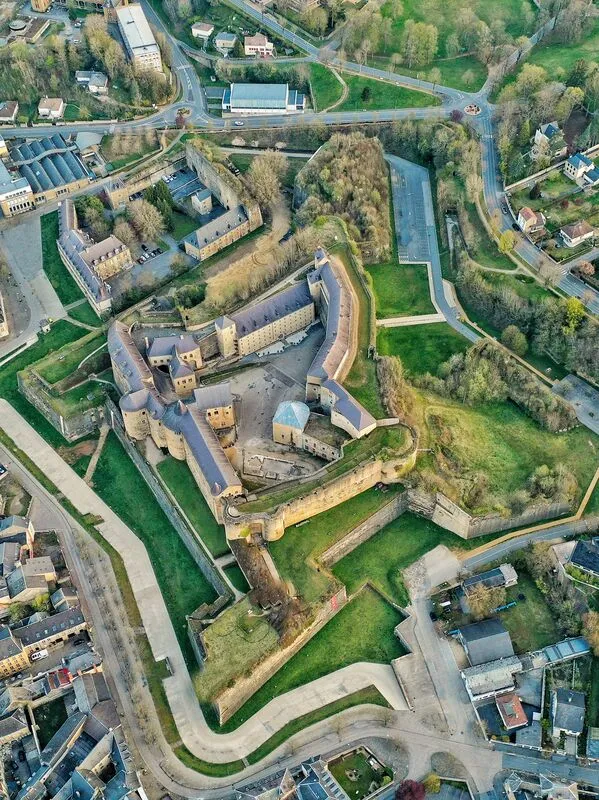
Ardennes: Meuse Valley and Forests
Discover the French Ardennes, from the Meuse Valley and Europe's largest medieval fortress at Sedan to Charleville-Mezieres's puppet festival and the wild forests of the Ardenne.
 Nature
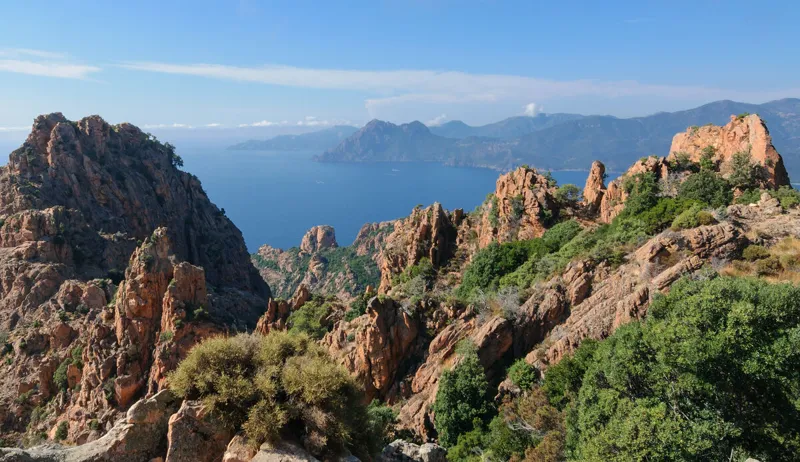
Corsica: The Island of Beauty
Discover Corsica: paradise beaches, GR20, Bonifacio, Porto and Scandola, hilltop villages. Complete guide with itineraries and Corsican flavours.