An hour from Paris, the Essonne unfurls a landscape that even Parisians often overlook. Jean Cocteau chose Milly-la-Foret for his retreat, and walking through its medieval market hall and medicinal herb fields, you understand why. The department alternates between farming plateaux, green valleys and a discreet heritage -- the chateaux of Dourdan and Chamarande, the Mereville estate -- best discovered at a Sunday pace.
Dourdan: Royal Fortress and Medieval Charm
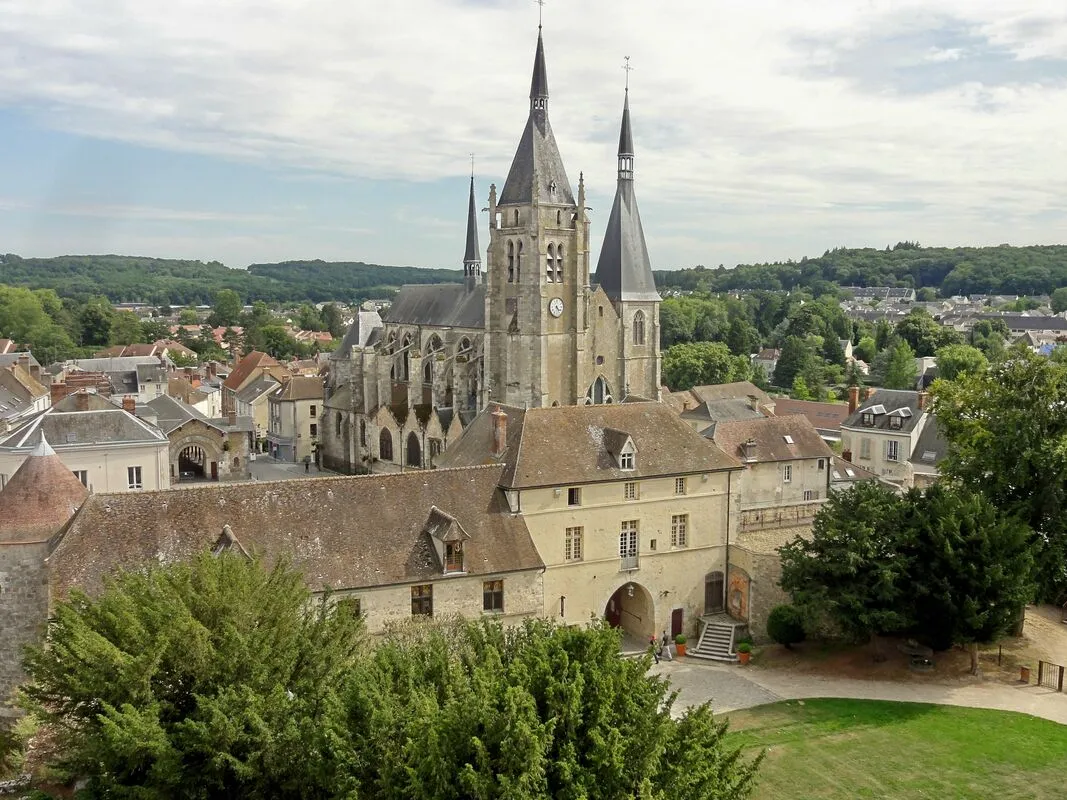
Dourdan, in the southwest of Essonne, is one of the department's most appealing small towns. Its castle, built in the 13th century by Philippe Auguste, is a remarkably well-preserved example of medieval military architecture. The round towers, moat, and cylindrical keep form an imposing silhouette. The museum housed in the keep traces the history of the town and region (environ 5 euros admission). In summer the castle hosts shows and historical re-enactments.
The old town of Dourdan has preserved its 15th-century market hall, where a lively market is held on Saturday mornings. Cobbled lanes lined with old houses invite idle strolling. The Church of Saint-Germain-l'Auxerrois, in Flamboyant Gothic style, is worth a visit for its stained glass.
Practical tip: Dourdan is served by RER C from Paris (about 1 hour), making it an easy day trip. Combine the castle visit with a walk in the Dourdan forest, accessible on foot from the town centre.
Milly-la-Forêt: Cocteau, Herbs and Beauty
Milly-la-Forêt is a characterful village nestled at the foot of the Fontainebleau sandstone. Its fame owes much to Jean Cocteau, who spent the last years of his life here and decorated the Chapel of Saint-Blaise-des-Simples (12th century) with frescoes dedicated to medicinal plants (environ 5 euros admission). This small whitewashed chapel, adorned with spare drawings of herbs and an immense Christ, is a place of rare emotion. Cocteau is buried here.
The tradition of medicinal herbs runs deep in Milly. The village was a centre for producing officinal plants, and the National Conservatory of Perfume, Medicinal and Aromatic Plants continues this tradition in a vast botanical garden (environ 6 euros). Hundreds of species are on display in themed gardens, from lavender to ginseng.
The Cyclop by Jean Tinguely
A few minutes from Milly, deep in the forest, hides one of Île-de-France's most astonishing artworks: The Cyclop. This monumental 22-metre-high sculpture, created by Jean Tinguely and Niki de Saint Phalle with contributions from other artists, is a giant head covered in mirrors and kinetic mechanisms. The interior is a labyrinth of interactive works. The visit (environ 8 euros, by reservation only from April to November) is a unique artistic experience, particularly popular with children.
Evry-Courcouronnes: Modernity and Diversity
Evry-Courcouronnes, prefecture of Essonne, presents a resolutely contemporary face. The Cathedral of the Resurrection, designed by architect Mario Botta and consecrated in 1995, is the only cathedral built in France in the 20th century. Its cylindrical brick architecture, topped with a crown of lime trees, is striking. Entry is free.
The town is also a cultural melting pot where dozens of communities coexist. Its market is one of the most cosmopolitan in Île-de-France, with stalls of African, Asian, and Caribbean products. It is a vibrant, authentic place far from tourist cliches.
The Méréville Estate and the Juine Valley
In the south of the department, the Méréville estate is a well-kept secret. This 18th-century picturesque garden, created for the Marquis de Laborde, was long left abandoned before being restored by the departmental council. Its follies (temples, columns, artificial grottoes), lake, and centuries-old trees compose a romantic landscape of great beauty. Admission is free on open days (check the calendar on the department's website).
The Juine valley, running through southern Essonne, offers bucolic walks past mills, wash-houses, and stone villages. Etampes, with its Romanesque churches, its Guinette tower, and its market, is a pleasant stop.
Scientific and Industrial Heritage
Essonne has a strong scientific tradition. The Chamarande estate, a 17th-century château in a 98-hectare park, now hosts contemporary art exhibitions (free entry). The grounds are superb for a family picnic.
The Robert Doisneau Photography House in Gentilly (on the Essonne border) pays tribute to the famous photographer born there. For science enthusiasts, the Saclay plateau concentrates some of France's greatest research centres (CEA, CNRS, Ecole Polytechnique), with occasional open-day visits.
Walking and Nature
Essonne offers many hiking routes, often little known. The GR 1, which circles Île-de-France, crosses the department and provides fine stretches between Dourdan and Milly-la-Forêt. The Larchant rocks, just across the border into Seine-et-Marne, form a spectacular climbing and walking site.
The banks of the Essonne river, between Corbeil-Essonnes and Ballancourt, are laid out for walking and cycling. Shaded riverbanks, locks, and old mills create a peaceful setting. The Etampes leisure base offers water activities in summer (pedalos, canoes, around 8 to 12 euros per half hour).
Essonne Gastronomy
Essonne's terroir is rooted in plateau farming and market gardening. Méréville watercress, grown in beds fed by springs from the Juine, is an exceptional product — mild, peppery, and essential in soups and salads. The watercress festival in Méréville (in April) celebrates this tradition.
Marcoussis strawberries, asparagus from the Saclay plateau, and honey from the forests round out the picture. For dining, inns in the Chevreuse valley (Essonne side) and restaurants in the south of the department offer terroir menus between 18 and 30 euros. In Milly-la-Forêt, several restaurants play the herb and aromatic plant card in their cuisine.
For a more ambitious gastronomic experience, Le Bouche à Oreille in Dourdan is locally recommended for its market-driven cuisine (menus around 35 euros).
Practical Tips
- When to visit: April to June for gardens and watercress season, September to October for forests and golden light
- Getting around: RER C serves Dourdan and the Orge valley, RER D passes through Evry and Corbeil, but a car is essential for Milly-la-Forêt and Méréville
- Food budget: expect 15 to 25 euros for a set lunch at an inn, 8 to 12 euros for a quick lunch
- Suggested duration: 2 to 3 days for the main sites, a single day is enough for Dourdan or Milly-la-Forêt
- Must-do experiences: the Cocteau chapel in Milly-la-Forêt, The Cyclop by Tinguely in the forest, and a stroll through the Méréville estate on an open day
Explore on the map
Map →📚 Related collections
Related guides
 Regions
Ain: Bresse, Dombes and Pays de Gex
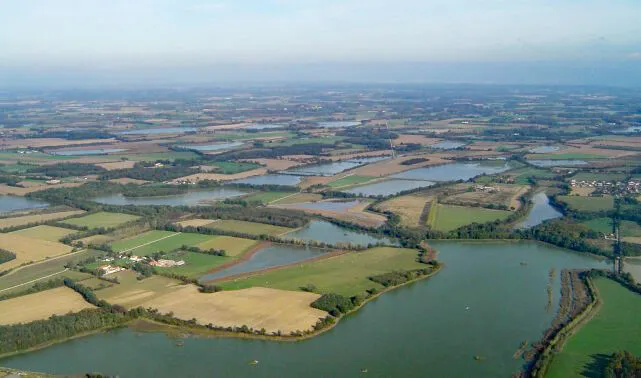
Discover the Ain: world-famous Bresse poultry, the thousand ponds of the Dombes, Pays de Gex facing Mont Blanc and the emerald gorges of Nantua. Complete guide.
 Regions
Aisne: Laon's Medieval Citadel and the Chemin des Dames
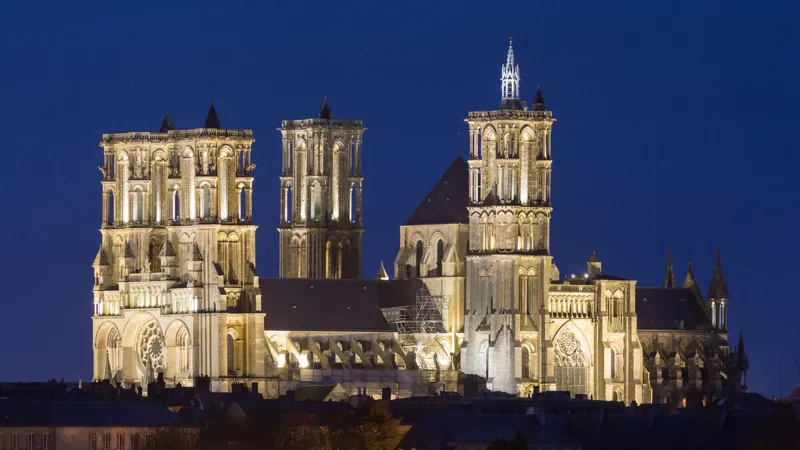
Discover the Aisne département: Laon's hilltop medieval city, the Chemin des Dames battlefields, Soissons, the Familistère de Guise and Champagne vineyards. Complete travel guide.