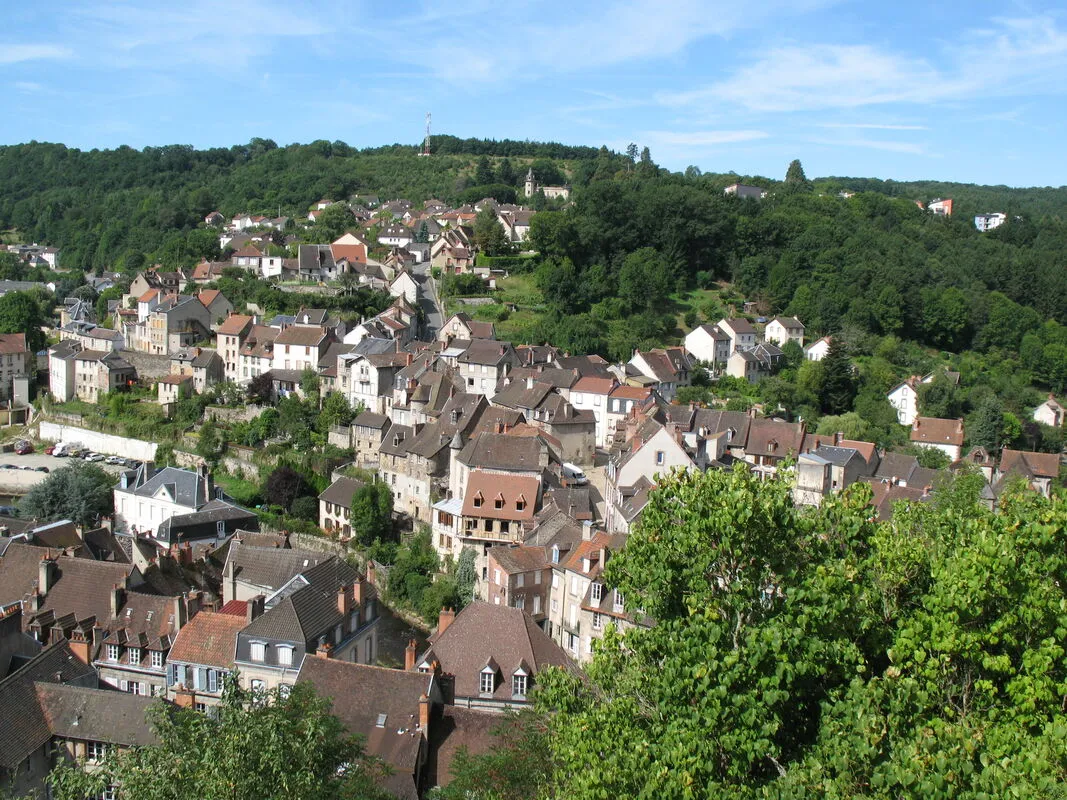
Mainland France's second-least-populated department, the Creuse turns its emptiness into treasure. No crowds, no tourist traps -- just wooded valleys, starlit skies of a purity now rare in Europe, and in Aubusson, a tapestry-weaving tradition inscribed on UNESCO's Intangible Heritage list that has crossed the centuries with stubborn grace.
Aubusson: World Capital of Tapestry
For six centuries, the small town of Aubusson has been synonymous with tapestry. Its weavers have produced wall hangings for kings, cardinals, and collectors since the 1400s, and in 2009 UNESCO inscribed Aubusson tapestry-making on its list of Intangible Cultural Heritage — a recognition of a living craft, not just a historical one.
The Cité internationale de la Tapisserie (~8 euros) is the essential starting point. Housed in a former decorative arts school, it displays masterpieces spanning the medieval period to the present day. The permanent collection traces the evolution of styles from verdure tapestries dense with foliage to bold modern commissions — including a monumental set inspired by Tolkien's Lord of the Rings currently being woven by local artisans. Allow 90 minutes to two hours for the visit.
Beyond the museum, several weaving workshops in town welcome visitors. Watching a lissier work at a low-warp loom is mesmerising: each square centimetre of tapestry represents hours of painstaking hand-work, building up colour and texture thread by thread.
Guéret: Gateway to the Creuse
Guéret, the département's capital, is a quiet, pleasant town that makes a good base. The Musée d'art et d'archéologie, set in the elegant Hôtel de la Sénatorerie, holds a fine collection of 12th-century Limoges enamels and medieval religious metalwork that punches well above its weight for a town this size.
A few kilometres outside Guéret, the Loups de Chabrières wolf park (~10 euros) is home to packs of grey, Arctic, and Iberian wolves roaming large forested enclosures. Keeper-led feeding sessions offer remarkably close views of the animals and insightful commentary on wolf ecology and conservation. It is a hit with families, but also with wildlife photographers who come for the rare chance to observe these animals in semi-natural conditions. Allow about two hours for the visit.
Crozant: In the Footsteps of the Impressionists
The Creuse Valley between Crozant and Fresselines drew Impressionist painters from the 1880s onward. Claude Monet spent the spring of 1889 here, captivated by the shifting light on the gorges and the ruins of the Château de Crozant, a medieval fortress whose remains still preside over the confluence of the Creuse and Sédelle rivers.
Today, a signposted painters' trail guides walkers to the exact viewpoints that Monet, Guillaumin, and Detroy committed to canvas. The gorge walk is especially beautiful in spring when bright yellow broom blazes across the hillsides. The castle ruins are free to explore and command a striking panorama over the steep, wooded valley.
Lac de Vassivière: Where Art Meets Wilderness
Lac de Vassivière is the largest artificial lake in the Limousin, its 45 kilometres of indented shoreline fringed by conifer forests and sandy beaches. Sailing, kayaking, swimming, and fishing are all on offer in summer, giving the lake a lively outdoor-recreation atmosphere.
The real surprise sits on the Île de Vassivière, reached by a footbridge or a short boat trip. The Centre international d'art et du paysage, designed by architect Aldo Rossi, hosts contemporary art exhibitions in a striking building surrounded by an open-air sculpture park. The juxtaposition of avant-garde art and wild upland landscape is genuinely unexpected. Admission is around 6 euros.
Cycling the loop around the lake (roughly 30 km) is an excellent way to discover its varied moods — dense woodland, hidden coves, and sudden open views across the water to forested hills.
The Plateau de Millevaches: France's Empty Quarter
The Plateau de Millevaches — whose name derives from the Gaulish for "a thousand springs," not a thousand cows — sprawls across the northeast of the département. This high tableland of heather, peat bogs, and scattered granite hamlets is one of the last genuinely wild spaces in central France. The regional nature park that governs it promotes slow, low-impact tourism centred on hiking, mountain biking, and wildlife observation.
The peat bogs shelter relict Ice Age flora — sundews, sphagnum mosses, cotton grass — that delights botanists. Red deer, roe deer, otters, and red kites inhabit the forests and river corridors.
Dark Skies Worth Travelling For
Thanks to its exceptionally low population density and near-total absence of light pollution, Creuse offers some of the finest dark skies in mainland France. On the Millevaches plateau in particular, the Milky Way arches overhead with a clarity that city dwellers rarely experience. Several local guesthouses and astronomy clubs organise guided stargazing evenings, especially during the summer months. If you have even a passing interest in astronomy, a clear night on the plateau is unforgettable.
Rural Heritage and Walking Country
Beyond the headline attractions, Creuse is stitched together by a quiet rural heritage: Romanesque churches that seat fifty, medieval bridges arching over trout streams, restored communal wash houses, and wayside crosses marking ancient paths. The network of GR long-distance and PR local walking trails is dense and well-maintained, making multi-day hikes from village to village entirely feasible, with farm stays and gîtes d'étape providing simple, welcoming accommodation along the way.
Rural tourism here is a philosophy as much as an industry. Limousin cattle farmers, beekeepers, and small-scale cheese producers are genuinely happy to welcome curious visitors and share their way of life.
Practical Tips
- Best time to visit: June for long days and flowering broom; September for solitude and wild mushrooms; winter for dark-sky stargazing
- Getting around: A car is essential — public transport is very limited. Guéret is reachable by train from Limoges (about 1 hour)
- Food budget: 12 to 20 euros for a set lunch; Creuse is one of the most affordable départements in France
- Suggested duration: 3 to 4 days for the main sites, longer if you plan to hike or simply decompress
- Don't miss: The Cité de la Tapisserie in Aubusson, a starlit night on the Millevaches plateau, and the Crozant gorges in spring
Explore on the map
Map →📚 Related collections
Related guides
 Regions
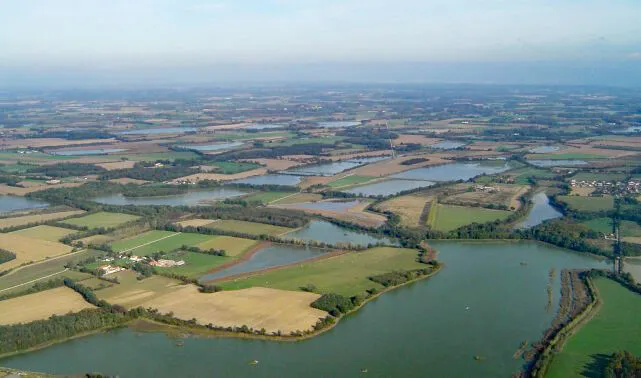
Ain: Bresse, Dombes and Pays de Gex
Discover the Ain: world-famous Bresse poultry, the thousand ponds of the Dombes, Pays de Gex facing Mont Blanc and the emerald gorges of Nantua. Complete guide.
 Regions
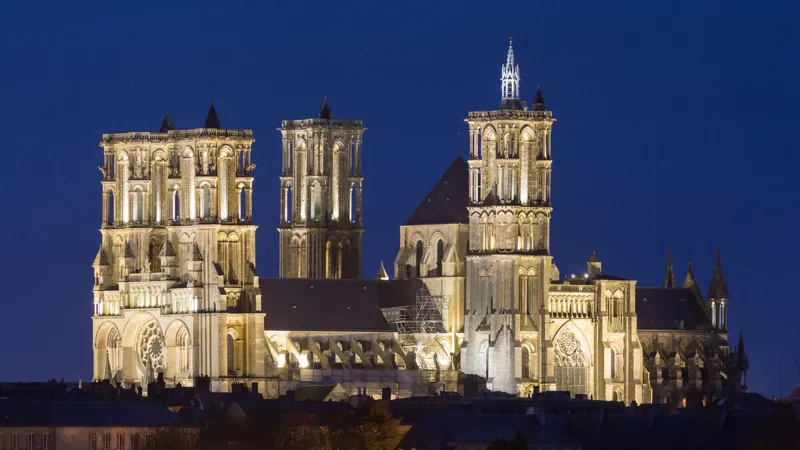
Aisne: Laon's Medieval Citadel and the Chemin des Dames
Discover the Aisne département: Laon's hilltop medieval city, the Chemin des Dames battlefields, Soissons, the Familistère de Guise and Champagne vineyards. Complete travel guide.