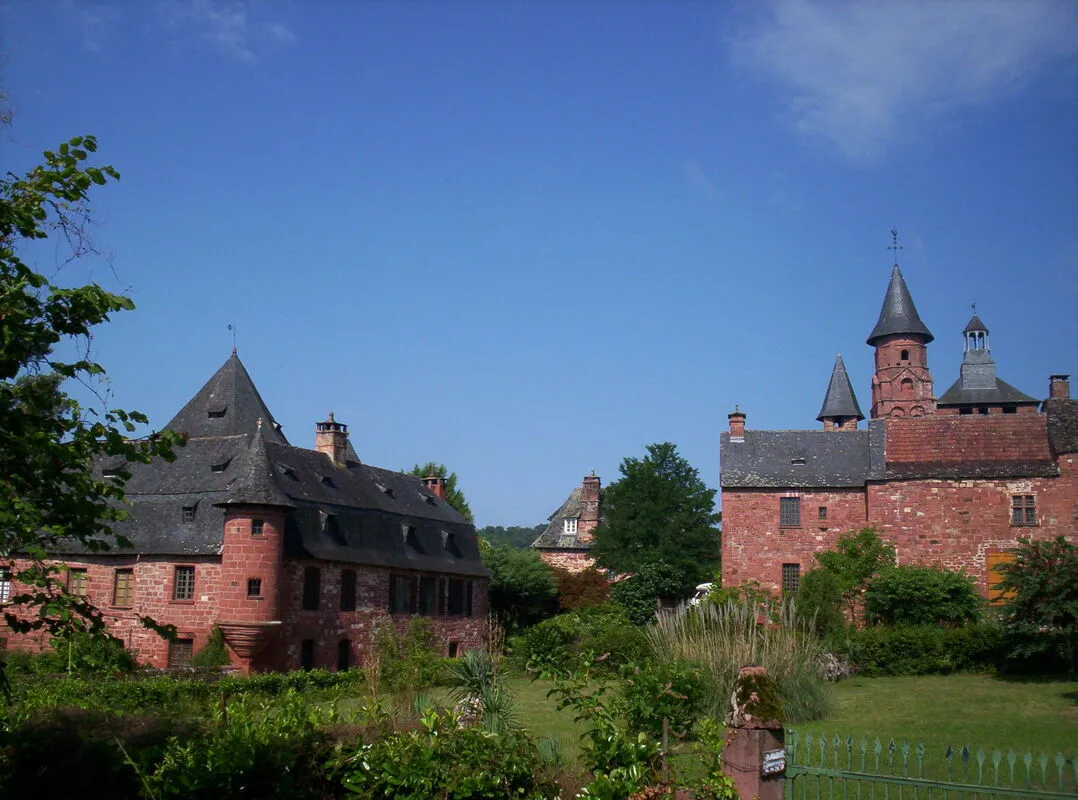
Beauty in Correze has to be earned. It does not advertise itself on motorway signs or in glossy brochures. It reveals itself around a bend, at the bottom of a hidden valley, in the red sandstone of a village ranked among the most beautiful in France. Collonges-la-Rouge, Turenne, Curemonte: these names evoke a timeless France of stone-slate roofs, century-old walnut trees and farm markets where foie gras changes hands with a smile.
Collonges-la-Rouge: The Crimson Village
Collonges-la-Rouge is the village that started it all. In 1982, its mayor founded the association of France's Most Beautiful Villages, and Collonges was the inaugural member. The reason is immediately obvious: every building is constructed from local red sandstone, giving the entire village a warm, almost otherworldly glow that shifts from pink at dawn to deep crimson at sunset.
Wander the narrow lanes to find the covered grain hall, the Romanesque Church of Saint-Pierre with its 12th-century carved tympanum, and the elegant townhouses built by local nobles who prospered from pilgrim traffic on the road to Santiago de Compostela. The village is free to enter, though parking costs around 4 euros in season. It gets crowded in summer, so aim for early morning or late afternoon visits.
Turenne: A Medieval Stronghold
Just a short drive from Collonges, Turenne rises dramatically from the valley floor. This fortified hilltop village was once the seat of a powerful viscountcy that controlled a third of the Limousin until 1738. The castle ruins (~5 euros admission) crown the summit, and the 360-degree panorama from the top is one of the finest in the département — rolling green hills stretching to the horizon in every direction.
The descent through the village passes Renaissance townhouses, a 16th-century collegiate church, and terraced gardens that cling improbably to the steep slopes. The architectural harmony is striking: pale limestone walls, grey slate roofs, and stone staircases winding between the houses. Allow about 90 minutes for a thorough visit.
Brive-la-Gaillarde: Market Town Extraordinaire
Brive-la-Gaillarde is the largest town in Corrèze and its commercial hub. The nickname "la Gaillarde" (the bold one) dates from the days when its ramparts were considered unbreachable. Today the town is best known for its outstanding covered market, one of the most celebrated in southwest France. Stalls overflow with foie gras, Périgord walnuts, wild cèpe mushrooms, black truffles in winter, and wine from the local Branceilles vineyards.
A visit to the Distillerie Denoix is a genuine treat. Founded in 1839, this family-run distillery produces walnut liqueur, violet mustard, and fruit aperitifs in a workshop that has barely changed in a century. The tour is free and concludes with a generous tasting. Nearby, the Musée Labenche (free admission), housed in a handsome Renaissance mansion, traces the region's history from prehistory through to modern times.
Brive works well as a base for exploring the surrounding villages. Roads are good, distances are short, and the town has the best choice of hotels and restaurants in the département.
Uzerche: Pearl of the Limousin
They call it the "Pearl of the Limousin", and the view from the Turgot bridge explains why. Uzerche sits on a rocky spur entirely encircled by a meander of the Vézère river, its slate rooftops, medieval towers, and terraced gardens reflected in the still water below. It is one of the most photogenic townscapes in central France.
The Abbey Church of Saint-Pierre, founded in the 6th century and rebuilt in the 12th, contains a remarkable Romanesque crypt. Walking the upper streets reveals noble houses with carved doorways, vaulted passageways, and hidden courtyards. For a different perspective, follow the riverside path that loops around the base of the promontory — a gentle 5-kilometre walk that takes about 90 minutes and offers beautiful views of the town from below.
Pompadour: France's Horse Capital
The Château de Pompadour was given by Louis XV to his famous mistress, the Marquise de Pompadour, but since the Revolution it has served as France's National Stud Farm. Corrèze has a deep tradition of horse breeding, and Pompadour is its showpiece. Parts of the château, including the grounds and the mare stables, are open to visitors (~6 euros). In summer, equestrian shows and competitions draw enthusiasts from across the country.
Even if horses are not your passion, the setting is impressive — a fairytale castle surrounded by paddocks where thoroughbreds and Anglo-Arabians graze against a backdrop of wooded hills.
The Gimel Waterfalls: Raw Natural Power
The Cascades de Gimel are among the most spectacular waterfalls in the Massif Central. The Montane river plunges 143 metres in three successive drops through a steep, densely wooded ravine. A well-maintained but occasionally steep trail leads down to the base of the falls — sturdy footwear is essential. The full loop takes roughly 90 minutes. The site is open from April to November with an admission fee of around 6 euros.
The mist, the roar of the water, and the lush ferns coating every rock face create an atmosphere that feels almost tropical — a world away from the quiet hilltop villages just a few kilometres away.
Plateau de Millevaches and Lac du Causse
The Plateau de Millevaches — whose name comes from the Gaulish for "a thousand springs" rather than a thousand cows — is a vast upland of heather, peat bogs, and forests rising to nearly 1,000 metres. It is the water tower of the Limousin, giving birth to three rivers: the Vézère, the Corrèze, and the Vienne. The regional nature park that protects it is superb walking and mountain-biking country, with well-marked trails through landscapes that feel wild and empty.
For something more leisurely, the Lac du Causse between Brive and Tulle is a family-friendly recreation lake. Supervised swimming in summer, a 7-kilometre walking trail around the shore, picnic areas, and pedalo hire make it a pleasant half-day break between village visits.
Practical Tips
- Best time to visit: May to June for wildflowers and lush greenery; September to October for autumn colours and mushroom markets
- Getting around: A car is essential — the villages are not served by public transport. Brive is reachable by train from Paris-Austerlitz (about 4 hours) or via Limoges by TGV
- Food budget: Expect 14 to 22 euros for a set lunch in a village auberge; Brive's best restaurants charge 40 to 60 euros
- Suggested duration: 3 to 5 days to cover the main villages, waterfalls, and a taste of the plateau
- Don't miss: Brive's Saturday morning market, sunset at Collonges-la-Rouge, and a riverside walk at Uzerche
Explore on the map
Map →📚 Related collections
Related guides
 Regions
Ain: Bresse, Dombes and Pays de Gex
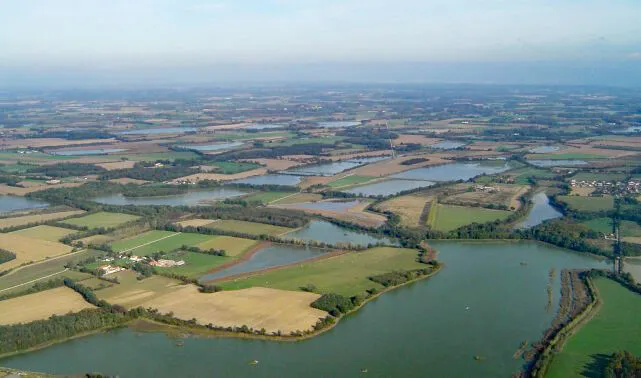
Discover the Ain: world-famous Bresse poultry, the thousand ponds of the Dombes, Pays de Gex facing Mont Blanc and the emerald gorges of Nantua. Complete guide.
 Regions
Aisne: Laon's Medieval Citadel and the Chemin des Dames
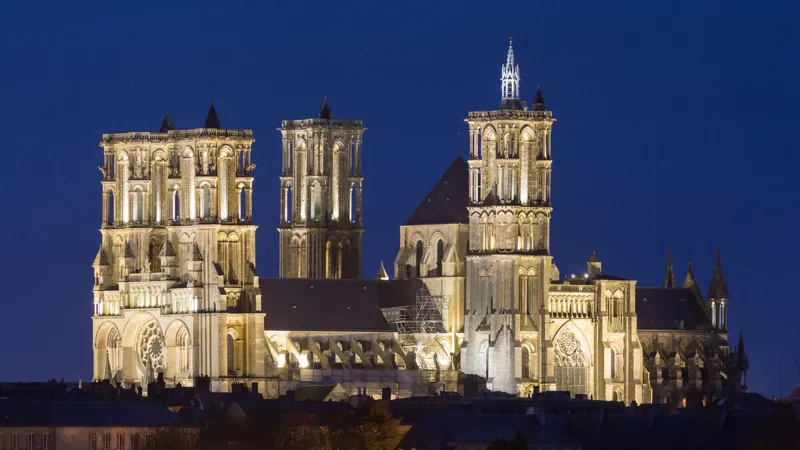
Discover the Aisne département: Laon's hilltop medieval city, the Chemin des Dames battlefields, Soissons, the Familistère de Guise and Champagne vineyards. Complete travel guide.