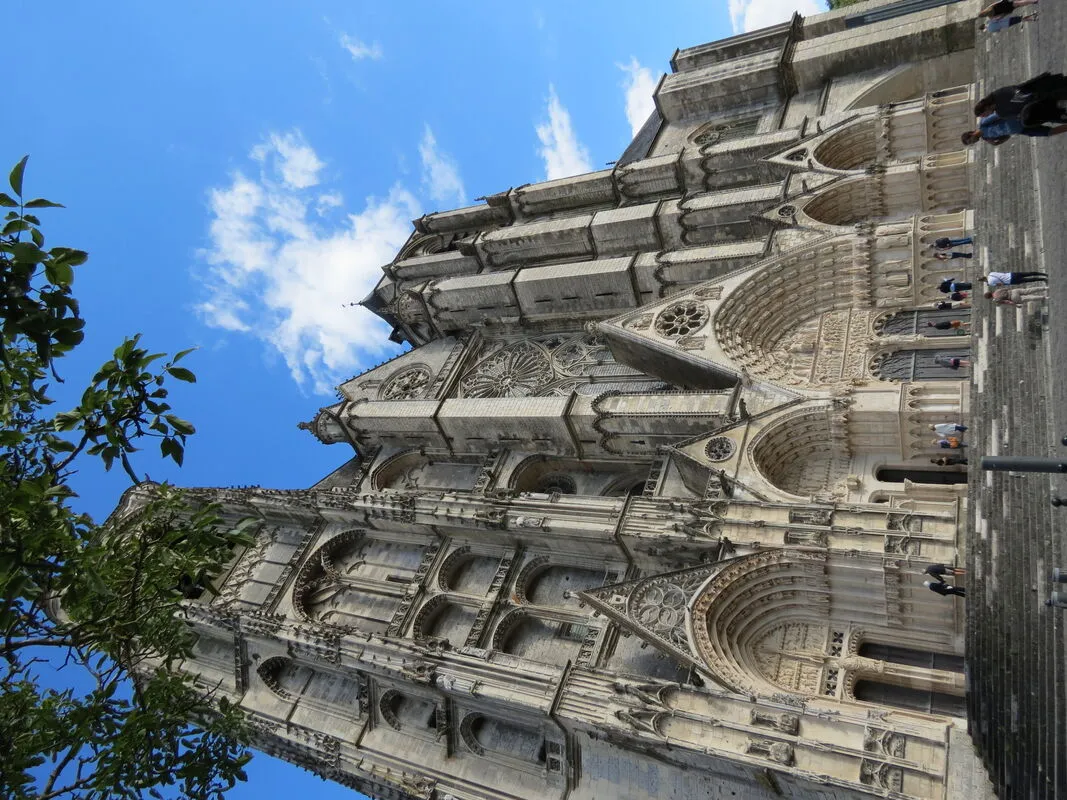
In Bourges, a UNESCO-listed Gothic cathedral rises above enchanting marshes. Thirty kilometres away, the hills of Sancerre unfurl vineyards whose Sauvignon Blanc has conquered tables the world over. The Cher department brings these two marvels together with the discretion typical of deep France -- the kind that makes no noise but leaves lasting memories.
Bourges: The Cathedral and the Heart of Berry
Bourges deserves far more than a brief stop. Its crowning glory is the Cathedral of Saint-Étienne, a UNESCO World Heritage Site since 1992. A masterwork of Gothic architecture, it stuns from the first glance with its monumental facade pierced by five sculpted portals — a feature unique in France. Inside, the transept-less nave creates an unbroken, soaring perspective, while 13th-century stained-glass windows flood the space with polychrome light that rivals Chartres.
Do not miss the climb up the north tower (~6 euros): 396 steps lead to a sweeping panorama over Bourges, its marshes, and the Berry plains. The crypt, one of the largest in France, houses the recumbent effigy of the Duke of Berry, the lavish medieval patron of the arts.
The Palais Jacques Coeur
A few streets from the cathedral, the Palais Jacques Coeur (~8 euros) is one of the finest secular medieval buildings in Europe. Built between 1443 and 1451 by the fabulously wealthy treasurer of King Charles VII, the palace blends residential luxury with defensive architecture to remarkable effect. Monumental fireplaces, painted ceilings and trompe-l'oeil false windows testify to the sophistication of a merchant who became the most powerful man in the kingdom. Allow about one hour for the guided tour.
The Marshes of Bourges
At the foot of the cathedral lie the Marais de Bourges, a network of market gardens crisscrossed by canals that date back to the Middle Ages. These 135 hectares of greenery in the heart of the city can be explored on foot or by flat-bottomed boat. It is an unexpectedly peaceful haven, home to herons, kingfishers, and gardeners who still tend their plots much as they have for centuries. A boat ride lasts around 45 minutes and costs about 8 euros.
Sancerre: King of the Whites
Perched on its hilltop at 312 metres above sea level, Sancerre commands the Loire and offers one of the finest views in the Centre-Val de Loire region. The village itself, with its steep medieval lanes, half-timbered houses and feudal tower, is classified among the most beautiful in France. But it is the wine, of course, that has given Sancerre its worldwide fame.
Sauvignon blanc from Sancerre is regarded as one of the purest expressions of the grape. The limestone and clay-flint slopes surrounding the village yield wines of incomparable minerality and freshness. The Maison des Sancerre (~8 euros) offers an interactive introduction to the terroirs and winemaking techniques, rounded off with a tasting.
There are dozens of estates open to visitors, most without appointment. Notable names include Domaine Vacheron, Domaine Henri Bourgeois, and Cave de la Mignonne. Tastings are usually free, and a bottle of Sancerre blanc costs between 12 and 25 euros depending on the cuvée.
Crottin de Chavignol
Two kilometres from Sancerre, the hamlet of Chavignol is the birthplace of the famous crottin de Chavignol, a small goat cheese with protected designation of origin whose texture ranges from soft and creamy to firm and nutty depending on its age. Several dairies offer tours and tastings. The pairing of Sancerre white with crottin de Chavignol is one of the most perfect gastronomic marriages in all of France.
The Route Jacques Coeur: Castles and History
The Route Jacques Coeur is a heritage trail linking some fifteen châteaux, abbeys and historic sites across the département. Named after Charles VII's treasurer, it winds through the Berry heartland and makes a compelling, far less crowded alternative to the Loire Valley castle circuit.
Château de Meillant
The Château de Meillant (~10 euros) is a showpiece of Flamboyant Gothic architecture. Its eastern facade, the Lion Tower, is a veritable book in stone — gargoyles, pinnacles, medallions and limestone lacework crowd every surface. The furnished interiors include tapestries, faience and a miniature salon that will delight admirers of decorative arts.
Noirlac Abbey
Noirlac Abbey (~8 euros) is one of the best-preserved Cistercian complexes in France. Founded in 1136, it has passed through the centuries with remarkable architectural purity: a spare nave, a harmonious cloister, and a refectory bathed in light. Now a cultural centre, the abbey hosts concerts and exhibitions that resonate beautifully in these bare stone spaces. Allow one to one and a half hours.
Château d'Ainay-le-Vieil
Nicknamed "Little Carcassonne" for its circular medieval ramparts, the Château d'Ainay-le-Vieil (~10 euros) conceals behind its towers an elegant Renaissance dwelling and remarkable chartreuse gardens. The same family has lived here since 1467, lending the visit an intimate, lived-in atmosphere.
The Berry: Landscape and Tradition
Berry is more than a geographic label — it is a terroir, a character, an identity. The landscapes of the Cher alternate between the broad cereal plains of the Champagne berrichonne, the wooded vales of the Boischaut, and the marshes of the Sologne.
The Sologne du Cher, in the northern part of the département, is a land of forests, ponds and heathland where stags roar during the autumn rut. The south, around Saint-Amand-Montrond, offers more pronounced hills and wilder scenery.
George Sand and the Berry
The spirit of George Sand hovers over the entire Berry, even though her estate at Nohant lies in the neighbouring Indre. The novelist glorified the Berry landscape in her pastoral works — The Devil's Pool, Little Fadette, The Master Pipers — and her influence still colours the attachment of local people to their land.
Aubigny-sur-Nère: The Stuart Town
Aubigny-sur-Nère is a historical curiosity: a French town with deep Scottish roots. Granted in 1423 by Charles VII to John Stuart of Darnley in gratitude for Scottish military aid, the town retains 15th-century half-timbered houses and celebrates the Franco-Scottish Festival every July, complete with bagpipes, kilts and Highland dancing. The Stuart château, now home to the tourist office, is free to visit.
Food and Drink in the Cher
Berry cooking is hearty and honest. Local specialities to seek out include:
- Pâté berrichon, a puff-pastry pie filled with minced meat and hard-boiled eggs
- Green lentils of Berry, grown locally and served in salads or as a side dish
- Galette de pommes de terre, a crispy golden potato cake
- Crottin de Chavignol, at every stage of ripeness
- Forestines de Bourges, praline-filled sweets that have been a local speciality since 1879
Restaurants in Bourges offer set menus between 14 and 22 euros. In Sancerre, gastronomic options are more numerous and prices slightly higher, between 25 and 45 euros for a full meal with wine.
Practical Tips
- Best time to visit: May to June for gardens in bloom and green vines; September to October for the Sancerre harvest and autumn colours
- Getting there: Bourges is 2 hours 15 minutes from Paris by train. A car is essential for the Route Jacques Coeur and Sancerre
- Visit budget: Expect 30 to 40 euros per person for 3 to 4 major sites
- Suggested duration: 3 to 5 days for Bourges, Sancerre and the Route Jacques Coeur
- Don't miss: the cathedral at sunset, a tasting in Sancerre overlooking the Loire, and Noirlac Abbey in the late afternoon when light streams through the cloister
Explore on the map
Map →📚 Related collections
Related guides
 Regions
Ain: Bresse, Dombes and Pays de Gex
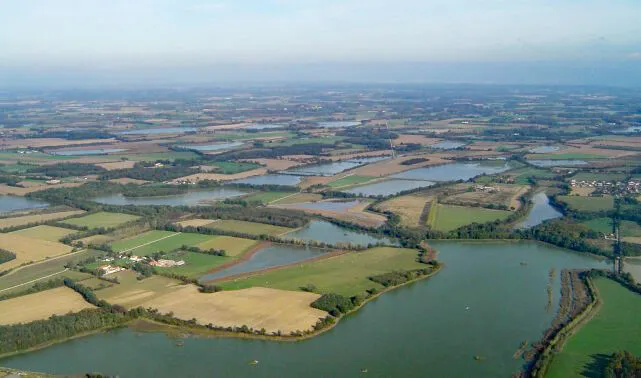
Discover the Ain: world-famous Bresse poultry, the thousand ponds of the Dombes, Pays de Gex facing Mont Blanc and the emerald gorges of Nantua. Complete guide.
 Regions
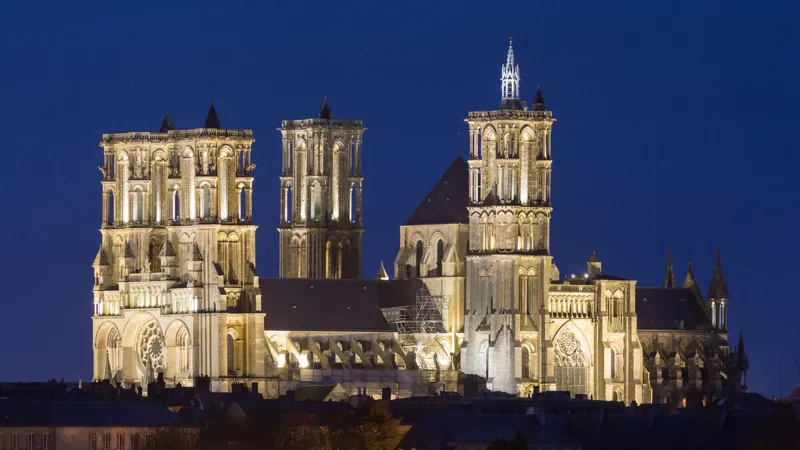
Aisne: Laon's Medieval Citadel and the Chemin des Dames
Discover the Aisne département: Laon's hilltop medieval city, the Chemin des Dames battlefields, Soissons, the Familistère de Guise and Champagne vineyards. Complete travel guide.