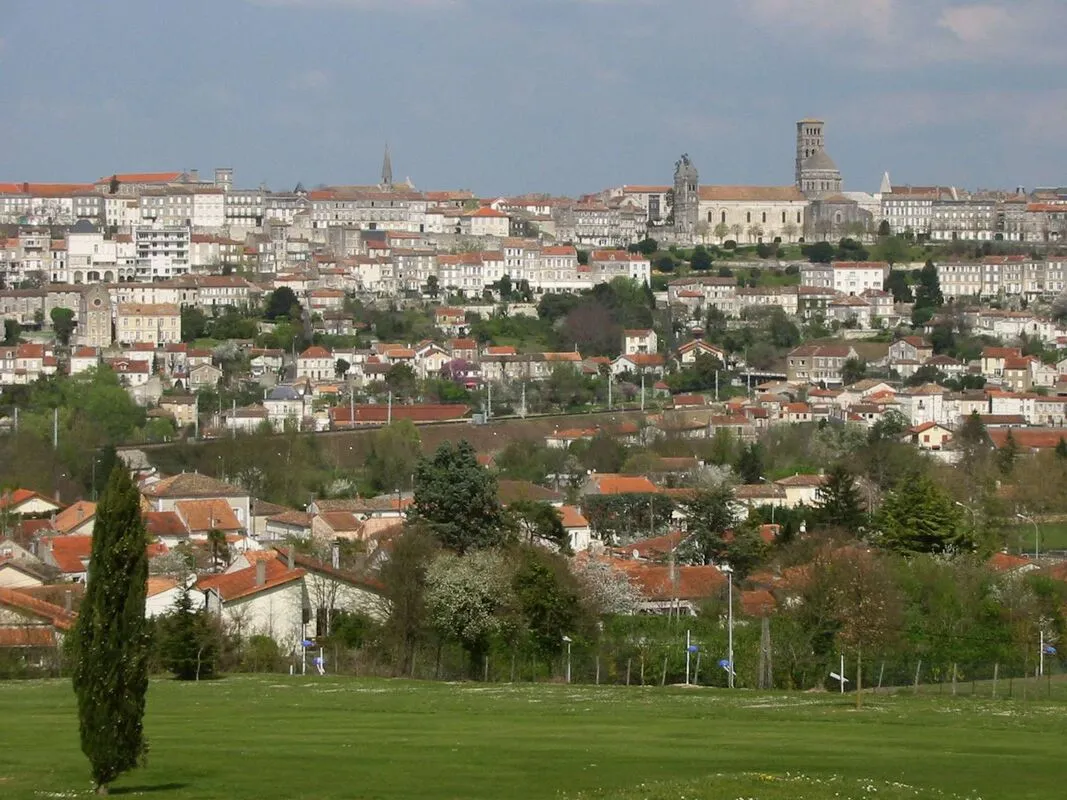
The Charente river flows with an almost Italian languor between soft meadows and low rows of vines whose grapes will one day become cognac. This southwestern department cultivates a discreet art of living, far from the bustle of major cities. Angouleme, perched on its promontory, surveys the valley with the serenity of a town that has turned its walls into an open-air comic-strip gallery.
Angoulême: Hilltop City and Comic Strip Capital
The Old Town on the Spur
Angoulême is a city on two levels. The upper town, perched on a rocky spur 80 meters above the River Charente, concentrates the essential historic heritage. It can be reached by a free elevator from the train station or on foot via shaded ramps. The ramparts encircling the plateau offer a remarkable panorama over the valley, the rooftops of the lower town and the surrounding hills. The walk along the ramparts, roughly 2 kilometers long, is one of the most pleasant strolls in the city.
The Cathédrale Saint-Pierre, a jewel of Poitevin Romanesque art, impresses with its carved facade featuring more than 70 figures depicting the Last Judgment. The interior, sober and luminous, shelters recently restored twelfth-century frescoes. Admission is free.
The International Comic Strip Festival
Every January, Angoulême hosts the Festival International de la Bande Dessinée (FIBD), the largest event devoted to comic art in Europe. For four days the city transforms into a temple of the ninth art: exhibitions, signings, meet-the-artist events, concerts and performances fill some twenty venues. The Grand Prix de la ville d'Angoulême, awarded to an author for a lifetime body of work, is the most prestigious distinction in the comic strip world. A day pass costs approximately 15 to 20 euros. Book accommodation several months ahead, as the city sells out completely.
The Painted Walls
Outside the festival, Angoulême lives and breathes comics all year round thanks to its famous painted walls. More than twenty monumental murals adorn building facades across the city, turning the streets into an open-air gallery. Corto Maltese, Lucky Luke, Titeuf and many other heroes look down on passers-by. A free, waymarked trail covers all of them in about 2 hours of walking. The Musée de la Bande Dessinée (admission about 7 euros), housed in former wine warehouses beside the Charente, holds one of the world's most important collections of original comic art, with more than 8,000 works.
The Circuit des Remparts
Every September, the cobbled lanes of the upper town vibrate to the sound of vintage engines during the Circuit des Remparts, a historic motor race created in 1939. Bugattis, Talbots and period Jaguars compete on a circuit traced along the medieval ramparts. The atmosphere blends retro elegance with mechanical passion. Spectator access is free, and the event draws roughly 60,000 visitors over the weekend. It is a unique gathering of its kind in France.
Cognac: City of the Eau-de-Vie
The Trading Houses
Cognac is a quiet little town built on the banks of the Charente, whose worldwide fame rests entirely on the brandy that shares its name. The great trading houses — Hennessy, Martell, Rémy Martin, Courvoisier — have their historic cellars here, recognizable by their blackened walls stained by Torula compniacensis, a microscopic fungus that feeds on alcohol vapors (the famous "angel's share").
A visit to Maison Hennessy (about 16 to 22 euros depending on the tour) includes a boat crossing of the Charente, a walk through centuries-old cellars and a guided tasting. Maison Martell (about 15 to 20 euros), the oldest of the great houses, founded in 1715, offers an immersive journey through its vaulted cellars. Each house delivers a different experience: take the time to visit at least two.
The Musée des Arts du Cognac
The Musée des Arts du Cognac (admission about 6 euros) traces the history of cognac from the first distillations in the sixteenth century to its global trade today. The collections of objects tied to the trade — antique bottles, copper stills, vintage labels — are fascinating. The museum also explains the process of double Charentaise distillation and the secrets of aging in Limousin oak barrels.
Walking Along the Charente
The River Charente, which Henri IV called "the most beautiful stream in my kingdom," crosses the town with majestic slowness. The landscaped quays invite strolling, and cruises aboard a gabarre (about 12 euros, 90 minutes) allow visitors to discover the valley from the water, just as the bargemen once did when they transported barrels of cognac toward the port of Tonnay-Charente. It is a peaceful and original way to understand the intimate bond between the river and the brandy.
La Rochefoucauld and Northern Charente
The Château de La Rochefoucauld
The Château de La Rochefoucauld (admission about 10 euros) is nicknamed the "little Chambord" thanks to its Renaissance double-helix staircase and Italianate galleries. Inhabited without interruption for over a thousand years by the same family — the La Rochefoucauld, whose most famous member remains the author of the Maximes — it is one of the rare privately occupied châteaux still open to visitors in France. The guided tour (about 75 minutes) passes through richly furnished salons, a Gothic chapel and an eleventh-century square keep. The grounds, freely accessible, offer a splendid view of the whole ensemble.
The Quéroy Caves and the Charente Karst
Charente is a limestone département, and its underground is riddled with caves and subterranean rivers. The Grottes du Quéroy, near Chazelles, are among the most accessible. Guided visits (about 8 euros) reveal chambers adorned with spectacular formations. The Charente karst also feeds numerous resurgences and Vauclusian springs, including the Source de la Touvre, the third-largest spring in France by volume, accessible free of charge.
The Vineyard and Romanesque Villages
The Cognac Appellation and Pineau
The Charente vineyard covers much of the département, but it does not produce ordinary table wine. The grapes, mainly Ugni Blanc, are destined for cognac distillation. The vineyard is classified into six crus — Grande Champagne, Petite Champagne, Borderies, Fins Bois, Bons Bois and Bois Ordinaires — according to the quality of the terroir. Family-owned estates open their doors for free or low-cost tastings (about 5 to 10 euros including a distillery tour). Pineau des Charentes, a fortified wine made by blending grape must with young cognac, is the quintessential local aperitif.
Charentais Romanesque Art
Charente has a remarkable concentration of Romanesque churches from the eleventh and twelfth centuries, whose carved facades form a veritable book in stone. The Church of Saint-Pierre d'Aulnay, inscribed on the UNESCO World Heritage List as part of the Routes of Santiago de Compostela, is an absolute masterpiece with portals adorned with hundreds of human figures, animals and plant motifs. Further south, the Abbaye de Bassac and the church at Châtre are also well worth the detour. These buildings are discovered in the silence of the Charente countryside, far from the crowds.
Charentais Gastronomy
Charente cooking is generous and earthy. Grillon charentais, a type of shredded pork rillettes cooked slowly in fat, is spread on country bread as an aperitif. Farci poitevin, a roll of cabbage stuffed with herbs and bacon, accompanies roast meats. The cagouille, the local name for the petit-gris snail, is an emblematic specialty: cooked in a court-bouillon flavored with Pineau and garlic, it can be found in country restaurants for about 10 to 14 euros a plate.
At the markets, look for Périgord walnuts, Ruffécois goat cheese and heather honey from the plateau. A meal at a country inn costs between 16 and 25 euros for a full menu.
Practical Tips
- When to go: Late January for the comic strip festival, mid-September for the Circuit des Remparts, May to June and September for pleasant weather and vineyards in bloom
- Getting around: Angoulême is 2 hours 10 minutes from Paris by TGV. A car is essential for exploring Cognac, La Rochefoucauld and the Romanesque villages
- Accommodation budget: Expect 65 to 120 euros per night in a chambre d'hôtes or small hotel, more during the comic strip festival
- How long: 3 to 5 days for a complete tour. 1 to 2 days for Angoulême, 1 day for Cognac, 1 day for La Rochefoucauld and the villages
- Do not miss: The painted-wall trail in Angoulême, a cognac house visit with tasting, the Château de La Rochefoucauld, and a gabarre cruise on the Charente
Explore on the map
Map →📚 Related collections
Related guides
 Regions
Ain: Bresse, Dombes and Pays de Gex
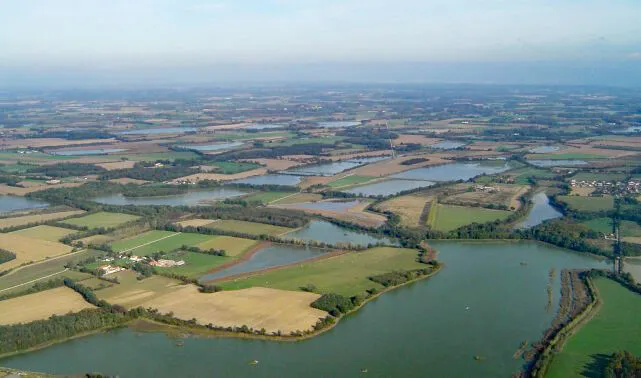
Discover the Ain: world-famous Bresse poultry, the thousand ponds of the Dombes, Pays de Gex facing Mont Blanc and the emerald gorges of Nantua. Complete guide.
 Regions
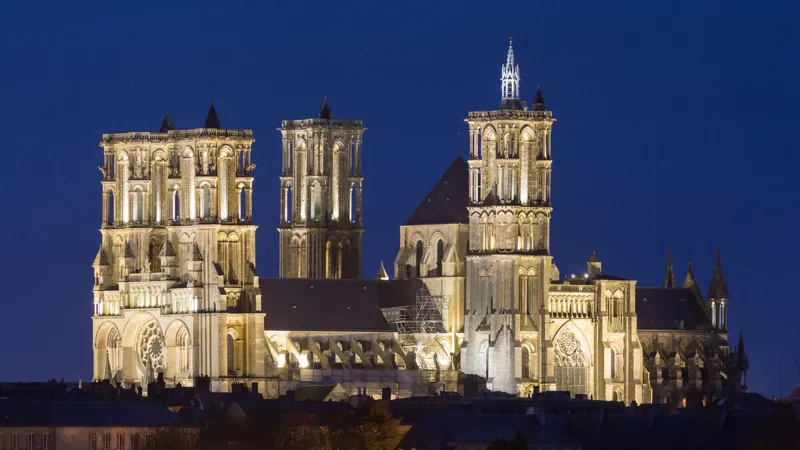
Aisne: Laon's Medieval Citadel and the Chemin des Dames
Discover the Aisne département: Laon's hilltop medieval city, the Chemin des Dames battlefields, Soissons, the Familistère de Guise and Champagne vineyards. Complete travel guide.