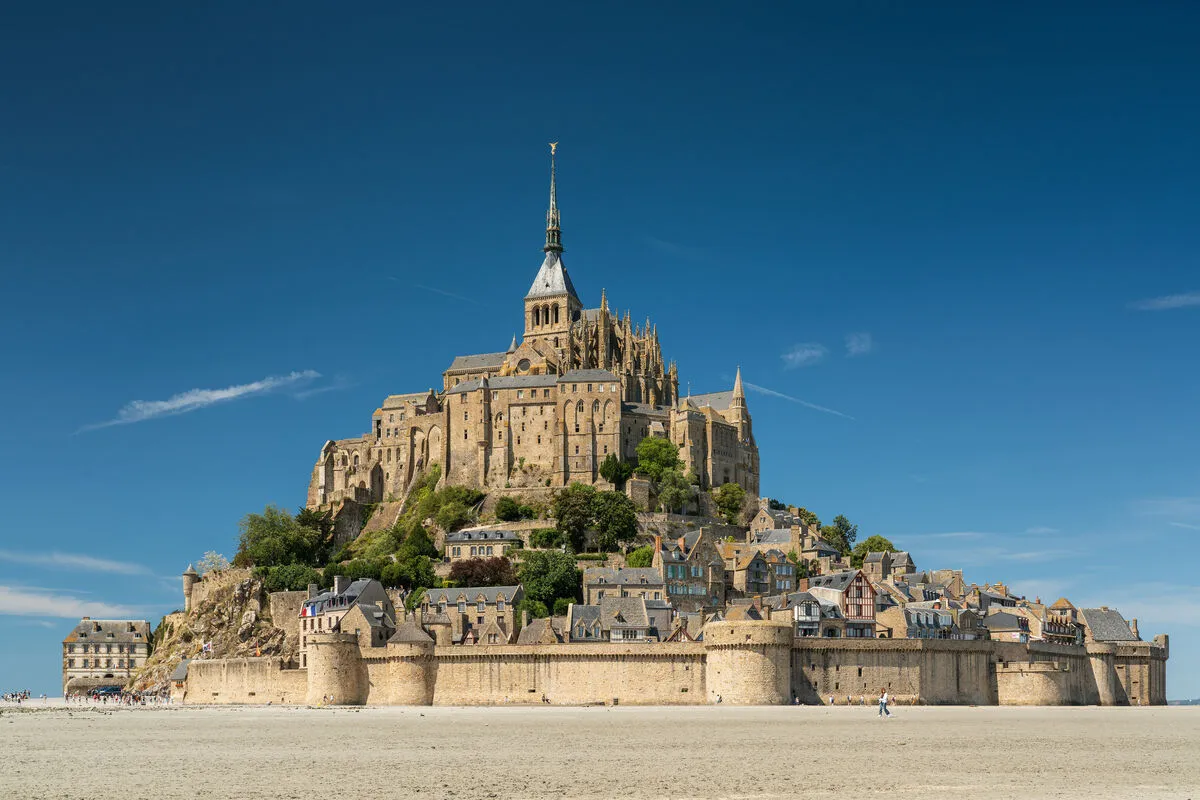
On 6 June 1944, five Calvados beaches entered world history. But this Norman department, probably the best known internationally, goes far beyond D-Day memory. The elegant seaside resorts of the Cote Fleurie, the rolling hills of the Pays d'Auge with their apple orchards, and the cheeses that bear the very name of their terroir -- Camembert, Pont-l'Eveque, Livarot -- compose a picture that is both moving and deeply appetising.
Bayeux and Its Legendary Tapestry
Start your Calvados journey in Bayeux, one of the first towns liberated after D-Day and one of the few in the region to survive the war unscathed. Its medieval streets, half-timbered houses, and magnificent cathedral feel like stepping back centuries.
The main draw is the Bayeux Tapestry, a 70-metre-long embroidered cloth from the 11th century depicting William the Conqueror's invasion of England. The admission fee (~11 euros) includes an excellent audio guide that walks you through each scene panel by panel. Allow about 90 minutes for the full visit, including the upstairs museum that provides historical context.
The Cathedral of Notre-Dame is a masterpiece of Romanesque and Gothic architecture. Its 11th-century crypt, decorated with faded frescoes of angels, is often overlooked by visitors rushing to the tapestry. On Saturday mornings, the market on Place Saint-Patrice is worth a detour for local cheeses, farm cider, and fresh produce.
The D-Day Beaches: Walking Through History
The Calvados coastline is hallowed ground. On June 6, 1944, Allied forces stormed these beaches in the largest amphibious invasion in history, and the landscape still bears witness.
Omaha Beach stretches between Vierville-sur-Mer and Colleville-sur-Mer. Today it is a vast, windswept expanse of sand, peaceful yet charged with memory. Above it, the American Cemetery holds 9,387 white marble crosses and Stars of David facing west toward the United States. Admission is free, and the visitor centre provides a moving introduction. Give yourself at least an hour here.
A few kilometres west, Pointe du Hoc remains a cratered moonscape where US Army Rangers scaled 30-metre cliffs under enemy fire. The site is open access and takes roughly 45 minutes to explore on foot. The shattered bunkers and shell craters make the events viscerally real in a way no museum can.
For deeper understanding, the Caen Memorial (~20 euros) is one of Europe's finest war museums. It goes far beyond D-Day, tracing the roots of conflict from Versailles to the Cold War. Budget at least three hours; many visitors spend half a day.
Caen: William the Conqueror's Capital
Caen was heavily damaged in 1944 but has rebuilt itself into a vibrant university city. William the Conqueror's Château de Caen still commands the skyline, its massive walls enclosing the Museum of Normandy and a free Fine Arts Museum with works by Perugino, Veronese, and Monet.
The twin abbeys founded by William and his wife Matilda — the Abbaye aux Hommes and Abbaye aux Dames — are superb examples of Norman Romanesque architecture. William himself is buried in the Abbaye aux Hommes.
Caen makes an excellent base for exploring the département, with good train connections to Paris (about 2 hours) and plenty of accommodation options ranging from budget hotels to characterful B&Bs.
The Côte Fleurie: Deauville, Trouville, and Honfleur
Normandy's glamour coast starts at Deauville, with its iconic boardwalk (Les Planches), designer boutiques, casino, and annual American Film Festival. Just across the harbour, Trouville-sur-Mer is its unpretentious twin — a working fishing port with a superb quayside fish market and family-friendly restaurants where a platter of oysters and prawns costs a fraction of Deauville prices.
Further east, Honfleur is one of Normandy's most photographed towns. Its narrow harbour, the Vieux Bassin, lined with tall, slate-fronted houses, was a magnet for Impressionist painters — Boudin, Monet, and Courbet all worked here. The Church of Sainte-Catherine, built entirely of wood by shipwrights in the 15th century, is unique in France, with a hull-shaped ceiling that feels like the inside of an upturned boat.
Tip: Honfleur gets extremely crowded in summer. Visit early in the morning or come in shoulder season (May or late September) for a far more pleasant experience.
Pays d'Auge: The Heart of Norman Gastronomy
Inland from the coast, the rolling hills and hedgerows of the Pays d'Auge are the spiritual home of Norman cuisine. This is where three iconic products originate: Camembert cheese, cider, and calvados apple brandy.
The signposted Route du Cidre winds through orchards and half-timbered villages between Cambremer and Beuvron-en-Auge, with frequent stops at farmsteads offering tastings. Most are free or charge a nominal fee. Beuvron-en-Auge, classified among France's Most Beautiful Villages, is a picture-perfect cluster of decorated timber-frame houses around a central square.
The towns of Pont-l'Évêque and Livarot lend their names to two more AOC cheeses that hold their own against camembert. For calvados, visit a working distillery to see the ageing process and sample vintages from young and fiery to mellow 20-year-old reserves. Expect to pay 5 to 10 euros for a guided tasting.
Suisse Normande: Normandy's Unexpected Highlands
In the south of Calvados, the Suisse Normande confounds expectations with its deep gorges, rocky outcrops, and wooded hillsides carved by the River Orne. The name is an exaggeration — these are not the Alps — but the scenery is striking by northern French standards.
The Roche d'Oëtre, a natural viewpoint perched 118 metres above a river valley, offers one of Normandy's most dramatic panoramas. Marked trails lead through heathland and forest, suitable for all fitness levels. The nearby village of Clécy is the area's outdoor hub, offering canoe and kayak rental on the Orne as well as mountain bike hire and rock-climbing routes.
Practical Tips
- Best time to visit: May to June for D-Day commemoration events and blooming gardens; September for golden light and fewer crowds
- Getting around: A car is essential for the beaches, bocage, and Pays d'Auge. Caen is well connected by train from Paris Gare Saint-Lazare (about 2 hours)
- Food budget: A set lunch at a countryside auberge runs 15 to 25 euros; Deauville restaurants charge 30 to 50 euros for similar quality
- Suggested duration: 4 to 6 days for a thorough tour, 2 days if focusing on the beaches and Bayeux
- Don't miss: A calvados tasting at a Pays d'Auge farm, a seafood platter on Trouville's quay, and sunset over Omaha Beach
Explore on the map
Map →📚 Related collections
Related guides
 Regions
Ain: Bresse, Dombes and Pays de Gex
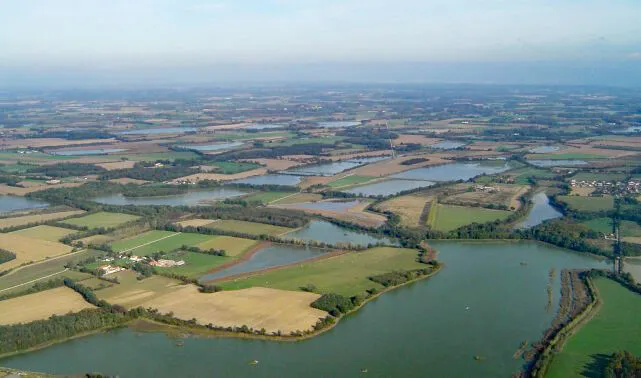
Discover the Ain: world-famous Bresse poultry, the thousand ponds of the Dombes, Pays de Gex facing Mont Blanc and the emerald gorges of Nantua. Complete guide.
 Regions
Aisne: Laon's Medieval Citadel and the Chemin des Dames
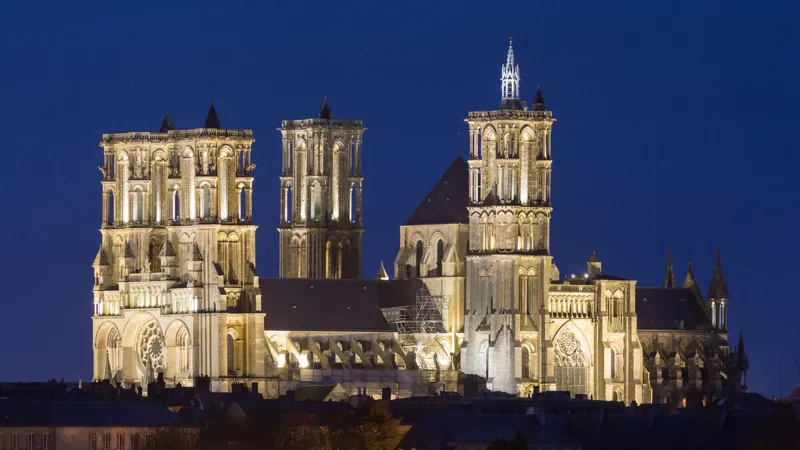
Discover the Aisne département: Laon's hilltop medieval city, the Chemin des Dames battlefields, Soissons, the Familistère de Guise and Champagne vineyards. Complete travel guide.