Wind, waves crashing against granite cliffs, and somewhere inland, a millennial menhir standing silent guard in a forest. Brittany is the peninsula where sea and land carry on an endless dialogue, where fishing ports sit alongside megalithic sites, and where a buckwheat crepe washed down with farmhouse cider makes one of the most comforting meals in the country.
Why Brittany Fascinates
Brittany boasts 2,730 kilometres of coastline, one-third of mainland France's total. This unique geography gives it an exceptional diversity of maritime landscapes: white sand beaches, jagged rocky coasts, wild islands, estuaries and rias. The interior is equally impressive, with the mysterious Brocéliande Forest, the Monts d'Arrée and the Nantes-to-Brest canal.
It is also a land of living Celtic culture: fest-noz (traditional dances), the Breton language, bagpipes and crêperies are part of daily life. This strong identity gives Brittany a character found nowhere else in France.
North Coast Highlights
Saint-Malo, the Corsair City
Surrounded by ramparts with the sea on three sides, Saint-Malo is one of Brittany's most spectacular towns. Walking the ramparts offers 360° views over the sea, the islands and the old town, faithfully rebuilt after 1944. At low tide, walk across to the Grand Bé, the islet where Chateaubriand rests, and the Fort National.
The Sillon and Bon-Secours beaches are perfect for swimming (the water is cool but invigorating!). The Cité d'Alet with its Second World War bunkers provides a striking historical counterpoint.
The Pink Granite Coast
Between Perros-Guirec and Trébeurden, the Pink Granite Coast is a geological spectacle unique in the world. Only three sites on the planet feature this pink-to-red granite. The customs officers' path (GR34), at Ploumanac'h, winds between granite boulders sculpted by erosion into fantastical shapes.
The Sept-Îles archipelago, offshore, is France's most important bird reserve: gannets, puffins and grey seals can be observed by boat.
Mont-Saint-Michel
Though technically in Normandy (a passionately debated topic!), Mont-Saint-Michel is often included in a Breton itinerary. This medieval marvel, its abbey dominating the bay at 80 metres, is one of France's most visited sites. Cross the bay on foot with a guide for an unforgettable experience — beware of quicksand and tides that are among the largest in Europe.
Inland Brittany
Brocéliande Forest
At Paimpont, the Brocéliande Forest is the cradle of Arthurian legend. The Val sans Retour (Valley of No Return), the Barenton Fountain, Merlin's Tomb and the Fairy Mirror line hiking trails through dense, mysterious woodland. Even the most rational visitors find themselves captivated by the magical atmosphere.
The Monts d'Arrée
At the heart of Finistère, the Monts d'Arrée form Brittany's highest point (384 m). These heather moorlands and peat bogs look more like Scotland than France. The Yeun Elez, a marsh considered the gateway to the underworld in Breton mythology, adds to the supernatural atmosphere.
Southern Brittany
Carnac and Its Megaliths
The Carnac alignments constitute the world's largest megalithic site: nearly 3,000 standing stones aligned over 4 kilometres. Erected between 5,000 and 3,000 BC, they remain shrouded in mystery. The Maison des Mégalithes offers essential guided tours to understand these monuments.
The Quiberon Peninsula and Belle-Île
The Quiberon Peninsula shows two faces: the Wild Coast battered by the Atlantic to the west, and the sheltered beaches of the bay to the east. From Quiberon, take the ferry to Belle-Île-en-Mer, the largest Breton island. Its cliffs, coves and the village of Sauzon enchant visitors. Monet painted some of his most famous works here.
Vannes and the Gulf of Morbihan
Vannes, with its medieval ramparts and half-timbered houses, is the gateway to the Gulf of Morbihan, this "little sea" dotted with 42 islands. Boat cruises visit Île-aux-Moines and Île-d'Arz, while coastal paths offer superb panoramas.
Breton Gastronomy
Brittany is a gastronomic paradise. Crêpes (wheat flour) and galettes (buckwheat) are the region's culinary emblem — accompanied by dry cider or buttermilk. Seafood is incomparably fresh: Cancale oysters, Breton lobster, Saint-Brieuc Bay scallops.
Don't miss the kouign-amann, this caramelized butter cake from Douarnenez, or the far breton with prunes. Breton salted butter is an institution — it finds its way into everything, including salted butter caramel, now an essential specialty.
Practical Tips
Best Time to Visit
July-August for fine weather and festivals (Festival Interceltique de Lorient, Vieilles Charrues). May-June for flowering rhododendrons and less-crowded coasts. Autumn offers beautiful light and seafood at its best.
Breton Weather
Yes, it rains in Brittany. But rarely for long: showers are brief and the sky changes quickly. Bring a waterproof windbreaker and you'll enjoy the region fully. The Quiberon peninsula enjoys a surprisingly dry microclimate.
Getting Around
A car is essential in Brittany. The TGV serves Rennes (1h25 from Paris), Saint-Brieuc, Brest and Quimper. Coastal roads are beautiful but winding — allow plenty of time.
Budget
Accommodation ranges from 50 to 80 euros per night for a budget hotel, 80 to 130 euros for a B&B or charming hotel, and 130 to 220 euros for upscale options. Creperies serve full meals for 10 to 18 euros; a seafood platter runs 25 to 45 euros per person. Coastal hikes along the GR34, beaches and most megalithic sites are free. Museums and paid sites cost 5 to 12 euros per person. To save money, stay at Brittany's excellent campsites, shop at farmers' markets for picnics, and enjoy the affordable creperie lunch formulas.
Explore on the map
Map →📚 Related collections
Related guides
 Regions
Ain: Bresse, Dombes and Pays de Gex
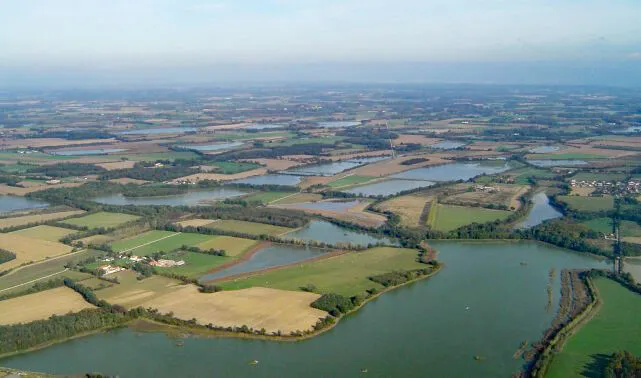
Discover the Ain: world-famous Bresse poultry, the thousand ponds of the Dombes, Pays de Gex facing Mont Blanc and the emerald gorges of Nantua. Complete guide.
 Regions
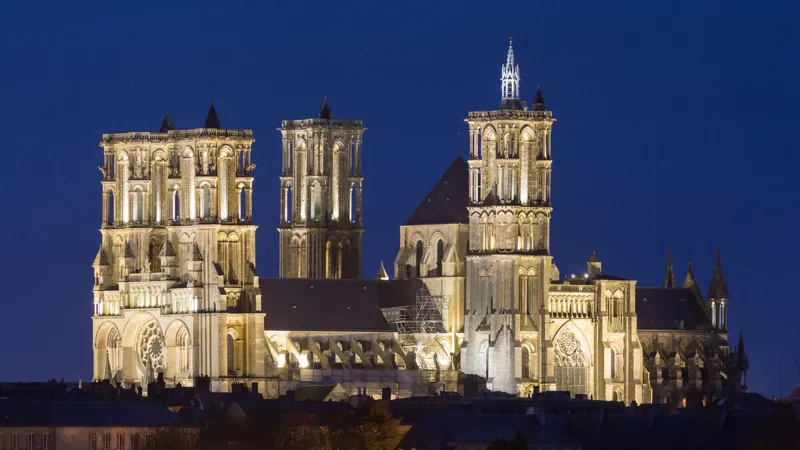
Aisne: Laon's Medieval Citadel and the Chemin des Dames
Discover the Aisne département: Laon's hilltop medieval city, the Chemin des Dames battlefields, Soissons, the Familistère de Guise and Champagne vineyards. Complete travel guide.