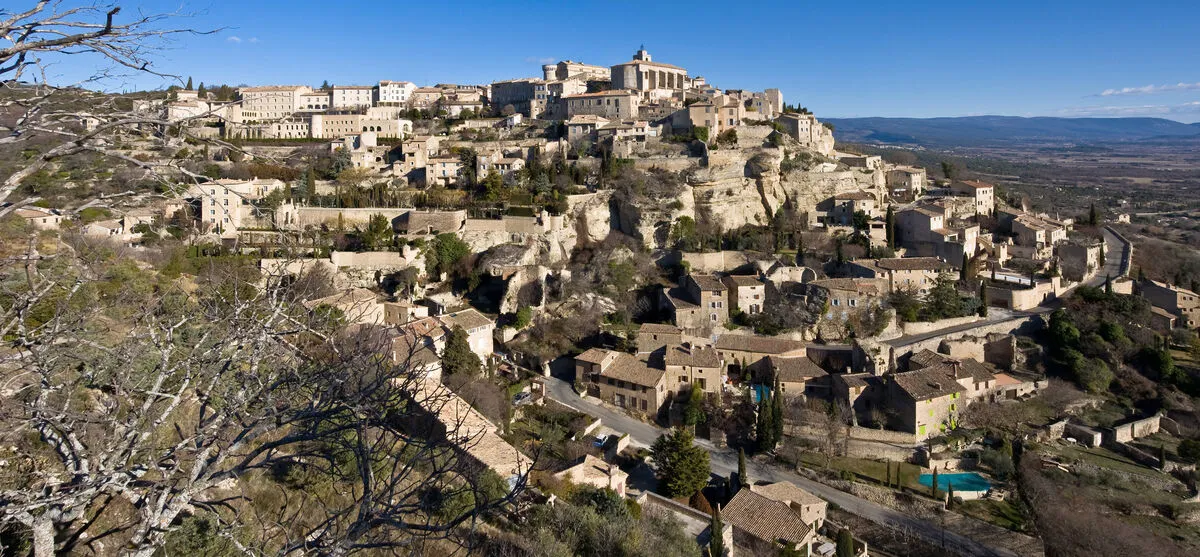
In June, the Valensole Plateau turns violet and the scent of lavender fills the air for miles. This is Provence as you dream it: golden-stone villages perched on hillsides, colourful markets where olives and honey compete for space, Chateauneuf-du-Pape and Bandol vineyards, and that light -- so particular, so constant -- that Cezanne, Van Gogh and Picasso spent their lives trying to capture.
The Lavender Route
Lavender is the emblem of Provence, and its bloom transforms the landscape into an unforgettable spectacle between mid-June and mid-August.
The Valensole Plateau
The Valensole Plateau, a vast 800 km² expanse between Manosque and Riez, offers the most photogenic lavender fields in Provence. Perfectly aligned rows stretch to the horizon, bathed in golden light and buzzing with bees. The spectacle peaks between the last week of June and mid-July. To avoid the crowds, come early morning or late afternoon. The village of Valensole hosts an annual Lavender Festival (third Sunday of July), with distillation demonstrations, markets and entertainment.
Sénanque Abbey
The most iconic image of Provence is arguably the Abbaye Notre-Dame de Sénanque, a twelfth-century Cistercian monastery nestled in a valley north of Gordes, bordered by impeccable rows of lavender. Monks still live here and produce honey and essential oil. A guided tour of the abbey costs about 8 euros. Tip: arrive at opening (10 am) to enjoy the site before the crowds. The lavender generally blooms from mid-June to mid-July.
Sault, Lavender Capital
Perched at 776 metres on the foothills of Mont Ventoux, the village of Sault is considered the capital of fine lavender (the most prized for its aromatic qualities). Blooming here is later than on the plains, from late July to mid-August, offering a second chance for those who missed Valensole. The Sault Lavender Festival (August 15) is one of the most authentic in Provence, with traditional sickle-cutting and decorated float parades. Local distilleries offer free tours with lavender product tastings.
The Hilltop Villages of the Luberon
The Luberon is dotted with stone villages clinging to hillsides, each offering a distinct character and breathtaking panoramas.
Gordes
Gordes is arguably the most famous of the Luberon's perched villages. Its dry-stone houses cascade down the hillside above a valley of olive groves and vines, dominated by an imposing Renaissance château (entry 6 euros). The view from the approach road, around a hairpin bend, is one of the most photographed panoramas in France. The village itself is a maze of calades (cobbled lanes), vaults and fountains. Practical tip: park at the lower car park (free in low season, 3 euros in summer) and walk up.
Roussillon and the Ochre Trails
Roussillon is unique: built on cliffs of red, orange and yellow ochre, the village offers an extraordinary palette of colours. The Sentier des Ocres (Ochre Trail, entry 3.50 euros) winds through former ochre quarries with sculptural formations — an almost lunar landscape. Allow 30 to 45 minutes. The former Mathieu factory, transformed into the Conservatoire des Ocres (entry 8 euros), offers natural paint workshops and traces the history of this centuries-old industry. Warning: wear shoes you don't mind staining — ochre earth is tenacious.
Bonnieux, Ménerbes and Lacoste
On a loop from Gordes, link the villages of Bonnieux (spectacular view from the upper church, centuries-old cedars), Ménerbes (made famous by Peter Mayle in "A Year in Provence", truffle and wine museum) and Lacoste (dominated by the ruins of the Marquis de Sade's castle, purchased and restored by Pierre Cardin). Each takes 1 to 2 hours to explore. The roads between these villages cross landscapes of vineyards, olive groves and wheat fields that sum up the beauty of the Luberon.
Avignon: City of the Popes
Avignon is a city of exceptional cultural richness, shaped by its past as a papal residence in the fourteenth century.
The Papal Palace
The Palais des Papes is the largest Gothic palace in the world. Its cavernous halls, frescoed chapels and towering ramparts take at least 90 minutes to explore. Entry costs about 12 euros for adults (14.50 euros for a combined ticket including the Pont d'Avignon). An excellent augmented-reality tablet guide brings the rooms to life.
The Bridge and the Festival
The Pont Saint-Bénézet (Pont d'Avignon), half-ruined, remains one of the best-known monuments in France thanks to the children's song. Each July, the Festival d'Avignon turns the city into one of the world's premier performing-arts events, with theatre, dance and music in the palace courtyard and dozens of other venues. If visiting during the festival, book accommodation months in advance. Walking the complete circuit of the fourteenth-century ramparts (about 4.3 kilometres) is a pleasant way to appreciate the old city. Finish at the Rocher des Doms, the hilltop garden above the palace, for a sweeping view across the Rhône to Mont Ventoux.
Aix-en-Provence: Elegance and Light
Aix-en-Provence balances aristocratic elegance with student energy and a quality of light that captivated Cézanne for decades.
Cours Mirabeau and the Fountains
The broad, plane-tree-shaded Cours Mirabeau is the beating heart of Aix. This boulevard divides the old town to the north from the Quartier Mazarin to the south, punctuated by mossy, murmuring fountains — the most famous being the Fontaine de la Rotonde at its western end. Sit at one of the grand café terraces and watch the city flow past.
Cézanne's Aix and the Markets
Paul Cézanne was born in Aix and painted its surroundings obsessively. The Circuit de Cézanne, a trail of bronze pavement studs, leads from his birthplace to his studio on the Chemin des Lauves, preserved much as he left it (entry about 6.50 euros). The trail continues to the hillside vantage point where he painted his celebrated views of Montagne Sainte-Victoire. Aix's markets are legendary: the daily produce market on Place Richelme bursts with Provençal tomatoes, courgette flowers and goat cheeses. Don't leave without tasting a calisson d'Aix, the almond-and-melon paste confection that has been the city's signature sweet since the fifteenth century.
Les Alpilles and Saint-Rémy
Les Baux-de-Provence
The ruined fortress village of Les Baux-de-Provence, perched on a spur of the Alpilles limestone ridge, is one of the most dramatic sites in southern France. The castle ruins (entry about 10 euros) include working medieval siege engines and panoramic views stretching to the Camargue. At the foot of the village, the Carrières de Lumières, a former quarry transformed into an immersive digital-art experience, projects floor-to-ceiling animated paintings inside vast subterranean chambers. Entry is around 16 euros.
Van Gogh's Saint-Rémy and the Ruins of Glanum
Saint-Rémy-de-Provence is where Vincent van Gogh spent a transformative year at the asylum of Saint-Paul-de-Mausole in 1889, producing Starry Night and over 150 other works. You can visit the cloister and a reconstruction of his room for about 6 euros. Just south, the archaeological site of Glanum reveals a Greco-Roman city with temples, baths and a forum (entry about 8 euros). The Alpilles are also the source of some of Provence's finest olive oils, protected by an AOC designation.
Provençal Flavours
Provence's cuisine is sunshine on a plate. Build meals around ratatouille, daube provençale (slow-braised beef with red wine and orange peel), soupe au pistou (vegetable soup with basil paste) and aïoli (salt cod and vegetables with garlic mayonnaise, traditionally served on Fridays). Markets overflow with tapenades, sun-dried tomatoes, herbes de Provence and honeys perfumed with lavender, thyme or rosemary.
For wines, the region produces outstanding rosé from appellations such as Bandol, Côtes de Provence and Luberon. Châteauneuf-du-Pape, barely 20 minutes from Avignon, is one of France's most prestigious red-wine appellations. And the quintessential Provençal drink is pastis, the anise-flavoured spirit diluted with ice water — order one at any village café around 6 pm and you will blend right in.
Practical Tips
Getting There and Around
Marseille-Provence airport and the TGV stations at Avignon and Aix-en-Provence connect the region to Paris in about three hours. A rental car is essential for the Luberon villages, lavender fields and Alpilles. Roads are well-maintained but narrow and winding in places. Budget for parking fees of 3 to 6 euros per stop in popular villages.
Suggested Itinerary: 6 to 8 Days
- Day 1: Arrive in Avignon, explore the Papal Palace and ramparts.
- Day 2: Les Baux-de-Provence and Saint-Rémy.
- Days 3-4: Luberon circuit — Gordes, Sénanque Abbey, Roussillon, Bonnieux, Ménerbes, Lacoste.
- Day 5: Lavender fields — Sault and Valensole Plateau.
- Day 6: Aix-en-Provence, Cézanne trail and markets.
- Days 7-8: Extend to the Verdon Gorge, Cassis calanques or wine-tasting in Châteauneuf-du-Pape.
Best Time to Visit
Late June to mid-July is ideal for lavender combined with warm, sunny weather. September and October bring harvest festivals, softer light and fewer tourists. Avoid August if you can — temperatures often exceed 35 degrees Celsius and the main sites are very crowded.
Budget
This area is pricier than the French average, especially in high season. Expect to pay 70 to 110 euros per night for a decent hotel, 110 to 170 euros for a charming B&B or boutique hotel, and 170 to 300 euros for premium establishments. Meals range from 18 to 28 euros for lunch to 30 to 55 euros for dinner. To save money, book well in advance, stay slightly away from the most touristy zones (prices drop 20-30%), eat at markets and local food stalls rather than seafront restaurants, and take advantage of the many free activities: hiking, beaches, village walks, panoramic viewpoints.
Explore on the map
Map →📚 Related collections
Related guides
 Road trips
The Alsace Wine Route: Vineyards and Charming Villages
Explore the Alsace Wine Route from Marlenheim to Thann. Picturesque villages, wine tastings and tips for an unforgettable road trip.
 Road trips
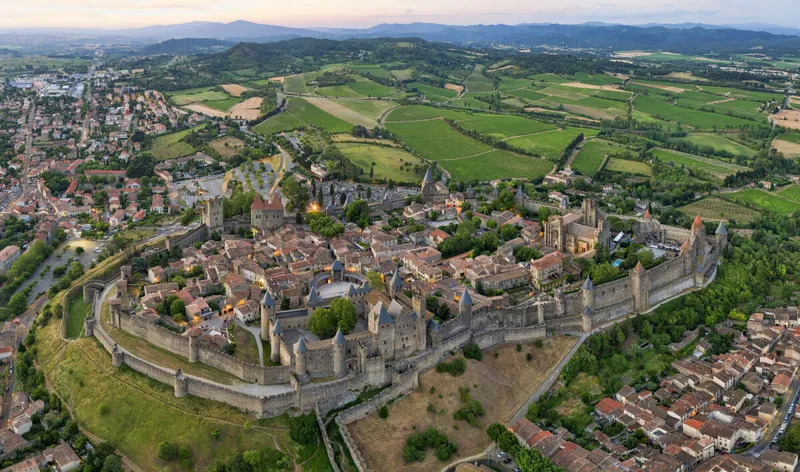
Aude: Carcassonne and Cathar Country
Guide to the Aude: Carcassonne citadel, Cathar castles, Canal du Midi, Narbonne, Fontfroide Abbey. Vertiginous fortresses and Languedoc vineyards.