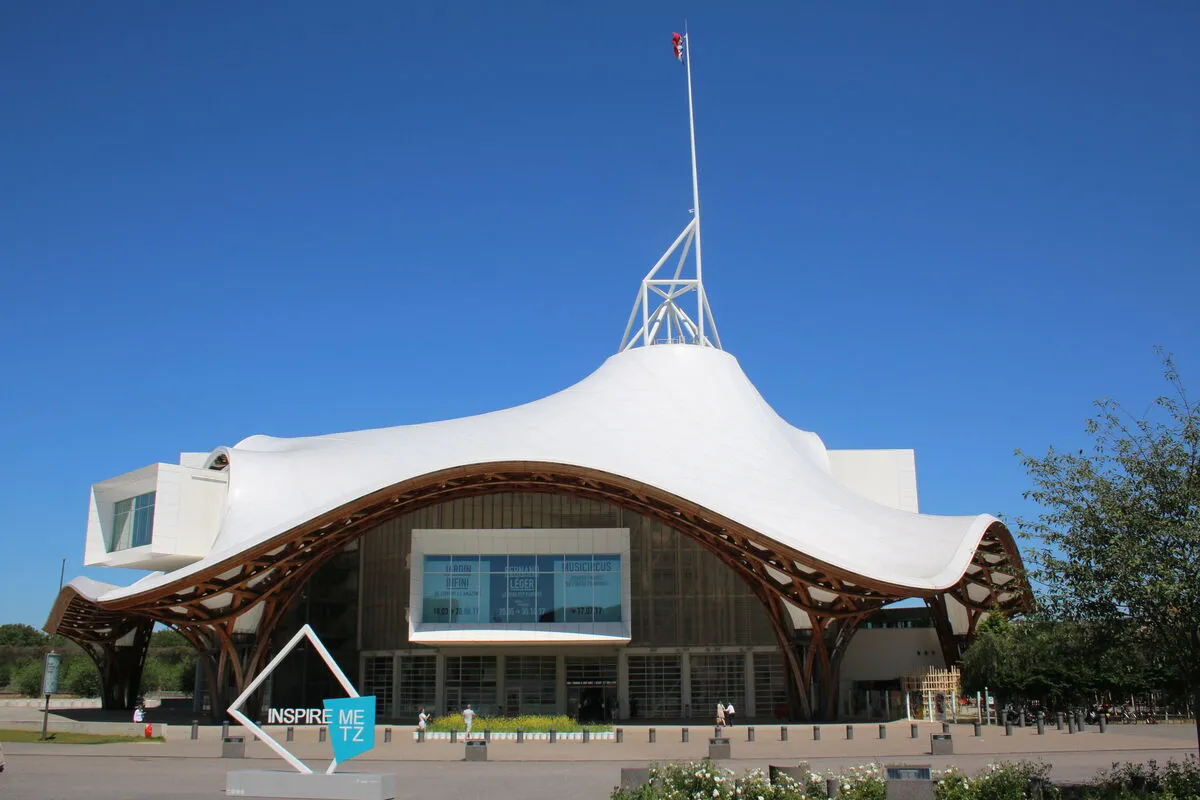
When the Centre Pompidou opened a branch in Metz in 2010, in a building whose roof ripples like a giant Chinese hat, it signalled a metamorphosis. Moselle, long reduced to cliches of industrial Lorraine in decline, has reinvented itself with boldness. Metz and its Chagall stained glass in the cathedral, the Vauban fortifications at Bitche, the thermal baths of Bains-les-Bains: this border department surprises at every turn.
Metz: A City of Light
Cathédrale Saint-Étienne and Its Stained Glass
Cathédrale Saint-Étienne de Metz is nicknamed the "Lantern of God," and the reason becomes clear the moment you step inside. With 6,500 square meters of stained glass, it is one of the most luminous cathedrals in France. The windows span eight centuries of artistic creation, from thirteenth-century medieval panels to the works of Marc Chagall created in the 1960s, instantly recognizable by their intense blues and dreamlike biblical scenes. The nave, soaring to 42 meters, is the third tallest in France. Entry is free. Themed guided tours focusing on the stained glass are available through the tourist office (approximately 8 euros).
Centre Pompidou-Metz
Opened in 2010, the Centre Pompidou-Metz transformed the city's reputation almost overnight. Designed by Shigeru Ban and Jean de Gastines, the building is an architectural feat whose hexagonal woven-timber roof, inspired by a Chinese hat, has become the symbol of Metz. The museum holds no permanent collection: instead it presents two to three major temporary exhibitions each year, drawn from the 120,000 works owned by the Centre Pompidou in Paris. Programming is ambitious and covers modern and contemporary art in every medium. Entry costs approximately 12 euros. Allow two hours. The ground-floor restaurant La Voile Blanche offers views over the forecourt and gardens.
The Imperial Quarter
The Quartier Impérial is a direct legacy of the German annexation of Alsace-Lorraine between 1871 and 1918. Kaiser Wilhelm II intended Metz to be a showcase of Germanic power, and the result is a monumental urban ensemble blending neo-Romanesque, neo-Gothic, Jugendstil and eclectic styles. Metz railway station, completed in 1908, is a masterpiece of grey sandstone adorned with allegorical sculptures and a 40-meter clock tower. The Temple Neuf, a Protestant church set on an island in the Moselle, is one of the city's most photographed landmarks. The entire quarter is a listed heritage zone and can be explored on foot in about ninety minutes.
The Moselle Riverbanks
The plan d'eau, a large recreational lake south of the city center, is a popular spot for strolling and water sports. Pedal boats, rowing and kayaks are available in season. Along the Moselle itself, landscaped quays link the center to the Pontiffroy district and the Parc de la Seille, forming a continuous green corridor ideal for walking or cycling.
Amnéville: Leisure and Wellness
Amnéville Zoo
The Amnéville Zoo, 20 kilometers north of Metz, is one of the largest privately run zoological parks in France. More than 2,000 animals of 360 species live in spacious enclosures: gorillas, white tigers, polar bears, penguins and a tropical vivarium. Birds of prey and sea lion shows round out the experience. Entry is approximately 30 euros for an adult; plan a full day.
Thermal Baths
The Thermapolis complex offers an extensive wellness area with indoor and outdoor pools, steam room, sauna and massage treatments. The thermal waters are naturally heated to 41 degrees Celsius. A half-day relaxation session costs approximately 20 to 30 euros depending on the package. An ideal way to unwind after a day of exploring.
Saint-Avold: Lorraine American Cemetery
The Lorraine American Cemetery at Saint-Avold is the largest American military cemetery from World War II in Europe. More than 10,000 American soldiers rest beneath white marble crosses arranged with striking precision on a hillside overlooking the Moselle countryside. The central memorial features mosaic wall maps tracing the military campaigns. Entry is free. The site commands a profound, respectful silence. Allow about one hour for the visit.
Rodemack: Lorraine's Little Carcassonne
On the Luxembourg border, Rodemack is a fortified village classified among France's Most Beautiful Villages. Its medieval ramparts, largely intact, encircle a maze of flowered lanes and houses built from golden Jaumont limestone. The Sierck Gate, an imposing fifteenth-century fortified entrance, sets the tone. Each June the village hosts a lively medieval festival with tournaments, markets and performances. The village is free to explore; allow one to one and a half hours.
Sarreguemines: The Faience Tradition
Sarreguemines, on the German border, is inseparable from its ceramic heritage. Founded in 1790, the Sarreguemines factory produced fine faience for two centuries, adorning tables and walls across France. The Faience Museum, housed in the former factory buildings along the River Sarre, traces this industrial and artistic saga. The winter garden, entirely covered in polychrome faience panels, is an unexpected treasure. Entry is approximately 6 euros.
Bitche Citadel
In the heart of the Northern Vosges Regional Nature Park, the Citadel of Bitche commands a rocky spur above the town. Fortified by Vauban in the seventeenth century, it is famous for withstanding a Prussian siege in 1870-1871 for 230 consecutive days. The visit, enhanced by video projections and sound reconstructions in the underground passages, is immersive and engaging. Entry costs approximately 8 euros; allow ninety minutes. The town of Bitche itself, with its red sandstone houses and forest setting, deserves a stop.
Lorraine Regional Nature Park
The Lorraine Regional Nature Park, which covers two distinct zones on either side of Metz, offers rolling landscapes of meadows, ponds and forests. The eastern section, between Metz and Sarrebourg, is dotted with ponds that attract remarkable birdlife. Marked trails allow for easy hikes of two to four hours. Lac de Madine, a large artificial lake, offers supervised swimming, sailing and a cycling path around its developed shoreline.
Moselle Gastronomy
Moselle cuisine carries the dual imprint of France and Germany. Quiche lorraine, born in this region, is served here in its authentic form: shortcrust pastry, a custard of eggs and cream (called migaine), and smoked lardons, with no added cheese. Pâté lorrain, puff pastry filled with meats marinated in white wine, is a staple at charcuteries and markets. The mirabelle, a small golden plum harvested in August and September, is the undisputed queen of Moselle orchards: as a tart, in jam, distilled into eau-de-vie, or eaten fresh off the tree, it is everywhere during late summer.
Practical Tips
Getting There and Around
Metz is one hour and 25 minutes from Paris by TGV. The city center can be explored on foot or by the Mettis bus rapid transit. A car is necessary for Amnéville, Rodemack, Bitche and the outlying sites.
Suggested Itinerary: 4 to 5 Days
- Days 1-2: Metz — cathedral, Centre Pompidou-Metz, Imperial Quarter, Moselle riverbanks.
- Day 3: Amnéville zoo and thermal baths. Lorraine American Cemetery at Saint-Avold.
- Day 4: Rodemack in the morning, Sarreguemines in the afternoon.
- Day 5: Bitche citadel and Northern Vosges Nature Park.
Best Time to Visit
May to September for outdoor activities and festivals. The Mirabelle Festival takes place in August in Metz. Autumn brings beautiful light to the Moselle hills.
Budget
Accommodation ranges from 50 to 80 euros per night for a budget hotel, 80 to 130 euros for a B&B or charming hotel, and 130 to 220 euros for upscale options. A restaurant lunch runs 14 to 22 euros, dinner 25 to 40 euros. Local farmers' markets provide excellent produce for picnics at reasonable prices. Hiking, village exploration and most churches are free. Paid sites and museums cost 6 to 15 euros per person. To keep costs in check, look for weekday set-lunch menus, stay in rural gites or quality campsites, and enjoy the free tastings many local producers offer.
Explore on the map
Map →📚 Related collections
Related guides
 Road trips
The Alsace Wine Route: Vineyards and Charming Villages
Explore the Alsace Wine Route from Marlenheim to Thann. Picturesque villages, wine tastings and tips for an unforgettable road trip.
 Road trips
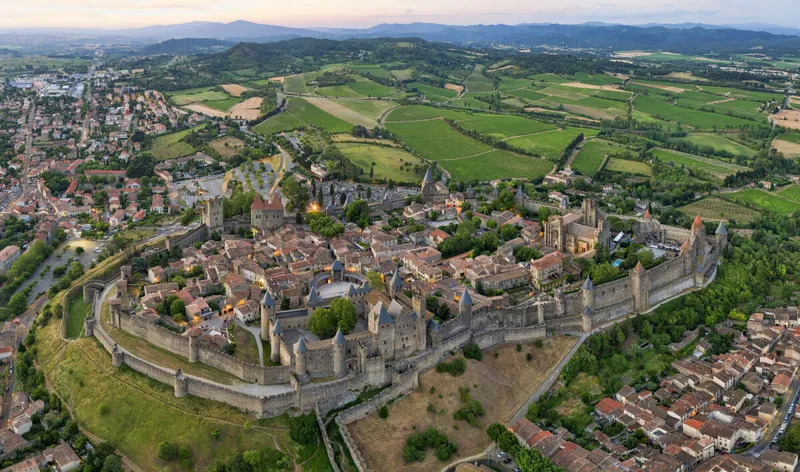
Aude: Carcassonne and Cathar Country
Guide to the Aude: Carcassonne citadel, Cathar castles, Canal du Midi, Narbonne, Fontfroide Abbey. Vertiginous fortresses and Languedoc vineyards.