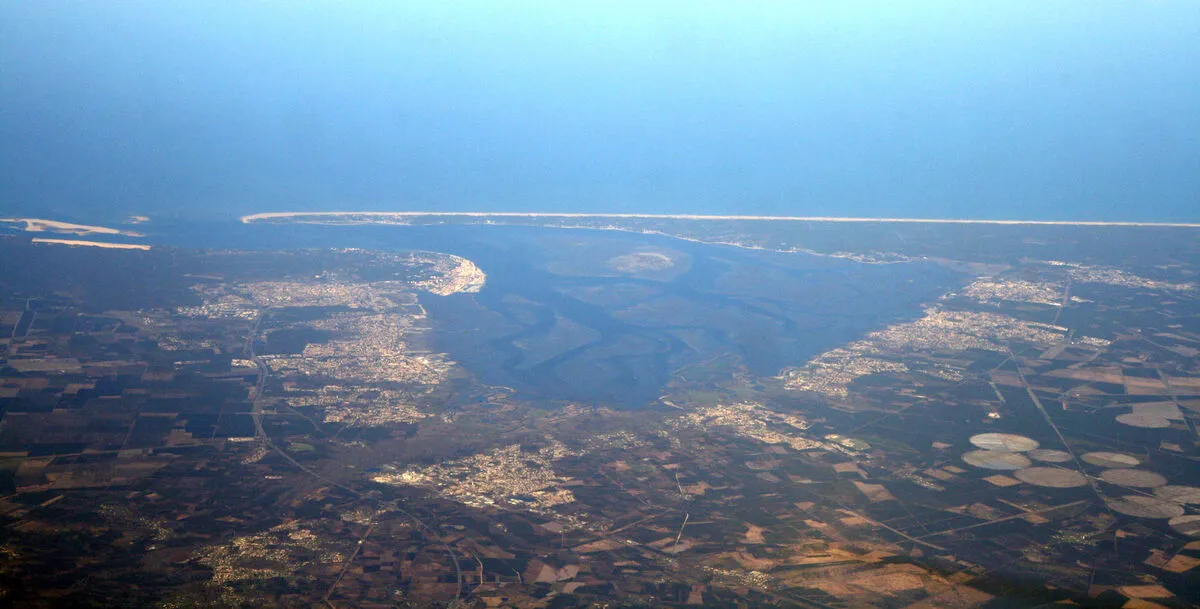
Few regions on earth pack world-famous vineyards, sleepy medieval villages along the Dordogne river and painted caves dating back 20,000 years into such a short stretch of road. Southwest France, from Bordeaux to the Perigord, is a permanent invitation to slow down, savour the table and marvel at a heritage of extraordinary density.
Bordeaux: A City Transformed
The Water Mirror and Place de la Bourse
Modern Bordeaux is one of Europe's great urban success stories. A massive renovation program stripped centuries of grime from the golden limestone facades and opened the riverfront to pedestrians. The symbol of the transformation is the Miroir d'Eau (Water Mirror) on the Quai de la Douane, a shallow sheet of water that alternately reflects and shrouds the magnificent eighteenth-century Place de la Bourse in mist. It is the largest reflecting pool in the world and utterly mesmerizing, especially at night when the buildings are lit. Free and open around the clock, it is at its most photogenic in the two hours before sunset.
Cité du Vin
Inaugurated in 2016, the Cité du Vin is far more than a wine museum. Housed in a swirling, fluid-shaped building beside the Garonne, it offers a permanent interactive exhibition spanning 3,000 years of wine culture across every continent. Twenty themed zones use films, scent stations and touch screens to explore terroir, winemaking, trade routes and the art of tasting. The visit concludes with a panoramic glass of wine in the Belvedere on the eighth floor, included in the ticket price of approximately 22 euros for adults. Allow at least two and a half hours.
Quartier Saint-Pierre and Darwin Ecosystem
The narrow pedestrian streets of the Quartier Saint-Pierre form the beating heart of old Bordeaux. The area around Place du Parlement and Place Saint-Pierre is packed with wine bars, bistros and independent boutiques. On Sunday mornings, the quayside Marché des Quais stretches for over a kilometer with food stalls selling oysters from Arcachon, charcuterie, cheeses and seasonal produce.
Across the river in the Bastide district, the Darwin Ecosystem occupies a former military barracks transformed into an alternative hub of co-working spaces, organic restaurants, a skatepark, street art and a craft brewery. It is the antidote to Bordeaux's sometimes buttoned-up elegance and a genuinely interesting place to spend an afternoon. Entry to the general spaces is free.
The Wine Routes
Saint-Émilion
Perched on a limestone plateau 40 kilometers east of Bordeaux, Saint-Émilion is arguably the most beautiful wine village in France. Its UNESCO-listed medieval streets wind past a monolithic church carved entirely from the rock below ground, Romanesque cloisters and rampart walls draped in ivy. The underground church and catacombs can only be visited on a guided tour organized by the tourist office (about 13 euros; book ahead in summer).
The surrounding vineyards produce some of the world's most celebrated wines, predominantly from Merlot grapes. Many châteaux welcome visitors for tastings, often by appointment. Entry-level tastings start at about 10 euros; premium experiences at prestigious estates can reach 40 to 60 euros. Do not miss the view from the top of the Tour du Roy (entry about 2 euros).
Médoc
North of Bordeaux, the Médoc peninsula is home to legendary appellations — Margaux, Pauillac, Saint-Julien, Saint-Estèphe — and some of the most famous wine estates in the world. The D2 road, often called the Route des Châteaux, winds past grand properties like Château Margaux, Château Latour and Château Mouton Rothschild. While the top-tier First Growths require advance booking and charge upward of 50 euros per tasting, smaller estates along the route offer warm, informative visits for 5 to 15 euros.
Pomerol
Tiny by comparison, the Pomerol appellation east of Libourne covers barely 800 hectares but produces some of Bordeaux's most sought-after wines, including Château Pétrus and Château Le Pin. The landscape is gentle, the vineyards intimate, and visits here feel far more personal than in the grand Médoc estates.
The Dordogne and Périgord Noir
Sarlat-la-Canéda
The golden-stone medieval town of Sarlat-la-Canéda is the unofficial capital of the Périgord Noir and one of the best-preserved Renaissance ensembles in France. Its Saturday morning market is legendary — hundreds of stalls fill the lanes with foie gras, walnuts, truffles (in season, November to March), cèpes, local honey and Bergerac wines. Sarlat rewards slow exploration on foot; allow a full morning to soak in its atmosphere.
Castles and Gardens of the Dordogne Valley
The stretch of the Dordogne River between Sarlat and Beynac is one of the most scenic valleys in France. Beynac-et-Cazenac rises almost vertically from the river, its twelfth-century fortress offering commanding views in every direction (entry about 10 euros). Across the valley, the rival castle of Castelnaud hosts an excellent museum of medieval warfare. Between them, the Jardins de Marqueyssac offer six kilometers of fantastically sculpted boxwood hedges and a cliff-edge belvedere with one of the finest panoramas in the Dordogne. Entry is approximately 11 euros.
Downstream, the village of La Roque-Gageac clings to a sunlit cliff above the river. Flat-bottomed gabarre boats depart from the waterfront for gentle 50-minute cruises (about 11 euros per adult). For a more active experience, rent a canoe or kayak — a half-day paddle from Cénac to Beynac (about 12 kilometers) costs around 18 to 25 euros per person and passes beneath three castles.
Prehistory in the Vézère Valley
Lascaux IV
The Vézère Valley, designated a UNESCO World Heritage Site, contains one of the densest concentrations of prehistoric sites on the planet. The crown jewel is Lascaux IV — Centre International de l'Art Pariétal, a complete, painstaking reproduction of the famous cave whose original was closed to the public in 1963 to preserve its paintings. The replica uses digital projection and immersive technology to bring the 20,000-year-old horses, aurochs and stags to vivid life. Guided tours last about 90 minutes. Tickets cost around 22 euros for adults and should be booked online well in advance.
Les Eyzies and Font-de-Gaume
The village of Les Eyzies-de-Tayac, sheltered beneath massive overhanging cliffs, is known as the "Capital of Prehistory." The Musée National de Préhistoire here holds an outstanding collection of carved and engraved objects from the Paleolithic era. Entry is about 7 euros.
Two kilometers from the village, the Grotte de Font-de-Gaume is one of the last caves in Europe where you can see authentic polychrome prehistoric paintings in situ. Access is limited to 78 visitors per day in groups of 12. Arrive at the ticket office at opening time (09:30) to secure a spot. Entry costs approximately 8 euros. This is an extraordinary, humbling experience that alone justifies the journey to the Vézère Valley.
Medieval Bastide Towns
Monpazier
The bastide towns scattered across the Dordogne and Lot-et-Garonne were planned settlements founded in the thirteenth and fourteenth centuries, typically on a strict grid plan around a central market square. Monpazier, founded in 1284 by Edward I of England, is the finest and best-preserved of them all. Its arcaded central square, the Place des Cornières, still hosts a Thursday morning market that has been running for over 700 years.
Domme and Eymet
Domme, perched on a sheer cliff 150 meters above the Dordogne, is a fortified bastide with panoramic views over the valley. Beneath the market square, a network of natural caves (entry about 9 euros) shelters impressive stalactites and stalagmites. The bastide of Eymet, further south near the Bergerac wine region, is smaller and less touristy, with an excellent Thursday market and a ruined thirteenth-century castle overlooking the River Dropt.
Southwest Gastronomy
The Dordogne is one of the great gastronomic heartlands of France, and its traditions are robust and unapologetic.
Foie gras is the region's defining luxury, produced from duck liver and served as a terrine, mi-cuit (semi-cooked), or seared in slices (poêlé). Local farms offer visits and direct sales, often at prices significantly lower than Parisian shops. Duck confit (confit de canard) and magret de canard (duck breast) are everyday staples found on nearly every restaurant menu, typically accompanied by pommes sarladaises, potatoes slowly cooked in duck fat with garlic and parsley.
In winter, the Périgord truffle (Tuber melanosporum) commands astronomical prices and perfumes everything from scrambled eggs to fresh pasta. Sarlat's truffle market in January is an unforgettable sensory experience.
Bordeaux contributes the canelé, a small caramelized pastry with a soft, rum-and-vanilla custard interior, baked in a distinctive fluted copper mold. The best bakeries in Bordeaux produce several batches daily; look for those with a dark, almost black crust and a moist, yielding center.
Practical Tips
Getting There and Around
Bordeaux is two hours and ten minutes from Paris by TGV high-speed train. A rental car is essential for the wine routes, the Dordogne castles and the Vézère Valley. From Bordeaux to Sarlat is roughly 170 kilometers (about two hours by car). Roads are well-maintained but winding through the river valleys.
Suggested Itinerary: 6 to 8 Days
- Days 1-2: Bordeaux city — Water Mirror, Cité du Vin, Quartier Saint-Pierre, Darwin.
- Day 3: Saint-Émilion and Pomerol wine tastings.
- Day 4: Drive to Sarlat via Monpazier. Explore Sarlat in the afternoon.
- Day 5: Dordogne Valley — Beynac, Marqueyssac, La Roque-Gageac, canoe trip.
- Day 6: Vézère Valley — Lascaux IV, Les Eyzies, Font-de-Gaume.
- Day 7: Domme, Médoc wine route or Arcachon Bay (optional extension).
- Day 8: Return to Bordeaux for final market visit and departure.
Best Time to Visit
May, June and September offer the best balance of warm weather, long days and manageable crowds. October brings the grape harvest and a festive atmosphere in the wine towns. Winter (November to March) is truffle season and Sarlat's most atmospheric period.
Budget
Accommodation ranges from 50 to 80 euros per night for a budget hotel, 80 to 130 euros for a B&B or charming hotel, and 130 to 220 euros for upscale options. A restaurant lunch runs 14 to 22 euros, dinner 25 to 40 euros. Local farmers' markets provide excellent produce for picnics at reasonable prices. Hiking, village exploration and most churches are free. Paid sites and museums cost 6 to 15 euros per person. To keep costs in check, look for weekday set-lunch menus, stay in rural gites or quality campsites, and enjoy the free tastings many local producers offer.
Explore on the map
Map →📚 Related collections
Related guides
 Road trips
The Alsace Wine Route: Vineyards and Charming Villages
Explore the Alsace Wine Route from Marlenheim to Thann. Picturesque villages, wine tastings and tips for an unforgettable road trip.
 Road trips
Aude: Carcassonne and Cathar Country
Guide to the Aude: Carcassonne citadel, Cathar castles, Canal du Midi, Narbonne, Fontfroide Abbey. Vertiginous fortresses and Languedoc vineyards.