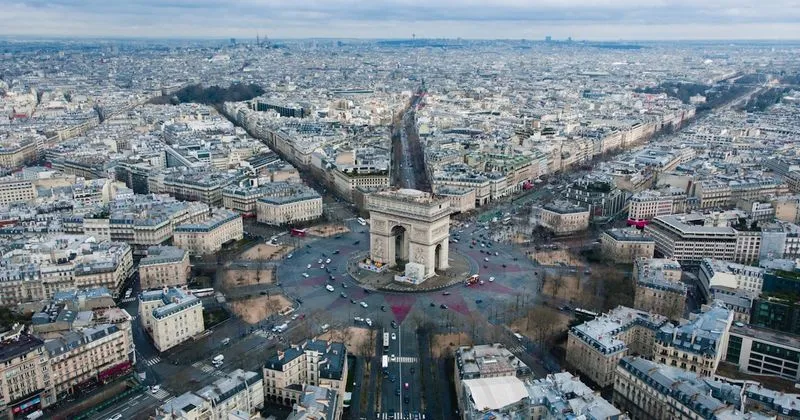
Thirty million tourists visit Paris every year, yet most never leave the Eiffel Tower-Louvre-Champs-Elysees triangle. There exists, however, a more intimate Paris: the covered passages of the 9th arrondissement, the Belleville markets, the canals of the 10th and the artist studios of the Butte-aux-Cailles. This guide is an invitation to discover the capital through its backstage.
Neighbourhoods to Explore
Canal Saint-Martin (10th arrondissement)
Immortalized by the film "Amélie," the Canal Saint-Martin has kept its working-class soul while becoming one of Paris's most creative areas. Its locks, cast-iron footbridges and century-old plane trees create a unique landscape in the heart of the city.
On Sunday mornings, when traffic is banned, the canal becomes an ideal walking spot. Independent designer shops, cafés and bookshops invite you to wander. Don't miss the Saint-Quentin covered market, one of the most beautiful and authentic in Paris.
In the evenings, the canal banks come alive: picnics among friends, impromptu concerts, and bar terraces fill up. The atmosphere is relaxed, far from the formality of tourist districts.
Buttes-Chaumont and Butte Bergeyre (19th)
The Parc des Buttes-Chaumont is Paris's most spectacular park: 25 hectares of hilly terrain with a lake, a grotto, a waterfall and a temple perched on a rock 30 metres high. Built on former gypsum quarries, it offers surprising views of Montmartre and the Sacré-Cœur.
Right next to it, the Butte Bergeyre is one of Paris's best-kept secrets: a tiny village of individual houses and vegetable gardens perched on a hill, accessible only by staircases. The atmosphere feels like a Provençal village transplanted into the heart of the city.
Belleville and Ménilmontant (20th)
Belleville is Paris's most cosmopolitan neighbourhood. The Rue de Belleville, with its Chinese restaurants, Tunisian grocers and trendy bars, is a snapshot of multicultural Paris. The Parc de Belleville, at the top of the hill, offers one of the finest panoramic views of the city — rivalling the Sacré-Cœur, without the crowds.
The neighbourhood is also the heart of Parisian street art. The Rue Dénoyez, entirely covered in graffiti, is an ever-changing open-air gallery. Giant murals along the Rue de Ménilmontant are signed by international artists.
La Campagne à Paris (20th)
A few steps from Père-Lachaise cemetery, La Campagne à Paris is a collection of small streets lined with houses and gardens, built in the early 20th century for workers. With its wisteria, climbing roses and sleeping cats, you would think you were in a southern French village. An unsuspected haven of peace.
The Mouzaïa Quarter (19th)
In the same spirit, the Mouzaïa Quarter consists of venelles (tiny pedestrian lanes) lined with colourful pavilions with small gardens. These "villas" — Villa de Bellevue, Villa du Progrès, Villa des Lilas — bear poetic names and offer a timeless stroll, completely removed from the urban hustle.
The Covered Passages
Paris has around twenty covered passages, vestiges of the 19th century and ancestors of shopping centres. The most remarkable:
- Galerie Vivienne (2nd): The most elegant, with its floor mosaics, columns and the Jousseaume bookshop, founded in 1826.
- Passage des Panoramas (2nd): Paris's oldest (1799), specializing in philately and small restaurants.
- Passage du Grand-Cerf (2nd): Paris's tallest glass roof, with designer boutiques.
- Passage Brady (10th): Nicknamed "little Bombay," it concentrates Indian and Pakistani restaurants and grocers.
Lesser-Known Museums
Beyond the Louvre and Orsay, Paris is full of intimate museums:
- Musée de la Chasse et de la Nature (3rd): A fascinating cabinet of curiosities in a Marais townhouse.
- Musée de la Vie Romantique (9th): Painter Ary Scheffer's house, with an enchanting garden tea room.
- Musée Nissim de Camondo (8th): A townhouse furnished as in 1900, with a poignant family history.
- Palais de la Porte Dorée (12th): Monumental Art Deco architecture, tropical aquarium in the basement.
Eating Like a Parisian
Forget Champs-Élysées restaurants. The best addresses are in residential neighbourhoods: bistros of the 11th arrondissement (Oberkampf, Charonne), Canal Saint-Martin canteens, open-air markets (Marché d'Aligre on Sundays, Marché des Enfants Rouges in the Marais).
For an authentic Parisian breakfast, look for a neighbourhood bakery rather than a tourist café. A butter croissant, an allongé coffee at the counter: that's the real Parisian ritual.
Free Paris
Many municipal museums are permanently free: the Museum of Modern Art of Paris, the Petit Palais, the Carnavalet Museum (history of Paris). On the first Sunday of each month, national museums (Louvre, Orsay, Orangerie) are free. Parks, gardens and historic cemeteries (Père-Lachaise, Montparnasse) are always open access.
Practical Tips
Getting Around
The metro is efficient but underground. To discover the city, choose walking (Paris is compact) and buses — lines 69, 87 and 96 pass through the most beautiful neighbourhoods. Vélib' (bike-sharing) is ideal on Sundays when traffic is lighter.
Avoiding Crowds
Visit major museums in the evening (the Louvre on Wednesday and Friday evenings, Orsay on Thursday evenings). Early morning (before 10am) is also a good slot. Prefer Tuesdays and Wednesdays over weekends.
Explore on the map
Map →📚 Related collections
Related guides
 Thematic
Hiking in the French Alps: The Most Beautiful Trails
Discover the best hikes in the French Alps: Mont Blanc, Vanoise, Écrins, Mercantour. Difficulty levels, tips and mountain refuges.
 Thematic
Loire à Vélo in 7 days: a detailed itinerary from Orléans to Nantes
Practical guide for riding the Loire à Vélo in one week: day-by-day stages from Orléans to the Atlantic, must-see châteaux, accommodation, budget and seasonal tips.